Description
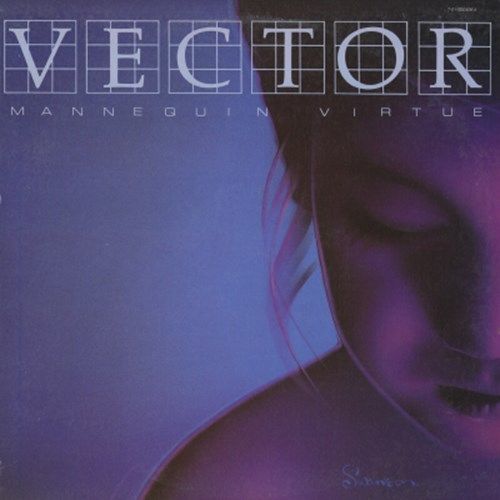
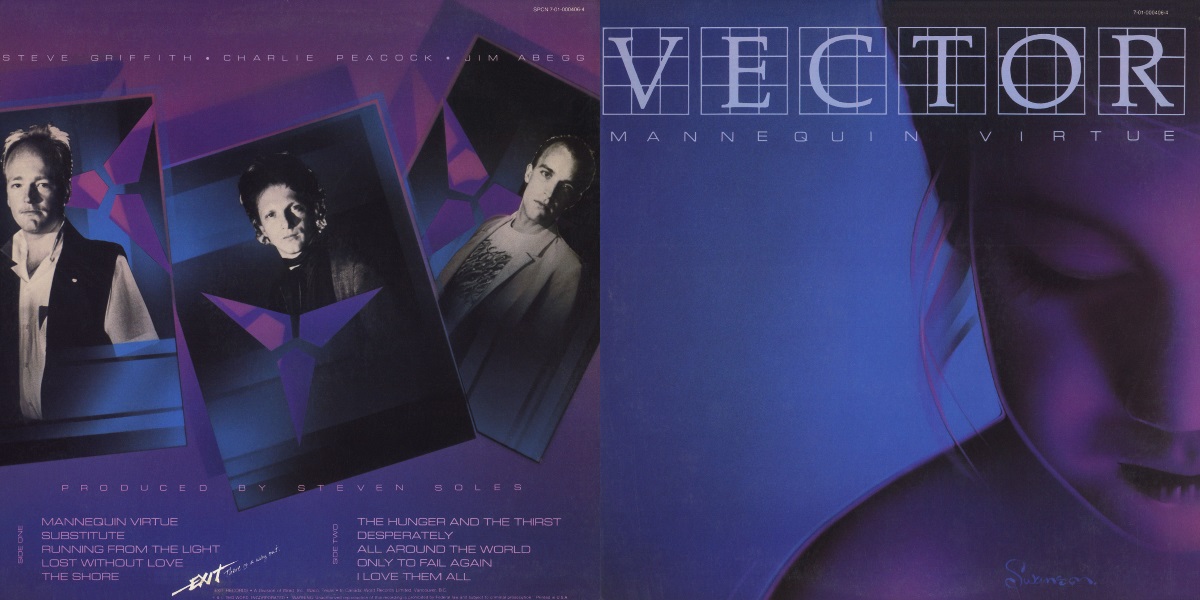
Mannequin Virtue is the debut album by the American alternative rock band Vector, released on Exit Records in 1983, a division of Word. The album was recorded during May – June 1983 by Daryl Zachman with band member Steve Griffith at The Warehouse Ministries’ Sangre Studios in Sacramento, California; with Steven Soles of The Alpha Band fame producing. Mixed by Larry Hirsch at Paramount Studios in Hollywood, California.
Not only are Mannequin Virtue and Please Stand By two classics of Christian alternative music (Vector’s debut coming in at 23 when our critics named the best albums of the 80s), but they broke ground toward establishing the culture and artistic relevance of rock by Christian artists. 83’s Mannequin Virtue remains one of my all time favorites, with Charlie Peacock experimenting in bold keyboard excursions to equal the aggressive and emotionally ragged guitar of Jimmy A., while Steve Griffith puts in equally edgy, vocal performances on such classics as «The Hunger and the Thirst», «Desperately», «Lost Without Love», «Substitute» and the title track. Please Stand By, from ’85, after the exit (pun intended) of Peacock, was produced and aided by former Missing Persons keyboardist Chuck Wild, and saw the addition of drummer Bruce Spencer. «Hear What I Say» is the project’s new single, but «Surrender» is probably the best Vector tune ever, and «I Can’t Help Falling In Love» and «Running to the Memory of You» define the growing sophistication of this wonderful band. [Brian Q. Newcomb, Harvest Rock Syndicate, Issue 2, 1990]
Vector’s Lean Passion
by David BartonSome of the best music in rock comes from groups whose members “agree to differ” in their musical tastes. Though they share a common ground, each has an interest that creates a group character greater than its part.
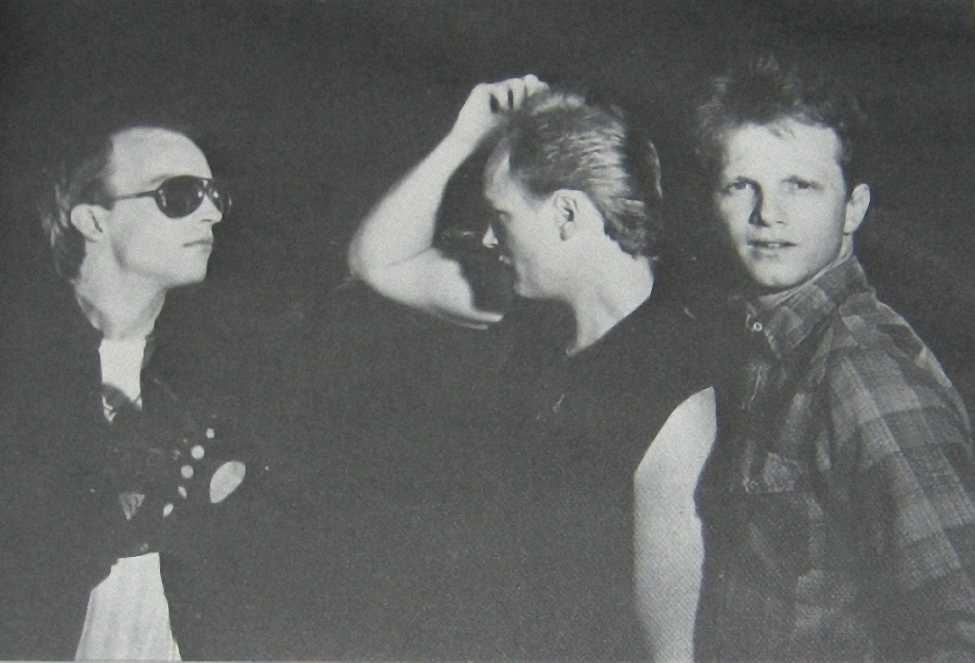
Vector is such a group. Bassist/singer Steve Griffith, guitarist Jim Abegg, keyboardist/singer Charlie Peacock and session drummer Aaron Smith (who subsequently departed for Romeo Void and has been replaced by Duane Temme) have created a sparse, driving sound on their debut LP, Mannequin Virtue on Exit Records.
Based in Sacramento, California, the group is one of several signed to the fledgling production company Sangre productions, and its label, Exit. In its first two months of release, Mannequin Virtue has sold over 20,000 copies and is beginning to get extensive college airplay.
That airplay is due not so much to the pull of Word Records, the world’s largest Christian record company, which distributes their records, but to the quality of their lean, passionate music. Abegg’s chordings and progressions are sophisticated and unpredictable, while Griffith’s bass and Smith’s drums provide some exceptional grooves and Peacock, who will have his own solo LP out in late spring, plays subdued synthesizers. The vocals are powerful and skilled, if occasionally melodramatic, and the lyrics don’t preach. For these guys, music came into their lives long before Christianity, and their choices of favorite LPs past and present indicate a rich and diverse catalog of unususal impressions.
Abegg recalls that the appearance of Jimi Hendrix’s Are You Experienced? in his small home town of Alliance, Nebraska was “a major event,” while Griffith remembers that amongst his mother’s jazz collection was Dave Brubeck’s “Take Five,” the first record he remembers hearing. Peacock recalls that his father let him order Chubby Checker’s “Let’s Twist” from the Columbia Record Club.
All three group members meet though, on some common musical territory with their favorite five LPs. Miles Davis appears on both Abegg and Peacock’s lists, Abegg naming In A Silent Way, while Peacock takes two: Someday My Prince Will Come and Bitches Brew, which he says “turned me around completely as to how I would approach music, whether jazz or pop.” Both Abegg and Griffith name Jimi Hendrix LPs, Abegg mentioning Electric Ladyland and Griffith describing his reaction to Are You Experienced?: “What is this?” [Article featured in Tower Records’ Pulse!, May 1984]
LP tracklist:
Side One
A1. “Mannequin Virtue” – 2:44
A2. “Substitute” – 2:32
A3. “Running From The Light” – 3:25
A4. “Lost Without Love” – 3:16
A5. “The Shore” – 3:50
Side Two
B1. “The Hunger And The Thirst” – 3:48
B2. “Desperately” – 3:45
B3. “All Around The World” – 3:25
B4. “Only To Fail Again” – 3:21
B5. “I Love Them All” – 3:50
Note: Simultaneously released on cassette and 12-inch vinyl LP by Exit Records. Later re-issued on CD.

VECTOR, MANNEQUIN VIRTUE (1983)
Exit Records may not possess the largest number of releases on this countdown, but they may be responsible for more releases per capita than any other label. The 77’s, Robert Vaughan, Charlie Peacock, First Strike, Steve Scott and Vector all make the list. When considering the limited number of releases and artists the label possessed, that is pretty darn impressive.
Vector’s debut album was the third album released by the label and was one of the early hits. The album also introduced a young singer-songwriter, producer and performer named Charlie Peacock. Peacock would leave the band soon after the release of the album and only sang one song on its debut.
I was working at a Christian bookstore in Southern California and had just graduated from High School when this album hit. It became an instant hit in the area and even KYMS radio pushed the envelope to add a few songs because of the “cool factor.”
But Vector is so unique and incredibly different that a review is both enjoyable and utterly frustrating since comparisons do not do the band justice and superlative fall short of just how original and powerful the band was with this debut project.
The band may be the first truly progressive rock new wave band in music. You can hear the influences of progressive rock acts like Genesis and world music influences like that of the Police, but there is an energy, originality and offbeat center to the band that is completely Vector. The original line-up consisted of Steve Griffith on vocals and bass, Jimmy Abegg (Jimmy A.) on guitar, Charlie Peacock on keyboards and vocals and Aaron Smith on drums (Bruce Spencer would take over after the recording of the album and a short tour with Aaron before Smith joined the 77’s).
Can we just take a moment here and note what a freakin’ incredible line-up of talent this one band possessed? Seriously, it is like a supergroup before we knew who they were. And one last thing…Aaron Smith is a monster beast and no one comes close!
The album starts off with the title track, the most accessible and commercial song on the album. It is utterly unique for the time to have a “new wave” band with such an impressive rock drummer driving the song. This keyboard dominated tune has a great vibe and killer chorus. Griffith’s vocals soar Abegg’s unique and completely original guitar styling is demonstrated. Producer Steven Soles creates a wall of sound and pristine production seriously lacking in the genre at the time.
Raise you hand if you agree this song should have been a monster hit?
The funky and odd “Substitute” begins to demonstrate the progressive and art rock tendencies of the band. Clearly MTV ready, the song’s “boingoish” rhythm is rife with danceable beats and intelligent lyrics. Again, Smith’s pounding is hypnotic and the drum bridge is head bobbing.
Peacock’s one lead vocal appearance is on “Running From the Light.” The wispy, high-pitched Peacock delivers with such a sensual groove that it was obvious that he was something special and would be doing his own music soon. The progressive jazz influence Peacock was noted for shows up here as well as the world music under current. The rhythm would be seen later in Peacock’s solo efforts, especially the debut. Griffith’s bass also takes center stage here.
The Bowie like musical offering of “Lost Without Love” is when I fell in love Griffith’s dramatic vocal style. His long and winding range is ever so evident here and carries an otherwise common melody to a totally different level.
“The Shore” slows things down, but by no means mellows things out. The Steve Scott like droning and building slowly pulls the listener into the song and surrounds you with a such a majestic melody.
Aaron Smith’s drum god prowess takes over on “The Hunger and the Thirst.” Though using common base themes in Christian music, the band lyrically takes them to a much deeper and more creative level. The give and take between Griffith and the backing vocals in the chorus is fantastic and it is all driven by Smith’s outrageous drumming.
A personal favorite is “Desperately,” with Abegg’s outrageous guitar rhythm juxtaposed against Peacock’s edgy and off-center keyboard work is impressive. Again, I find myself at a loss to adequately and fairly find the right words to help the reader get what is going on here musically. I continue to fall back on the progressive rock influence that shapes an utterly unique new wave/alternative vibe. The closing minute of guitar work by Abegg is worth the price of admission.
“All Around the World” is really a beautiful song. The Steven Soles influence can be felt here as well as even late 70’s and early 80’s bands like The Baby’s. Smart, well crafted pop with an ingenious melody and hypnotic rhythm.
The only song to match the title track in accessibility and radio friendliness is “Only to Fail Again.” The most pop driven and hook oriented song on the album, the chorus provides a great and memorable experience. The lyrics dealing with man’s constant failings is such a surprise couched in a fun and poppy new wave melody. Again, another hit that missed.
The album closes with the Police tinged “I Love Them All.” Released around the same time as “Synchronicity,” this song was right with the times and not a few years behind like much of the contemporaries. Beautiful and haunting, the song lingers with the listener long after it fades out. The beauty found in God’s unending love is the perfect close to an album filled with questions, doubts and glimmers of hope.
If ever a band’s name suited the music they create it is Vector. I can’t really explain why, but when I heard the name this is exactly what I expected, though significantly more impressive than I ever could have hoped for.
Reviews
There are no reviews yet.