Description
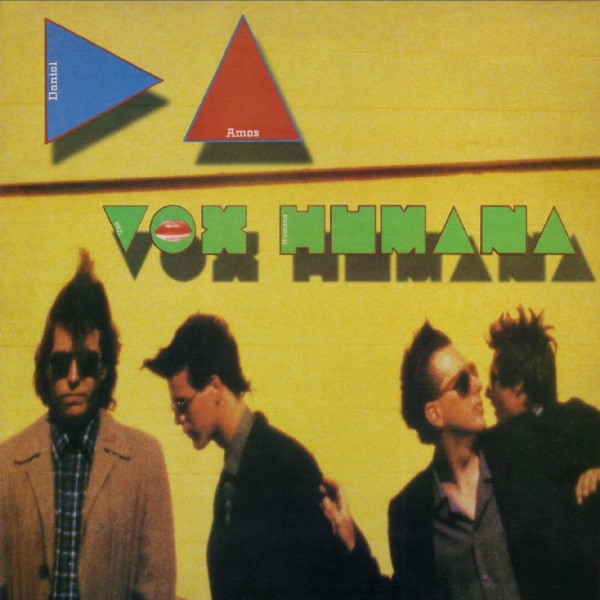
Vox Humana: The “¡Alarma Chronicles!” Volume III is the third release of a four part series of albums by Daniel Amos entitled The ¡ALARMA! Chronicles. (¡Alarma!, Doppelgänger, and Fearful Symmetry being the first, second, and the fourth installments, respectively.)
Vox Humana, sub-titled The “Alarma Chronicles” Volume III, is the sixth studio album by the American alternative rock band Daniel Amos, released on Refuge Records in August 1984, distributed by The Benson Company. (An early title for the album actually was Vox Robotica.) The album was recorded and mixed by Doug Doyle with Rob Watson at 3-D Studios in Costa Mesa, California; and was produced by Terry Taylor with Watson co-producing half of the tracks. Directed by Terry Taylor for Rebel Base Productions.
Vox Humana is a much brighter album than its predecessor, Doppelgänger, and features catchy, synthesizer-driven pop songs with lyrics about technology’s role in the American culture. Danish author Søren Kierkegaard, Polish poet Czeslaw Milosz, and Britons Malcolm Muggeridge and William Blake are all quoted in the liner notes of the album. The album also includes a tribute to Blake – a ballad simply entitled “William Blake.” In The Doppelgänger Radio Special (produced by CCM Magazine critic Bruce Brown and aired across the country in January 1983) it was stated that “Maintaining spiritual values in the midst of a computer age will be the theme of the Alarma Chronicles Volume Three, Vox Robotica: The voice of the robot. There is a signpost on ‘Doppelgänger’ pointing towards the Vox Robotica album, the song «Youth With A Machine».”
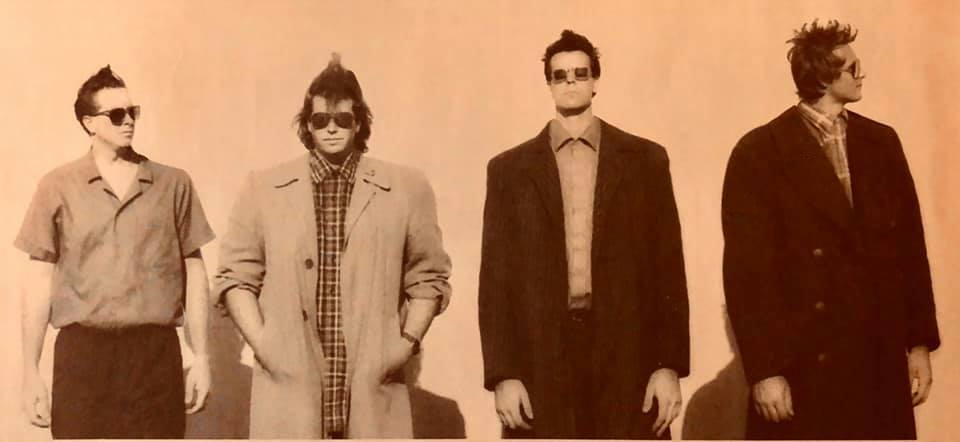
Trivia: At the time of the recording of the album, the band was down to four members: Terry Taylor, Rob Watson, Tim Chandler and Ed McTaggart. Though keyboardist Watson – who officially joined the band in April of 1984 (he actually also did play on a few tracks on 1983’s Doppelgänger) – participated in the recording of the album, he was unavailable for the photo session due to being on tour with Petra (as documented in Petra’s “Blinded Eyes” video, based upon a live shoot of the band from their Not of this World tour). Thus it is the silhouette of Leo Sorentino, road manager for The Choir, that appeares on the album cover in Watson’s place. New guitarist Greg Flesch joined the band in time for the Vox Humana tour, to replace long time guitarist Jerry Chamberlain who had retired before the recording of the album. (The Refuge Records sampler Rock Around the World featured the first opportunity for the public to hear a new track from then soon to be released Vox Humana album; the song «Home Permanent». Interestingly, this is an early rough mix of the track. The version that later ended up on the album features an uncredited guitar solo by Greg Flesh, actually his very first contribution to a Daniel Amos recording.)
DANIEL AMOS – Vox Humana, PRODUCER: Terry Taylor, Refuge R 84008
There is a conflict between Christianity and art – a conflict Daniel Amos continues to confront. In this new wave release – the third in their Alarma trilogy – they seem a little more commercial, and a little more intent on being hip. It’s nice to see a Christian act take a chance with a concept like this. [Billboard Magazine, March 9, 1985 (Album Reviews/Gospel Picks)]
Vox Humana, the eagerly awaited third LP in Daniel Amos’ Alarma! Chronicles, paints the “voice of the human” on a canvas of modern studio technology, with surprisingly warm and emotional results. «The Incredible Shrinking Man» is the cornerstone of Vox Humana in the same way «The Double» was in the previous Doppelganger. We’re reminded that in the face of technology’s dominance and society’s depersonalization of the human being, we’re welcomed as unique individuals into God’s presence.
In «Travelog» we meet a Person whose only communication with the outside world is through TV. «(It’s the Eighties, So Where’s Our) Rocket Packs» asks why, when we’ve progressed so far technologically, we haven’t mastered the art of love. «Live and Let Live» attacks our complacency in the face of impending technology, decrying the church’s willingness to conform to the world system. «When World’s Collide» works on two levels – as a love song from man to woman and from the Heavenly Father to His children.
A catchy, pop tune destined to bring D.A. its highest radio recognition, «Home Permanent» ironically contains one of Terry Taylor’s most stinging indictments of the way Christians perceive their personal witness. «As the World Turns» reminds us that “against the grain One often stands alone.”
«It’s Sick» reprises thoughts from earlier D.A. tunes such as «My Room». Taylor mentions examples of persecution recent enough to be fresh in all our minds – and chastises us for our apathy.
Danish reformer Soren Kierkegaard, Polish poet Czeslaw Milosz, and Britons Malcolm Muggeridge and William Blake are all quoted on the inner sleeve of Vox Humana. Taylor’s obvious affection for writers a bit ahead of their time comes through on the touching tribute «William Blake». The allegorical «She’s All Heart» speaks of the conflict between the intellectual and emotional sides of our human nature.
Cleverly disguised as a trip to American Bandstand, «Dance Stop» condemns the nuclear arms escalation. «Sanctuary» makes a simple, concluding statement about entering into the peace of God.
D.A.’s liberal use of synthesizers and drum machines make Vox Humana difficult to categorize musically. The LP is rife with quotations from the Beatles, Beach Boys, and Buffalo Springfield. Taylor’s quirky melodic hooks are reminiscent of Lindsey Buckingham (Fleetwood Mac) and Ric Ocasek (The Cars).
Daniel Amos will inevitably be shoved into the broad classification of “new wave,” with artists like the 77s and Steve Taylor. But call Vox Humana a classic pop album with state-of-the-studio production smarts. Innovative in scope and imaginative in execution, Vox Humana is a highly entertaining package from a band one step ahead of the cutting edge. [Bruce A. Brown, CCM, December 1984]
Vox Humana: The Alarma! Chronicles Vol III Collector’s Edition
The early ’80s journey of Daniel Amos through the ‘Alarma Chronicles’ took them through four albums and four different labels as they struggled to find a place within the Christian marketplace for their intelligent new wave rock. By 1984, Volume 3, titled ‘Vox Humana’, saw them embracing a few more synths and a sound that nearly a quarter of a century later is very recognisably ’80s! Terry Taylor’s songwriting still stands supreme though but it’s the fun songs on this album that really push my buttons. «(It’s The Eighties So Where’s Our) Rocket Packs» is a superb sci-fi adventure that explores how the expectations of a previous generation were not fulfilled. «It’s Sick» is a fast paced swipe at the injustices between the haves and have nots whilst «Dance Stop» is one of the band’s fun songs and a rock’n’roller floor filler with just the right amount of silly moments to make it work. «Home Permanent» is perfect pop with one of those wonderful singable choruses. «Live And Let Live» allows Taylor & Co to indulge their Beatles influences while «When Worlds Collide» is a crisp new wave song. «The Incredible Shrinking Man» has one of those fabulous whistled hooks and more sci-fi references. Whilst obviously clever and featuring creative production, I have to confess that whilst the other albums in the chronicles seemed to have a high concept, this one passes me by and is the weaker because of that. [Mike Rimmer, Cross Rhythms, September 2008]
> Apple Music (https://music.apple.com/us/album/vox-humana-deluxe-edition/1130968977)
LP tracklist:
Side One
A1. “Travelog” – 4:25
A2. “(It’s The Eighties, So Where’s Our) Rocket Packs” – 3:35
A3. “Home Permanent” – 3:00
A4. “It’s Sick” – 2:18
A5. “William Blake” – 4:30
A6. “Dance Stop” – 2:43
Side Two
B1. “Live And Let Live” – 3:40
B2. “When Worlds Collide” – 4:20
B3. “As The World Turns” – 3:47
B4. “She’s All Heart” – 3:00
B5. “The Incredible Shrinking Man” – 2:45
B6. “Sanctuary” – 5:45
Note: Simultaneously released on cassette and 12-inch vinyl LP by Refuge Records. Re-issued on CD and cassette by Heartbeat Music in 1992 (both marked “Collector’s Edition”), administered by Refuge Records. A Deluxe 2CD version of the album was released by Stunt Records in June 2016, distributed by Born Twice Records. Available at Bandcamp: https://terryscotttaylor.bandcamp.com/album/vox-humana-deluxe-w-bonus
https://terryscotttaylor.bandcamp.com/album/vox-humana-bonus-bonus
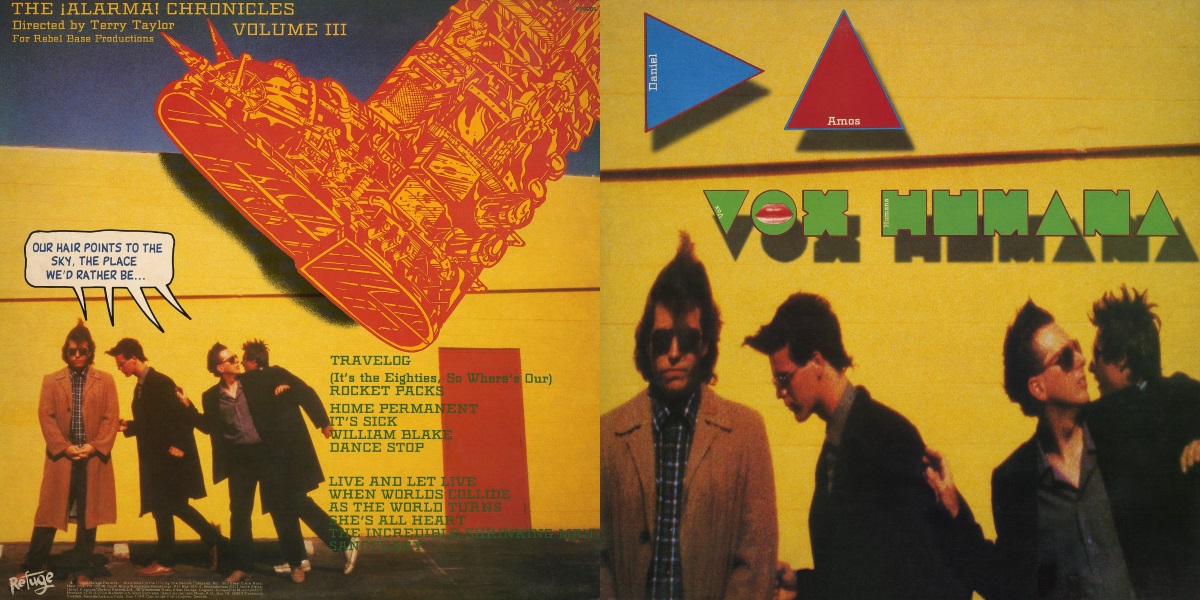

A Deluxe double disc version of the album (a 2CD in a three-panel digipak) was released by Stunt Records in June 2016, as a part of its ongoing deluxe reissue series, distributed by Born Twice Records. Disc One of the collection presents the entire Vox Humana album, carefully and respectfully remastered. Disc Two includes 17 bonus tracks, including alternate versions of album tracks – never before heard by the public, alternate mixes and more. The 6-panel Digipak and 24-page booklet presents all of the original LP artwork, along with never-before-seen photos, DA memorabilia, complete credits and lyrics and the entire text of the Alarma! Chronicles Volume III.
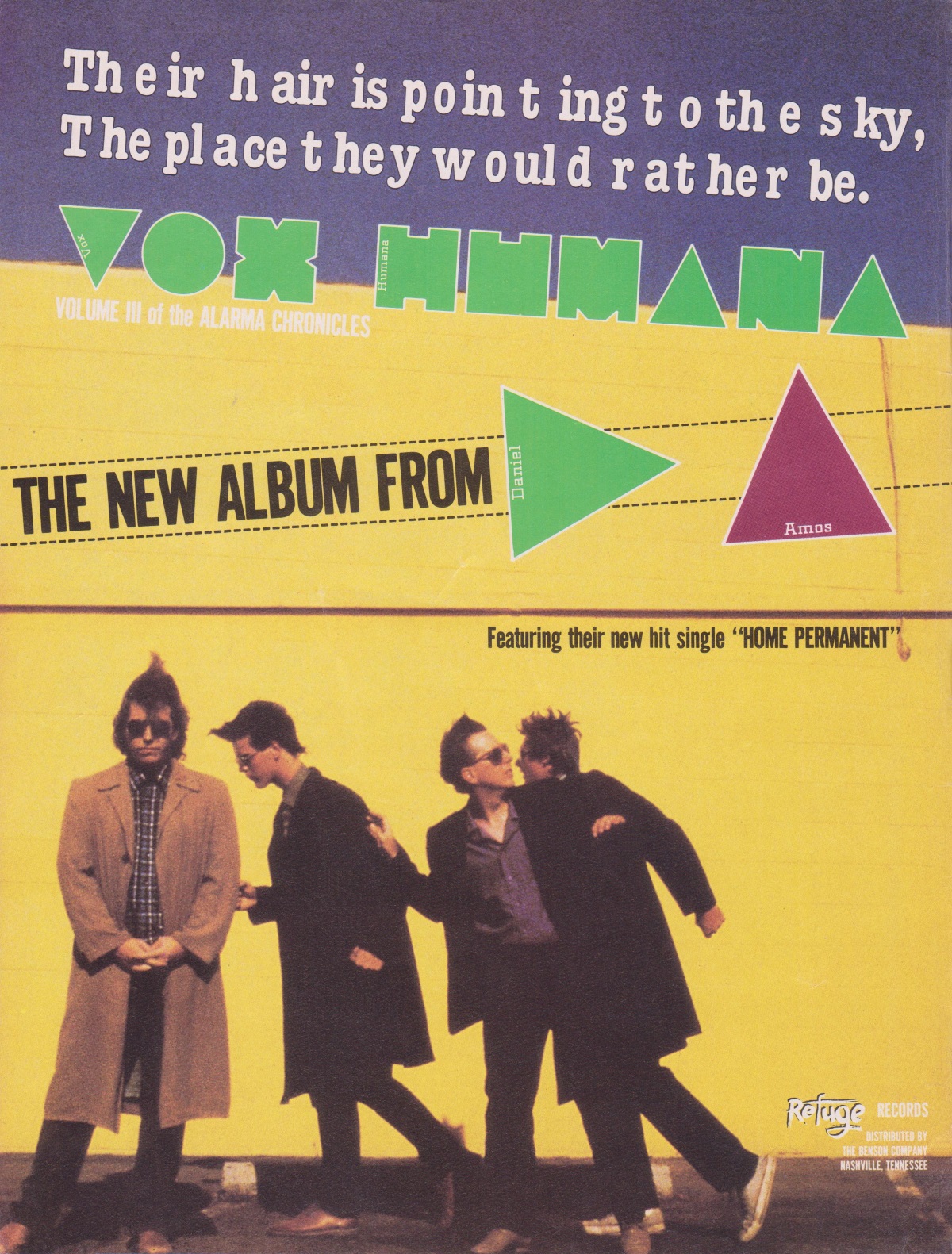 A full-page advertisement for Daniel Amos’ Vox Humana was featured in the October 1984 issue of CCM Magazine.
“(It’s The Eighties, So Where’s Our) Rocket Packs” (CUSTOM MUSIC VIDEO)
“Sanctuary”, from the “Live in Anaheim 1985” DVD.
“Travelog” and “Endless Summer”, Live at Cornerstone 1985.
Daniel Amos – Vox Humana Deluxe Edition, 2016
For a band that made change a centerpiece of their ethos, Daniel Amos (DA) sure had a heck of a lot of it. In 1984, with the arrival of the third of their ambitious four album cycle The Alarma Chronicles, Vox Humana landed on the band’s fifth record label (at this stage they only had six albums, so you can see how dynamic these changes were).
A song on the album seemed to telegraph a general dissatisfaction with change for the sake of it, even as the overall band sound was now dominated by synths. «(It’s The Eighties So Where’s Our) Rocket Packs» said, in knowing fashion, the promises of progress have been that it would facilitate human interaction, with all the pesky barriers and time-killers removed by modernity. Instead, modernity dulled the ability to communicate at all. Not only did the technology of the future not come to pass as spectacularly as the b-movies promised, what little did advance made it all worse, not better.
That’s the connective tissue for the whole of the album which takes inspiration from movies and television of the ’50s and ’60s and asks the question, “Are we any closer to the ideal, or are we just channel surfing?” The opening «Travelog» makes that concept explicit as the character of the seeker flicks from station to station to find not solace but a form of anesthetic and spiritual…something. «When Worlds Collide», «As The World Turns», and «The Incredible Shrinking Man» crystallize the concept through strategic name-drops.
The album itself sounded completely of its time, pushed ever so farther to the edge, as was primary songwriter Terry Scott Taylor’s wont. Let’s not forget that the early ’80s was the first generation of pop music that fully embraced the artificial sound of synth. It was not used as secondary atmosphere pads but as THE main instrument in the mix — think of Gary Numan’s icy, metallic compositions or Men Without Hats’ (God help us all) «Safety Dance». Thanks to keyboardist Rob Watson, Vox Humana‘s keys could be both psychedelic and a bit menacing. This worked fine for the times and, with a bit of placement restraint, still does.
The album never had an easy time of it in the discography. Already the band had strayed past the point of return from their country rock origins, and several initial fans had no issue with saying, “No thank you.” With the winnowing of the base, DA had fewer but more devoted followers who enjoyed the next sharp left turn. The labels, on the other hand, probably saw diminishing return on investment, thus providing the instability of those years. Further, it took a longer time for the album to finally make it to CD toward the end of the decade, and when it did, it was an utter botch job. Tracks cut off halfway and bled into the following track. The song «It’s Sick» was the victim of karmic typos and was inadvertently retitled «It’s Slick». The biggest drawback was that the point of pushing the synths up to 10 in ’84 was now lost. The music, indeed, became a bit too slick for its own good.
After finally getting an appropriate CD authoring for the album’s placement in the Alarma Chronicles compilation, and subsequently being illegally sold separately on Ebay, we now at last have Vox Humana Deluxe Edition, promising to right the wrongs of a fickle industry and a fractious consumer base. Does it succeed?
The booklet of the 2-disc set faithfully reprints the lyrics, credits, and the Chronicles insert that was in the vinyl LP at the time, and “remastered” is the word used to signify the newness of it all. Listeners who are familiar with the material will get a different, more surprising interpretation. It sounds like the initial recordings were also remixed, as Tim Chandler’s bass is far more present, and the guitars rise to the top overall. Pushed a bit back is the percussion, mostly synthetic percussion, from Ed McTaggart. Synths resume, whenever possible, the “pad atmospheric” role we might be more comfortable with now.
Is it better? Definitely. I can say with little hesitation that this is the version I will listen to above all the others. Even the echoes and reverb that bathed the original mix seem tamped down, and nowhere is that more evident than in Taylor’s vocal harmonies and in the apocalyptic closer «Sanctuary». While it’s nice to have the bonus cuts and alternate mixes found on disc 2 of the set, the real reason to own it is because Vox Humana finally gets the respect it has deserved all this time.
It is not faithfully representative of the era from which it came. That may be the sticking point for other longtime fans who are trying to recapture the glory days when albums like Vox Humana came out almost every year and did not require elaborate funding strategies to make them happen. I spoke with two of the release’s executive producers who assure me no remixing was done with the original recordings, that this is merely what you get when you have an expert engineer equalizing the final output. I believe them wholeheartedly, but the end result still sounds like a massive amount of positive work was put into bringing Vox Humana up to spec.
But fans can be odd sometimes, looking for a feeling, not necessarily “the best something can be.” What these songs gain from considerate and careful (not wholesale revisionist) treatment, they might lose for those merely seeking a nostalgic trip. There’s not much I can say to assuage that feeling other than the old version is now irrelevant and probably found for dirt cheap online. If you’re okay with blatant flaws, go for it. But for those who have appreciated these tunes for decades but wish they weren’t so…dated, you’re never going to get a better version of it than the Vox Humana Deluxe Edition. [Dw. Dunphy, PopDose, December 6, 2016]
CREDITS. Produced by Terry Taylor with Rob Watson co-producing tracks A2, A3, A5, B2, B3, and B4. Directed by Terry Taylor for Rebel Base Productions. Arranged by Taylor and the The DA Boys. Engineered by Doug Doyle. Second Engineering by Rob Watson with thanks to Bruce Swift. Recorded and mixed at 3-D, Costa Mesa, CA. Mastered by John Matouchek at Motown, LA. Art Direction, Layout and Graphics by Ed McTaggart. Album Art Concept by Terry Taylor. Photographics and Photography by Linda (Photo) Dillion Baley and Ken Baley. “Foot” Art by Phil Yea. Special Hair effects by Cathy Kern. “Boot” shadow by Gary DeLacy. All songs written by Terry Taylor (Track A5 and A6 arranged by Taylor and Tim Chandler).
Musicians: DA – Terry Taylor (Lead Vocals, Rhythm Guitar, Occasional Keyboards, Synthesizers), Rob Watson (Keyboards, Synthesizers, Percussion), Tim Chandler (Lead Guitar, 4 & 12 String Bass, Synthesizers), Ed McTaggart (Drums, Percussion, Synthesizers). Backing Vocals: Rob Watson, Terry Taylor, Tim Chandler.
Reviews
There are no reviews yet.