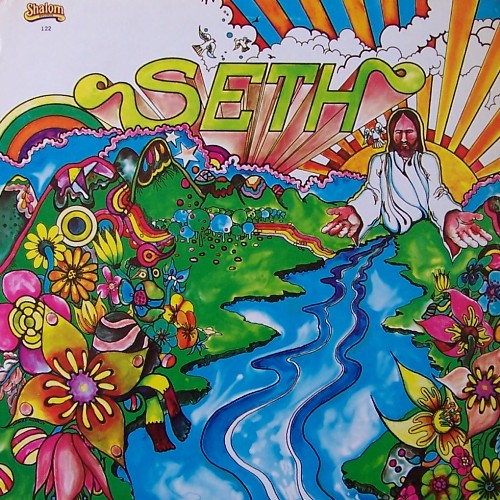
Description
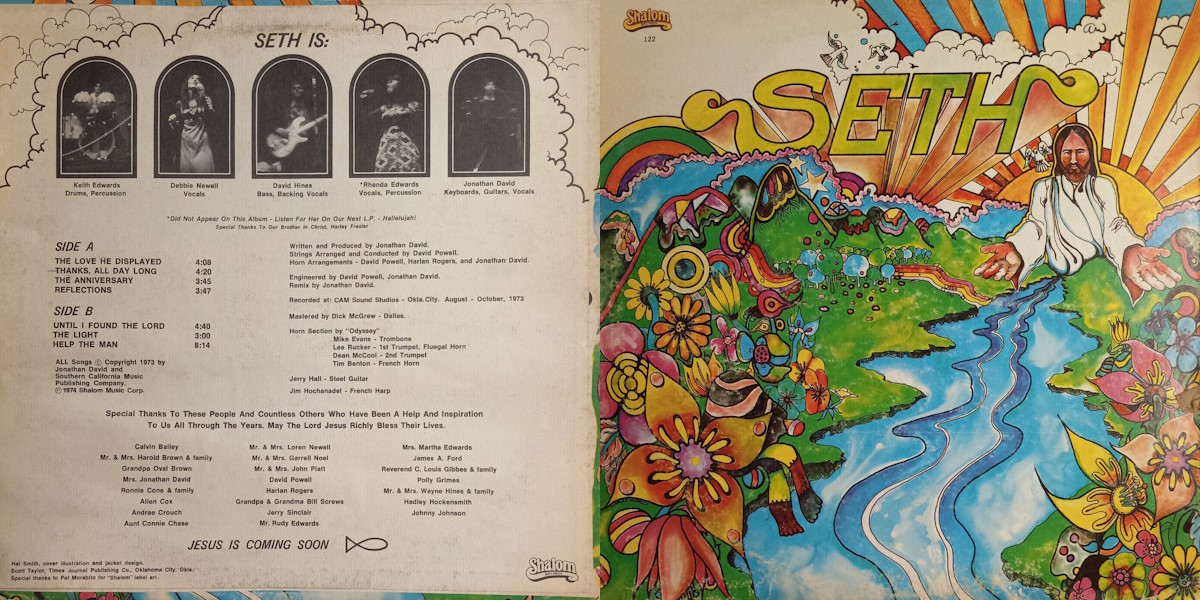
The self-titled debut album by the American folk-pop group Seth was released on Shalom Records in 1974, a label created by Andrae Crouch. The album was recorded in August-October 1973 by David Powell and band member Jonathan David at CAM Sound Studios in Oklahoma City, Oklahoma; with Jonathan David producing and mixing (who also wrote all the songs). Strings arranged and conducted by David Powell. Horns arranged by David Powell, Harlan Rogers, and Jonathan David. Cover illustration and jacket design by Hal Smith.
Seth is Debbie Newell on vocals, Jonathan David on keyboards, guitars, and vocals (a.k.a. legendary CCM producer known as Jonathan David Brown; November 20, 1955 – September 27, 2016), David Hines on bass and backing vocals, and Keith Edwards on drums and percussion, as well as Rhenda Edwards on vocals and percussion (“Did not appear on this album – Listen for her on our next LP – Hallelujah!“). The album also features Jerry Hall on steel guitar and Jim Hochanadel on French harp. Horn section by “Odyssey” (Lee Rucker on 1st trumpet and flugel horn, Dean McCool on 2nd trumpet, Mike Evans on trombone, and Tim Benton on French horn).
Seth strikes me as sort of a Christian version of The Carpenters. Jonathan David Brown’s keyboards, song-writing and production frequently come close to duplicating their sound while Debbie Newell’s vocals strike more than a passing resemblance to Karen. Dripping with strings and horns, Seth can at times be dreadfully mellow. Yet there’s often a catchy hook in their mix of folky pop, MOR pop, light-hearted country pop and jazzy pop – if you’re gonna make that kind of a record, well, I suppose this is the way to do it. They even have their artsy moments, most notably the closing 8-minute ballad «Help The Man» which has a good electric guitar climax and fadeout. Horn section by “Odyssey”. Wild psychedelic cover art exploding with color. [Ken Scott, The Archivist]
LP tracklist:
Side One
A1. “The Love He Displayed” – 4:08
A2. “Thanks, All Day Long” – 4:20
A3. “The Anniversary” – 3:45
A4. “Reflections” – 3:47
Side Two
B1. “Until I Found The Lord” – 4:40
B2. “The Light” – 3:00
B3. “Help The Man” – 8:14
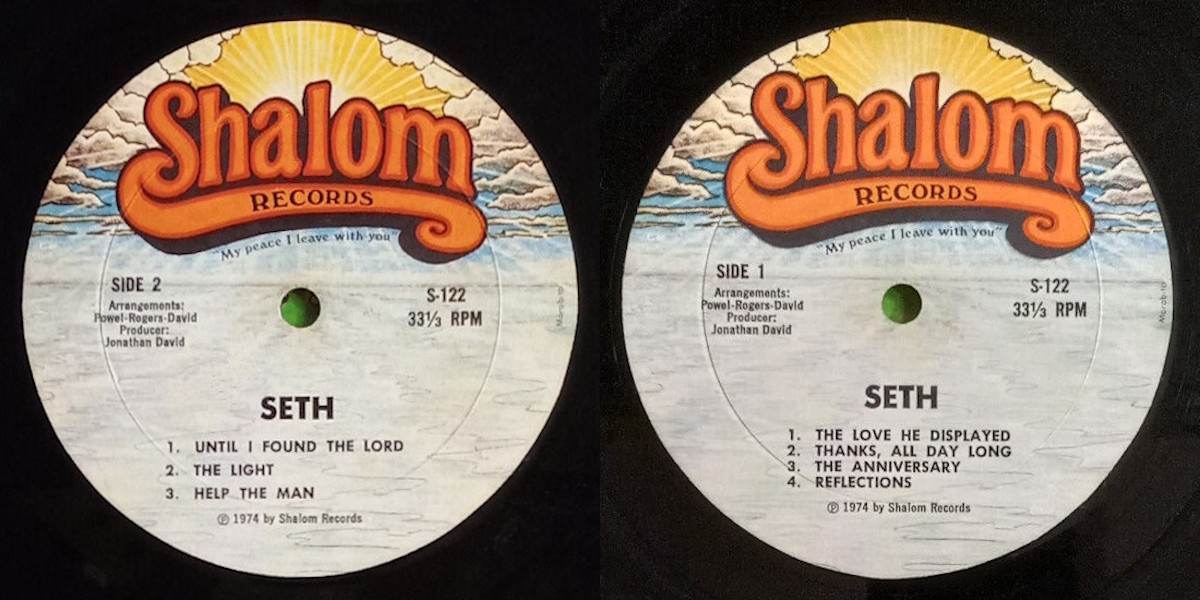
Note: Simultaneously released on 8-track tape and 12-inch vinyl LP by Shalom Records.
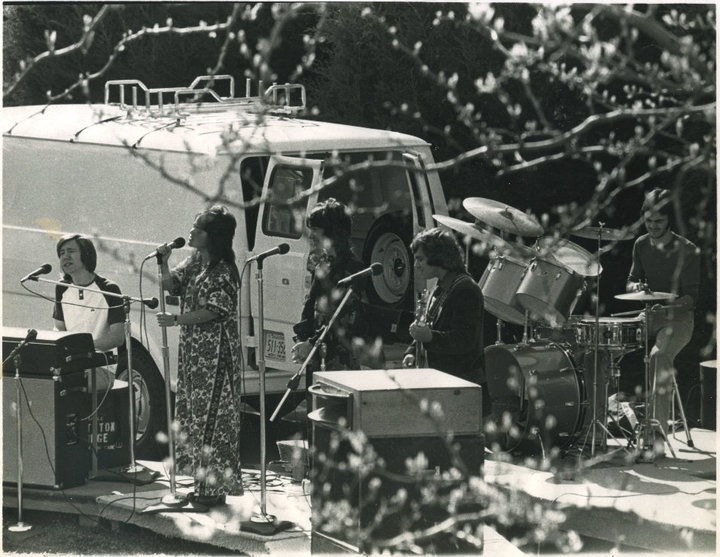 Seth live at Bethany Nazarene College – a.k.a. Southern Nazarene University – 1974. (L-R): Jonathan David Blocker (a.k.a. J.D. Brown), Rhenda Lue Edwards, Rob Phillips, David Hines, and drummer Keith Edwards at the back.
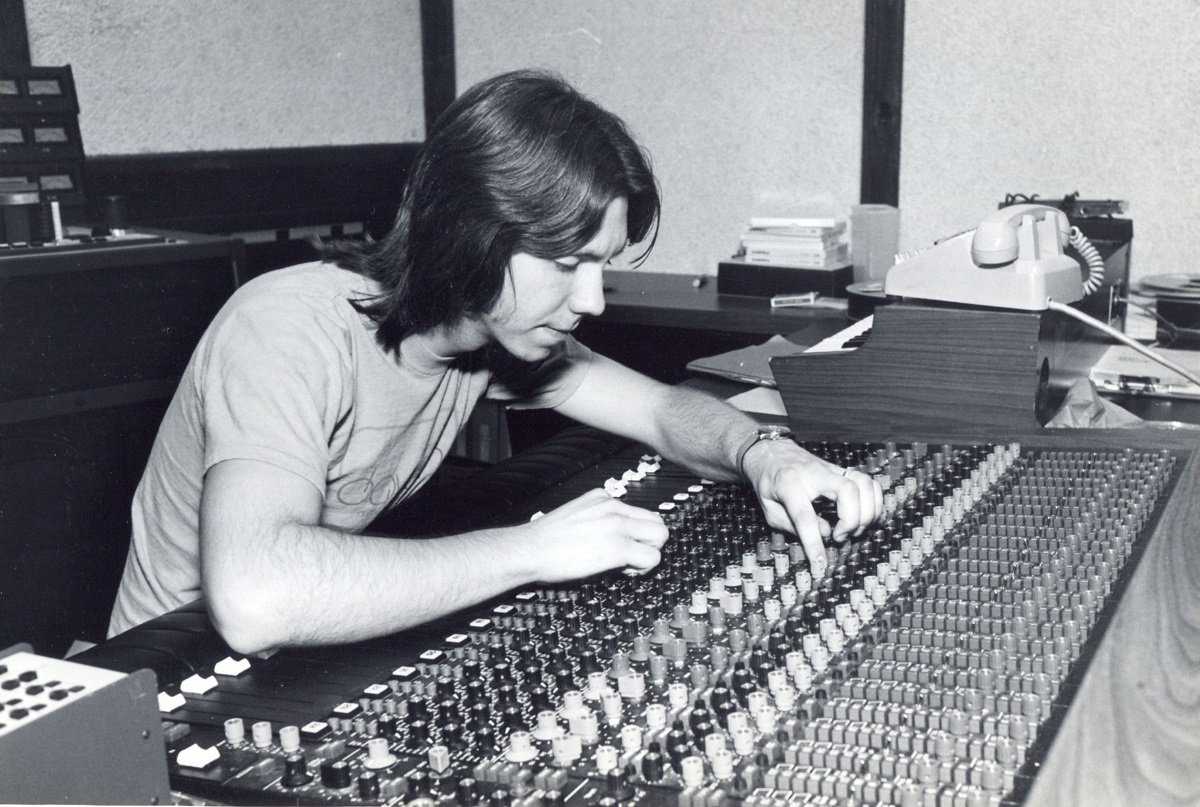 Jonathan David Brown engineering during the Shotgun Angel sessions in early 1977. Brown produced, engineered, and mixed the album.
Jonathan David Brown (November 20, 1955 – September 27, 2016)
Jonathan David Brown was an American singer, songwriter, audio engineer, and record producer known for his work on more than hundred albums released by the contemporary Christian music industry. Brown engineered numerous albums for the Maranantha! Music label starting in 1975, including Mustard Seed Faith’s Sail on Sailor (1975), Becky Ugartechea’s House-Between-Two-Rivers (1976), Daniel Amos’ self-titled debut album (1976), as well as the Terry Talbot-written musical Firewind released by Sparrow Records in 1976 and Tom Howard’s debut album View from the Bridge released on Solid Rock Records in 1977. Among Brown’s first production credits was the Daniel Amos’ classic Shotgun Angel (1977). Other Maranantha! productions from the late 1970s included Sweet Comfort Band’s self-titled debut, First Things First by Bob Bennett, Come for the Children – the debut solo album by Oden Fong of Mustard Seed Faith fame, Blame It On The One I Love! by his former Seth bandmate Kelly Willard, and The Misfit by Erick Nelson and Michele Pillar. During the 1980s JDB would work on albums by artist such as Mark Heard, Roby Duke, Twila Paris, Michele Wagner, Morgan Cryar, David Meece, Steve Taylor, Greg X. Volz and Petra.
In reference to remastering the songs produced by Jonathan David Brown for the box set Now the Truth Can Be Told, Steve Taylor said “the stuff that Jonathan produced and engineered, sonically and everything like that, he was a genius. And you won’t hear me use that very often, but he was really a genius. It’s like, we put that stuff up, and we didn’t have to EQ it because whether you like the sound of it or not, sonically, it was really brilliant.”


Reviews
There are no reviews yet.