
Description
The Master & The Musician is the first instrumental album – as well as the third solo album overall – by the American singer, songwriter, and guitarist, Phil Keaggy of Glass Harp fame, released on NewSong Records in 1978. (Re-issued by Myrrh Records the following year.) The album was recorded by Mal Davis and Gary Hedden at Hedden West Studios in Schaumburg, Illinois; June-August 1978, with Phil Keaggy producing and arranging. Mixed by Davis and Keaggy (as well as Hedden on tracks B1 and B2). Featuring folk, jazz and rock influenced compositions by Phil Keaggy, mostly made up right in the studio.
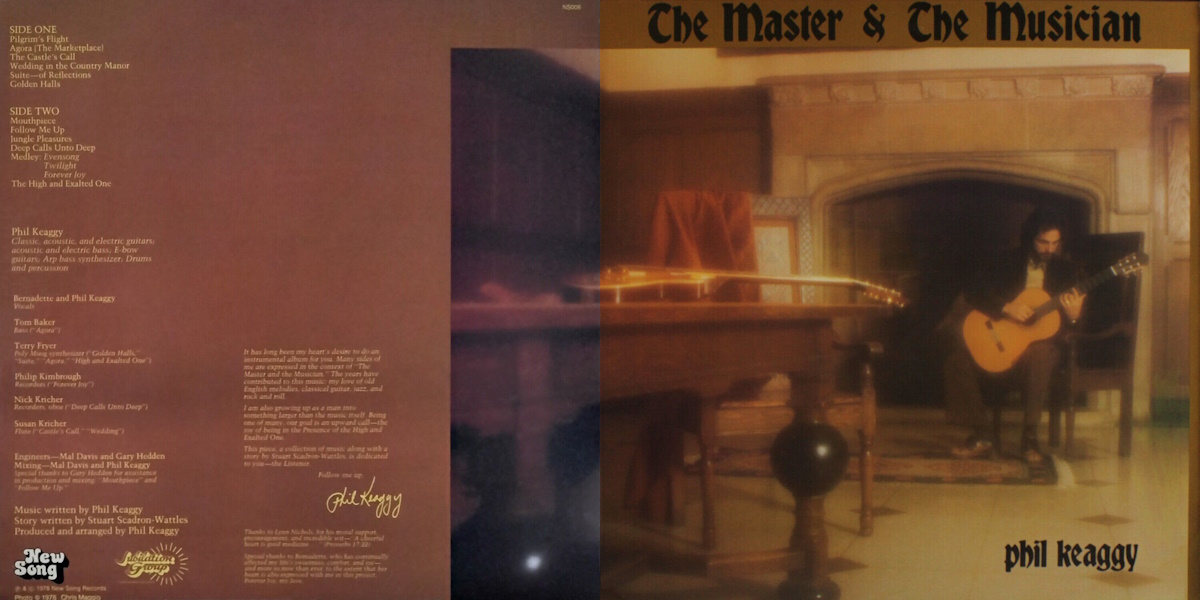
Featuring Phil Keaggy on classic, acoustic, and electric guitars; acoustic and electric bass; E-bow guitars; Arp bass synthesizer; as well as drums and percussion.
The Master & The Musician was included among CCM Magazine’s Top 10 MOR/Inspirational and Misc. Albums of 1979 – Mr. Keaggy gave us the gift of an all-instrumental record this year. His guitar-playing prowess was effectively showcased in both classical and rock settings. (Maybe next year we’ll find him going Baroque!).
With The Master and The Musician, maestro Phil Keaggy let his fingers do the talking, creating a warm, worshipful and at times melancholy ambience that used electric and acoustic guitars, ethnic percussion, and modern synthesizers to say what words never could. The stylistic flavor of The Master and The Musician reflects the diverse musical elements taking root in the 1970s. Modern folk and folk-rock by artists like Steeleye Span, John Renbourn and Bruce Cockburn and progressive rock by Jan Hammer and Anthony Phillips (a founding member of Genesis) all became the ingredients Keaggy would pull from for his eclectic project. Distinctly English and Celtic motifs dance around modern jazz elements and straight 70s rock.
Album Liner Notes:
It has long been my heart’s desire to do an instrumental album for you. Many sides of me are expressed in the context of “The Master and the Musician.” The years have contributed to this music: my love of old English melodies, classical guitar, jazz, and rock and roll.
I am also growing up as a man into something larger than the music itself. Being one of many, our goal is an upward call – the joy of being in the Presence of the High and Exalted One.
This piece, a collection of music along with a story by Stuart Scadron-Wattles, is dedicated to you – the Listener.
Follow me up,
Phil Keaggy
THE MASTER AND THE MUSICIAN – PHIL KEAGGY – New Song NS006 (Word)
It’s not every day you stumble across a collection of new gospel instrumental tunes built around a conceptual theme, but Keaggy has done just that. His guitar virtuosity is expressed in jazz, classical, rock and even old English sounding melodies reminiscent of the times of Henry VIII. A concept story written around the tunes special meaning. [Record World, May 12, 1979 (Gospel Section, Album Picks)]
Phil Keaggy’s first instrumental album is a groundbreaking piece of work for him as an artist, for the Christian music genre, and for instrumental guitar music in general. Full of emotional twists, meditative sounds, and world-influenced tonalities, The Master & the Musician stands as an oasis in an otherwise barren field of Christian instrumental music. Pieces like «Jungle Pleasures» and «Follow Me Up» are great works in their own right, Christian or otherwise. The excellent arrangement of «Amazing Grace» on the 1988 re-release features Keaggy’s guitar sounding like bagpipes. An excellent work from an excellent musician. [Mark Allender, AMG]
Landmark progressive instrumental recording that artfully combines elements of classical, folk and rock. In addition to his varied and exemplary classical, acoustic and electric guitar work, Keaggy adds further layers of depth by playing Arp bass synthesizer, E-bow guitars, drums and percussion, While additional musicians provide textures of Poly Moog synthesizer, recorder, oboe, flute and bass. Also enhanced in a couple places with wordless vocals from Keaggy and his wife Bernadette. The album contains a lot more classical stylings than heard on Phil’s earlier recordings, a welcome presence on tracks like «Pilgrim’s Flight», «The Castle’s Call» and «Wedding In The Country Manor». «Golden Halls» and «Deep Calls Unto Deep» draw the listener in with their melodic soft moods, while «Agora», «Follow Me Up» and the percussive «Jungle Pleasures» effectively balance the project by supplying dynamic rock edges. The instrumental format seems to have lent itself to expanded levels of creativity, resulting in one of Phil’s most respected albums. The original New Song press includes a storyline on the inner sleeve, deleted on subsequent re-issues as Keaggy felt the music stood on its own – which it most certainly does. [Ken Scott, The Archivist, 4th Edition]
For his last album of the 70s, Phil goes back to being a one-man band – with a little help from a few friends. But comparing What a Day to The Master and the Musician is kind of like comparing, say, «Love Me Do» with «Strawberry Fields Forever». The early album was the young believer’s first foray on his own, playing fun choruses and campfire music. The mature work is built on similar scaffolding, but the material is deeper, more complex, and stands up to multiple replays. It’s also takes longer to assimilate and appreciate, because this time, there’s no words.
Trying to assess an album like this is difficult because the ordinary rules of what makes a song memorable really don’t apply. There’s themes that stand out, riffs,sounds, and atmospheres that connect, but this is not the kind of music that you would hear on the radio. This is intellectual and spiritual music, and what songs will appeal to what listeners depends on taste, feelings, and how one connects to the music. The one song that often stands out and get included on compilations is «Pilgrim’s Flight», and I wonder if it’s because it’s the first track out of the gate. It is a rather cool melding of classical and folk ideas, with everything from acoustic guitar to something called an E-Bow, an electronic instrument that emits a pulse that causes the strings to vibrate at a constant rate. The result is a sort of spacy flute sound that Keaggy would use for the rest of his career.
Other personal highlights include «Wedding in the Country Manor», a fun little mini-suite of baroque and folk pieces that Phil did indeed write for a friend’s wedding; and «Follow Me Up», the closest thing to a rocker on the album, with Phil handling the drums and bass as well as the cranky guitar lines. The strongest part of the album is the middle that features the longer songs like «Suite Of Reflections», with its gentle acoustic themes which spontaneously bursts into a thundering finale. «Deep Calls Unto Deep» also has a big crescendo following a very watery acoustic section. [Jimm Derby, 2015]
CD re-issue, Myrrh Records 1989
Thank goodness for CD re-issues! Or else this album might have been destined to live in infamy in Christian radio production library hell, where it’s been languishing for ten years. In 1979, Dino (not Fred Flinstone’s dog) was about the only Christian artist doing instrumental music. So, once the novelty of a Phil Keaggy album without words wore off, the music from one of Keaggy’s best records spent the next several years ad nauseam backing promos and commercials on Christian radio stations.
Folks who are recent Keaggy converts will instantly recognize many of the melodies which he has been weaving in and out of the solo guitar portions of his concerts the past decade. ‘The Master & The Musician’ displays at least a little of all of Keaggy’s guitar stylings – classical, jazz, rock and even country influences are in evidence. Owners of the original record will immediately notice the improved bass response, the crisp bite of the guitars, and the way even the most delicate percussion taps rise in the mix.
As a bonus, this digitally remastered tape/CD has a newly recorded «Epilogue» tacked on, which is completely consistent with the original sessions, and features a rendition of Keaggy’s live staple, «Amazing Grace». Thankfully, Myrrh has seen fit not to spoil the inner sleeve with the silly fairy tale that was foisted on buyers the first time around. [Bruce A. Brown, Harvest Rock Syndicate, Issue 3, 1989 (Volume 4)]
> Apple Music (https://music.apple.com/us/album/the-master-and-the-musician-30th-anniversary-edition/276351480)
LP tracklist:
Side One
A1. “Pilgrim’s Flight” – 2:22
A2. “Agora (The Markerplace)” – 3:26
A3. “The Castle’s Call” – 0:47
A4. “Wedding In The Country Manor” – 3:20
A5. “Suite Of Reflections” – 5:45
A6. “Golden Halls” – 5:13
Side Two
B1. “Mouthpiece” – 1:18
B2. “Follow Me Up” – 4:05
B3. “Jungle Pleasures” – 0:55
B4. “Deep Calls Unto Deep” – 3:52
B5. Medley: “Evensong, Twilight, Forever Joy” – 7:50
B6. “The High And Exalted One” – 1:48
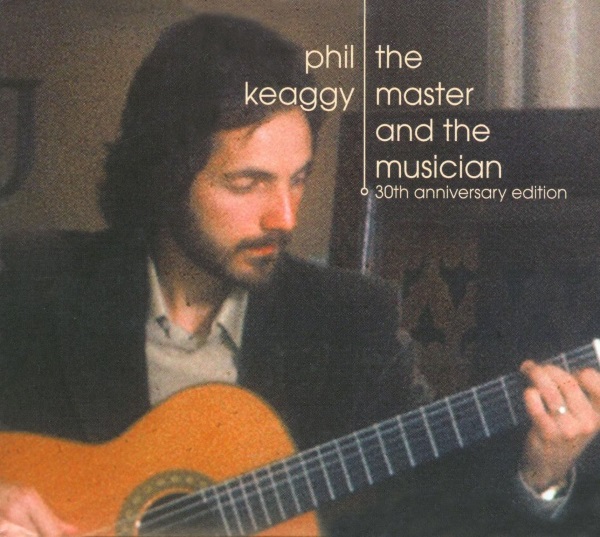
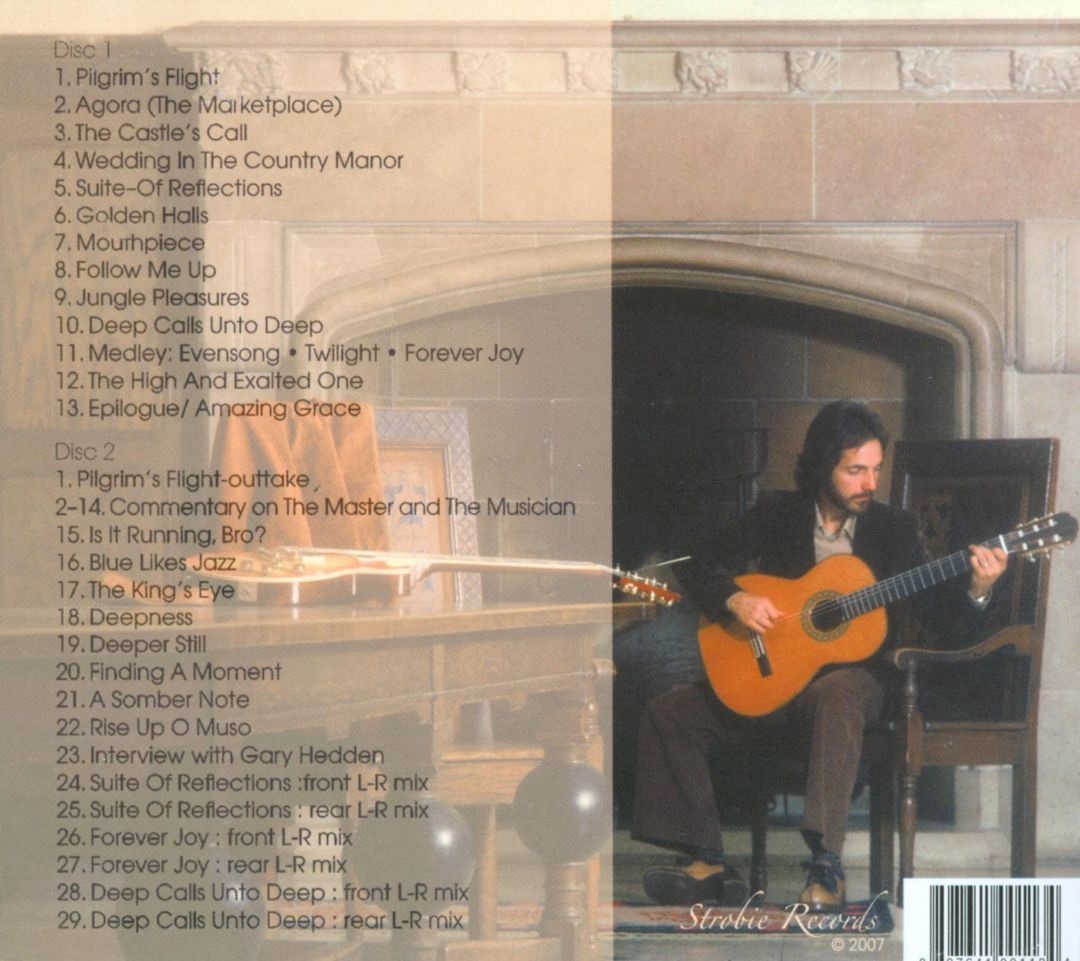
Note: Simultaneously released on 8-track tape, cassette, and 12-inch vinyl LP by NewSong Records. Re-issued on cassette and CD by Myrrh Records in 1989, featuring a bonus track called “Epilogue/Amazing Grace” specifically recorded for the re-release. Remastered by Doug Doyle and repackaged as a 2CD by Strobie Records in November 2007, entitled The Master & The Musician – 30th Anniversary Edition, featuring the original tracks (including the 1989 bonus track “Epilogue/Amazing Grace”) as well as outtakes and commentary included on a 29-track bonus disc. The album and a bonus disc are available at Bandcamp: https://philkeaggy.bandcamp.com/album/the-master-the-musician https://philkeaggy.bandcamp.com/album/the-master-the-musician-bonus-disc
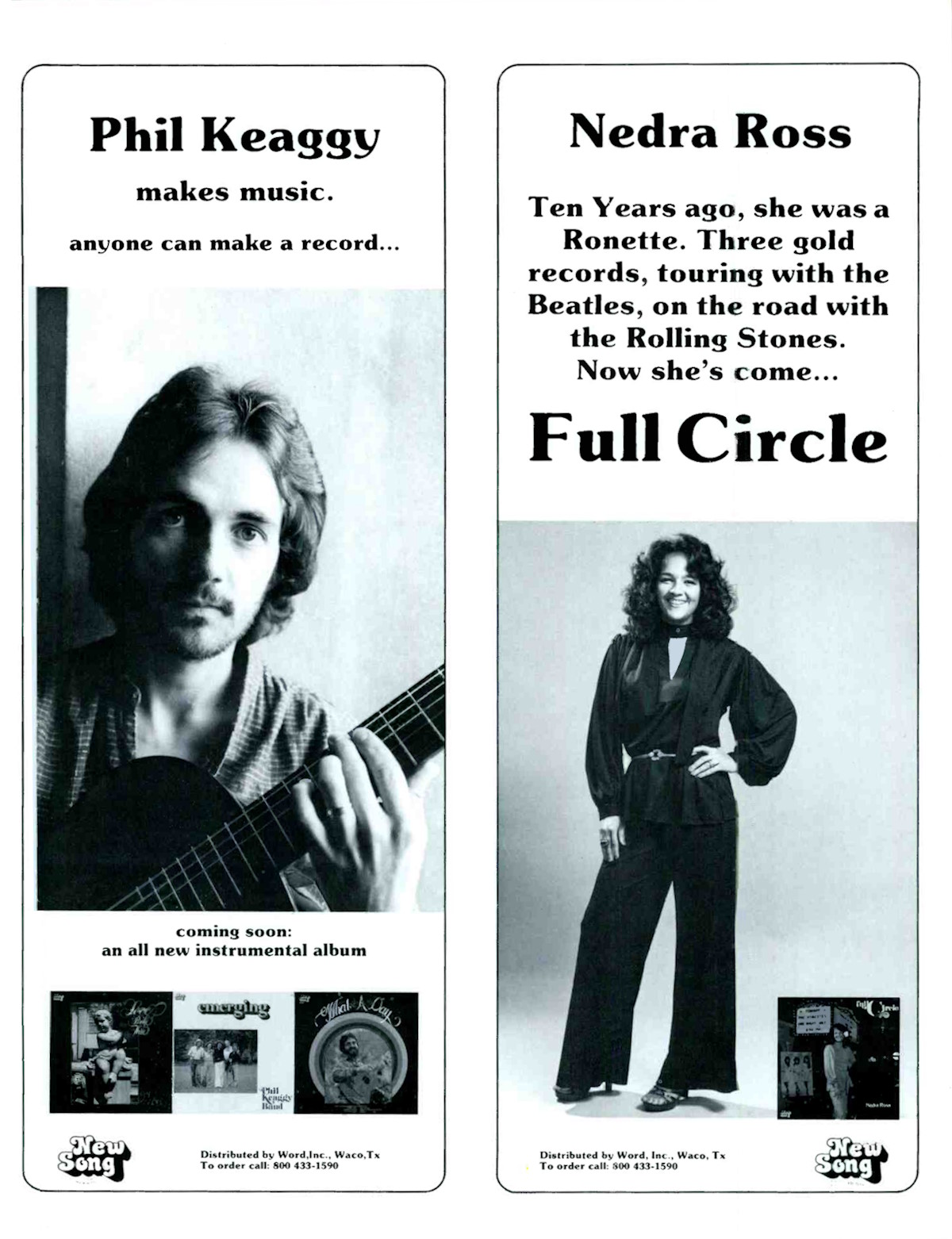 A full-page advertisement for two new releases on NewSong Records, Nedra Ross’ Full Circle and Phil Keaggy’s up-coming instrumental album The Master & The Musician, was featured in the November 11, 1978 issue of Record World.


Reviews
There are no reviews yet.