Description
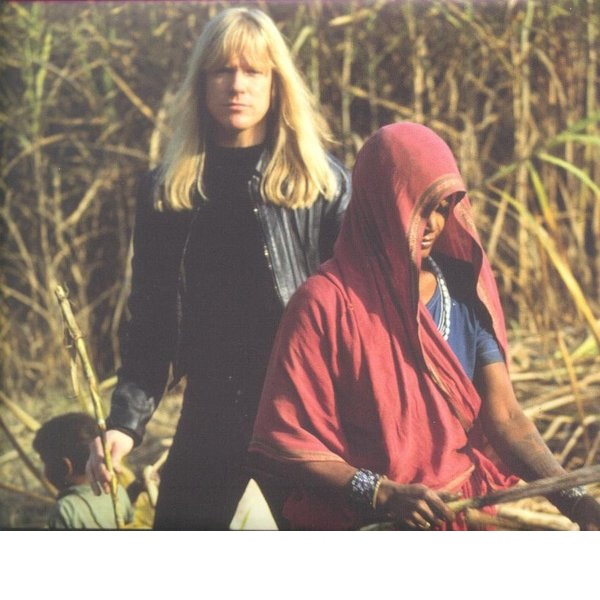
Rebel Poet, Jukebox Balladeer: The Anthology is a compilation album by the American singer and songwriter Larry Norman, released on ARRCO in May 2008, in association with Solid Rock Records.
The Anthology features 20-track that will guide listeners chronologically through Larry Norman’s career, beginning with his early days in the 60’s band People! (“I Love You”) through his critically-acclaimed and, at times, controversial solo albums of the 70’s and 80’s. Digitally remastered and featuring extensive liner notes as well as rare and never-before-seen photographs and artwork.
At his finest, Larry Norman impressively possessed the snappy, bitingly satirical wit of Costello, the charismatic rock swagger of Jagger, the articulate cultural and spiritual observations of Dylan, the melodic chamber-pop/psych elegance of the Zombies, and the recording-studio playfulness of mature Beatles.
As with the Beatles, with a Larry Norman album, you always got more. The record of Magical Mystery Tour opened like a book, and so did Only Visiting This Planet. When Norman made his own record companies, One Way, Phydeaux, and Solid Rock, he always tried to include a booklet of lyrics or photos, or slide a picture into the sleeve. As Doug Van Pelt pointed out in his Norman tribute in HM Magazine, Norman, again like the Beatles, always gave you more magic and mystery: the last line of the last song in each of the Trilogy albums is the title of the album. This CD continues that tradition. It unfolds twice, revealing song notes by Norman and an introduction. Slipped in the sleeve is a sticker and a twenty four page lyrics and photos booklet.
This CD would be a great intro to Norman for those new to him, and also as a sampler for bands considering tribute songs. However, it doesn’t scratch the surface of his musical output. Greg from Arena Rock began work on this compilation with Norman, even though it seems to be a tribute after the fact. Like most “Best of” collections, some of the songs are not what I would have chosen, but for an odd reason. As the Rolling Stone review notes, seven songs are from Only Visiting This Planet (1972). Why not just listen to the whole album? Also, the PR sheet from Big Hassle media quotes Frank Black talking about Norman’s Street Level album, but no songs from that disc are included.
«Peace Pollution Revolution» is included (which is on Street Level) but the version here is from the MGM single, released in connection with the MGM album, So Long Ago the Garden. However, the single wasn’t on the album, nor on some versions of the CD Norman himself released on his own Solid Rock label (I like the rougher Street Level version a lot better). Street Level, however, was released as a record in two versions, with one side entirely different. The first version, which Norman later released on CD, consists of songs from his rock operas (which were originally slated for Broadway), which are great songs, and which could have filled a collection like this one.
According to the liner notes, all twenty songs on this CD come from five albums: Upon This Rock, Only Visiting This Planet, So Long Ago the Garden, In Another Land, and Something New Under the Son (with one exception, People’s cover of the Zombies’ «I Love You»). That may be true of the songs, but not of the included versions. Upon This Rock was released on Capitol, but Norman remixed some songs when it was re-released on Impact. The songs on this CD listed as from the Capitol version are from the Impact version (which I think is a lot better than the Capitol one). You can hear the difference on the two disc collector’s CD of Upon This Rock. The second disc includes a radio show called Powerline, and has the Capitol version playing in the background.
«Ha Ha World», I think, is a great song. There are other versions, including one on a two record set, later released on CD, called Bootleg. «Rosemary’s Baby (the Omen-666)» was recorded by Frank Black and the Catholics as just «666», in a very different version than heard here. «Nightmare no. 71» Norman says is one of a series of “nightmare songs” (like Bob Dylan‘s series of dreams songs). This is the epic version from So Long Ago, which also had a better known (and shorter) nightmare called «Be Careful What You Sign», also known as «38 Thornton Special» which is highly worth tracking down. There’s also a nightmare on Something New, the underrated, little-heard album that inspired Frank Black while with the Pixies.
Norman left behind a canon of at least seven great albums (and many more great songs): Only Visiting This Planet, So Long Ago the Garden, In Another Land (known together as the Trilogy), Upon This Rock, Street Level, Bootleg, and Something New Under the Son. The tributes will be coming from unexpected places, like Frank Black and Modest Mouse, but bands looking for great songs to cover may want to check out the late, great Larry Norman. [Gord Wilson]
Here’s a posthumous collection of the best of Larry’s music designed to belatedly introduce a mainstream audience to a selection of the late great’s output. From his earliest music recorded with the West Coast band People! in the late ’60s through to choice cuts from his biggest albums of the ’70s, there are plenty of top songs here like «Why Should The Devil Have All The Good Music», «I Wish We’d All Been Ready» and «Moses». Other classics are «The Outlaw» – one of the best critiques of the life of Christ – and «Nightmare» – a surreal masterpiece that contains his best writing ever. One quibble from me would be the lack of «Why Don’t You Look Into Jesus» which should be on here instead of fluff like «The Sun Began To Rain» and the inferior «Baroquen Spirits». Having endured the endless compilation albums released by Larry in the last 10 years of his life, it’s hard to get excited about another one but this does effectively introduce his music to a new audience. Despite the recent revelations about his personal life, there is no doubt that Larry was, at his height, a creative tour-de-force who wrote and recorded some of the most enduring music of the era. Larry was certainly at his creative peak in the ’70s and it’s interesting to note that there is no material included here that was recorded after 1977. He may have continued performing and recording until ill health slowed him down in his final years but he had lost his defining creative edge after this first decade. Although this compilation was released a few months after he died, effectively as a recording artist and creative force Larry had sadly died long before that. [Mike Rimmer, Cross Rhythms, August 2008]
CD tracklist:
01. I Love You – 3:36
02. I’ve Got To Learn To Live Without You – 3:19
03. I Am The Six O’Clock News – 6:03
04. The Great American Novel – 4:30
05. Moses: A Blues Recital and Meditation of 40 Years on the Road – 3:12
06. Peacepollutionrevolution – 3:19
07. Pardon Me – 3:39
08. Reader’s Digest – 2:41
09. Why Should The Devil Have All The Good Music? – 2:37
10. Baroquen Spirits – 2:51
11. Nightmare #71 – 6:19
12. Watch What You’re Doing – 5:57
13. Without Love, You Ain’t Nothing (Righteous Rocker) – 2:50
14. The Outlaw – 3:52
15. Ha Ha World – 3:20
16. U.F.O. – 2:43
17. I’ve Searched All Around The World – 3:18
18. I Wish We’d All Been Ready – 4:31
19. Rosemary’s Baby (The Omen – 666) – 2:33
20. The Sun Began To Rain – 1:18
Note: Also released as a 12-inch double LP by ARRCO.
Obituary: Larry Norman. By Steve Turner.
(Published in The Guardian on 27 February, 2008.)> He combined the rhythms of Elvis and the words of Christ to create Jesus Rock
Larry Norman, who has died at the age of 61, was a pioneer of what became known as Jesus Rock, which combined the rhythms of rock’n’roll with the social and spiritual observations of Christianity. Norman, who was instinctively an outsider, was resigned to the fact that his music would cause offence to the church and the music industry, and once summed his position up as “too secular for the Christians and too Christian for the secularists”.
Yet it was his hybrid that provided the template for the development of the multimillion dollar contemporary Christian music industry, a genre that now outsells jazz, classical and new age combined in America.
Norman was born in Corpus Christi, Texas, but moved to San Francisco as a child. He claimed that he thought of the possibility of Jesus Rock as early as 1956, when he was as excited by the sound of Elvis Presley as he was by the words of Jesus Christ. It occurred to him that the two could be combined; as a boy of nine, he would invent Christian lyrics to fit the music of Elvis hits.
A decade later, caught up in the mood of the west coast music explosion, he formed the band People, the name supposedly a jibe at a trend for animal and insect names. In June 1968, they made a Billboard top 20 hit with their cover version of the Zombies’ I Love You, but broke up shortly after releasing their debut album for Capitol. Norman had wanted it to be called We Need a Whole Lot More of Jesus and a Lot Less Rock’n’Roll, but the executives wanted I Love You. The record company won.
Larry, always uncompromising, saw this as a victory for big business over artistic vision and for secular pop over spiritual rock. From then on, he ploughed an often lonely furrow as a solo artist who tried to combine the thrill of the Beatles and the Rolling Stones with the spiritual insight of writers such as CS Lewis and GK Chesterton.
He was helped by the emergence of the Jesus movement, for which he became a figurehead. Not only were American churches taking note of counterculture complaints, but many hippies were becoming Christians, and rock music was the natural forum of expression for these changes. Norman’s songs, such as I Wish We’d All Been Ready, Why Don’t You Look Into Jesus, The Outlaw, The Great American Novel, I Am Your Servant and Why Should the Devil Have All the Good Music, were as vital to this new community as Give Peace a Chance and Street Fighting Man had been to the counterculture.
His first album, Upon This Rock, was released in 1969 by Capitol, which by then had surmised that Jesus Rock might be worth investing in. By 1972, he had transferred to MGM, where he began the most fertile period of his career. He created a trilogy of albums – Only Visiting This Planet, So Long Ago the Garden and In Another Land – that told the story of creation, fall and redemption. During this period, he played to full houses in such venues as the Royal Albert Hall, London, and Sydney Opera House. His big fan Cliff Richard later covered his songs and claimed that Norman was proof that Christian views could merge with rock.
Although never innovative as a musician or singer, he was a mesmerising performer who knew the value of every word and gesture on stage: he borrowed the movements of Charlie Chaplin, the pace of Woody Allen’s delivery and the forceful logic of Lenny Bruce to create a stage act that drew the audience into his world. Usually, he was accompanied only by his acoustic guitar, but he sometimes toured with pick-up bands.
He was also a powerful lyricist who could turn complex theological ideas into simple statements. He was well known for songs with a strong and deliberate sense of propaganda, but was also a master of obliqueness, preferring to see his songs as threads in a tapestry rather than as individual pictures of Christian doctrine.
His work in the 1980s and 1990s was uneven, underfunded and derivative of his earlier material. In 1981, after moving to Oregon, he began to record exclusively for mail-order albums on his own label, Phydeaux. Records by Bob Dylan such as Slow Train Coming, Saved and Shot of Love, and the emergence of U2 in the 1980s, made his splicing of rock and religion less uncommon, and the Christian music market that he had helped create didn’t find him slick enough, sweet enough or overt enough. As he once noted, he wasn’t there to provide “a comfortable experience”.
His personal life was erratic. He tended to alienate even his closest friends, had a reputation for stubbornness and unreliability, and was dogged by ill health. He suffered a head injury during a bad plane landing at Los Angeles and claimed to have been poisoned by the KGB during a tour of Russia in 1988. In 1992 he had a heart attack and from then on he was a frequent hospital patient. He recently lost the sight in his right eye.
By choosing to work outside both the church and the music industry, Norman limited his audience. However, in 1995 he was the subject of a tribute album, One Way: The Songs of Larry Norman, and in 2001 he was inducted into the Gospel Music Hall of Fame. For a concert in his home town of Salem, Oregon, in 2005, he was joined on stage by Black Francis of the Pixies, a longtime fan.
> Larry David Norman, musician, born April 8 1947; died February 24 2008
Reviews
There are no reviews yet.