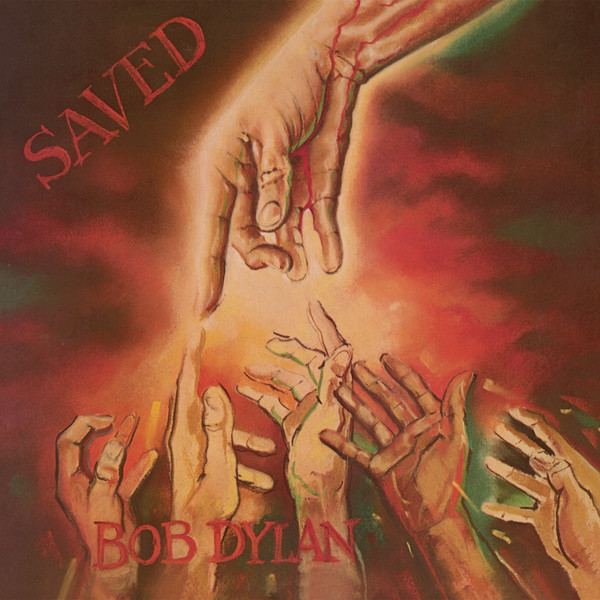
Description
Saved is the second album in the gospel trilogy of the American singer and songwriter Bob Dylan, released on Columbia Records in June 1980. The album was recorded by Gregg Hamm assisted by Mary Beth McLemore at Muscle Shoals Sound Studios in Sheffield, Alabama; with Jerry Wexler and Barry Beckett producing. The album peaked at No. 3 on the UK charts, reached No. 24 on the US charts, though did not go Gold.
Featuring Bob Dylan on lead vocals, guitar, and harmonica, backed by his live band at the time: Spooner Oldham and Terry Young on keyboards (with the latter also providing vocals), Fred Tackett on guitar, Tim Drummond on bass, and Jim Keltner on drums. Background vocals provided by Clydie King, Mona Lisa Young, and Regina Havis. Also featuring guest appearance by producer Barry Beckett.
Saved was included among CCM Magazine’s Top 10 Albums of 1980.
Bob Dylan’s second album since his conversion to Christianity is quintessential contemporary black gospel, mostly. The usual soulful Dylan-esque lyrics, sometimes directly from scripture and always delivered from the heart, combine well with the black musical style. Lyrically, the album relies not on subtleties or metaphors but rather on the composer’s personal response to his relationship with his Lord.
While last year’s Slow Train Coming LP could be considered didactic in tone, Saved stands openly as a declaration of Dylan’s deepening faith – sometimes questioning, sometimes testifying and sometimes simply reflecting on his broadening Christian experience. If Slow Train Coming with its strong social commentary failed to convince a few die-hard, old Dylan fans that his religious imagery was more than symbolic, Saved will certainly erase their doubts. The joyful witness and thanks expressed in the asertive rocking title song, «Saved» and the sincere and humble delivery of «What Can I Do For You», a song of servanthood, should alone be enough to do the job.
Although not cut live, Saved is basically a concert album. Dylan is backed by his road band, with the same basic arrangements performed in concert. Vocals by Clydie King, Regina Havis and Mona Lisa Young lend the album a big sound that flies free despite the absence of Mark Knopfler’s clean guitar licks (which strongly influenced the mood of the slower, and somewhat slicker, Slow Train production). Co-producers Jerry Wexler and Barry Beckett reportedly finished Saved in only five working days, perhaps accounting for the LP’s spontaneous feel.
Dylan seems to have reached directly into the core of the American gospel music tradition for Saved. His combination of Anglo-Saxon hymnody and black rhythms should serve to remind Christian artists (who sometimes forget) that the key to reaching hearts with Christ’s message is not necessarily found in attaining the most “commercial” sound but rather in couching the simple elegance of the Truth in music which reaches back into the listener’s cultural heritage.
The album sleeve of Saved displays a verse from Jeremiah, Chapter 31: “Behold, the days come, saith the Lord, that I will make a new covenant with the house of Israel, and with the house of Judah.” (v. 31). Dylan has retained his Judaic heritage as the basis for his new-found Christian beliefs. Perhaps this at least partially explains his affinity for the American black musical response to the Christian experience.
In Slow Train, Dylan points to the persecution shared by the Jewish and black peoples in ancient and recent history. He is no doubt also acutely aware that the history of the early Church clearly demonstrates that Christians also must be prepared to be persecuted for their beliefs. Many Christians today, however, are far from willing to accept this radical Christian tenet. Perhaps this is the reason that on Saved, Dylan saves the most challenging cut for last: “…Are you ready? Are you ready to meet Jesus? Are you where you oughta be? Will He know you when He sees you? Or will He say, ‘You’re apart from Me?’ Are you ready?” [CCM (Records – What’s New), July 1980]
From the title refrain of “I’ve been saved by the blood of the lamb” to the hand-of-God cover art, to the Scripture-quoting inner sleeve, Dylan left little doubt where he was coming from on this one. The rock music cognoscenti picked up on that and subsequently called it Dylan at his preachiest. Although the song-writing is perhaps not as memorable as on Slow Train Coming, Saved nevertheless benefits from being heavily energized by black gospel influences. In particular, the expressive trio of female backing singers gives a rather unique stamp to this outing. The coupling of rock and gospel is especially effective on «Solid Rock» and the driving title cut. Slower moods characterize side two, where titles like «Pressing On», «In The Garden», «Saving Grace» and «Are You Ready» all helped assure 1980 Christian music fans that they had indeed “bagged the big one”. Dylan would to continue to explore Christian themes for one more full album (1981’s respected Shot Of Love) before expanding to other topics. [Ken Scott, The Archivist, 4th edition]
Saved (2007 Reissue)
I guess there are many reading this who can remember vividly the shock of hearing that Bob Dylan had become a born again Christian. At the time his career was on the slide as the music world changed around him. During the last night of his world tour of 1979 Dylan announced to the audience that he had become a Christian. Later that year came ‘Slow Train Coming‘ which went to number three in the charts as people clamoured to find out if his Christianity was a gimmick. From the passionate lyrics of the album it was quite clear that it was not. In 1980 this album, the second of his Christian trilogy, was released. ‘Saved’ has a “live” sound to it with Jerry Wexler and Barry Beckett at the helm as they were on ‘Slow Train Coming’, but this time they keep the production grittily organic. Both «Saved» and «Solid Rock» are remarkably energetic with Beckett’s superlative boogie piano impossible to resist while «Covenant Woman» and «What Can I Do For You» are excellent ballads. Like its predecessor it was panned by critics but the truth was that it was the lyrical content that they hated because musically this is up there with anything else and even now more than 25 years later this still sounds like the classic that it truly is. Whether you can remember it first time round on crackly vinyl or whether you weren’t born at the time this is one CD that you really should have in your collection. [Philip Croft, Cross Rhythms, June 2007]
> Apple Music (https://music.apple.com/us/album/saved-remastered/717154574)
LP tracklist:
Side One
A1. “A Satisfied Mind” – 1:57
A2. “Saved” – 4:00
A3. “Covenant Woman” – 6:02
A4. “What Can I Do for You?” – 5:54
A5. “Solid Rock” – 3:55
Side Two
B1. “Pressing On” – 5:11
B2. “In the Garden” – 5:58
B3. “Saving Grace” – 5:01
B4. “Are You Ready” – 4:41
Note: Simultaneously released on 8-track tape, cassette, and 12-inch vinyl LP by Columbia Records. Later re-issued on CD.
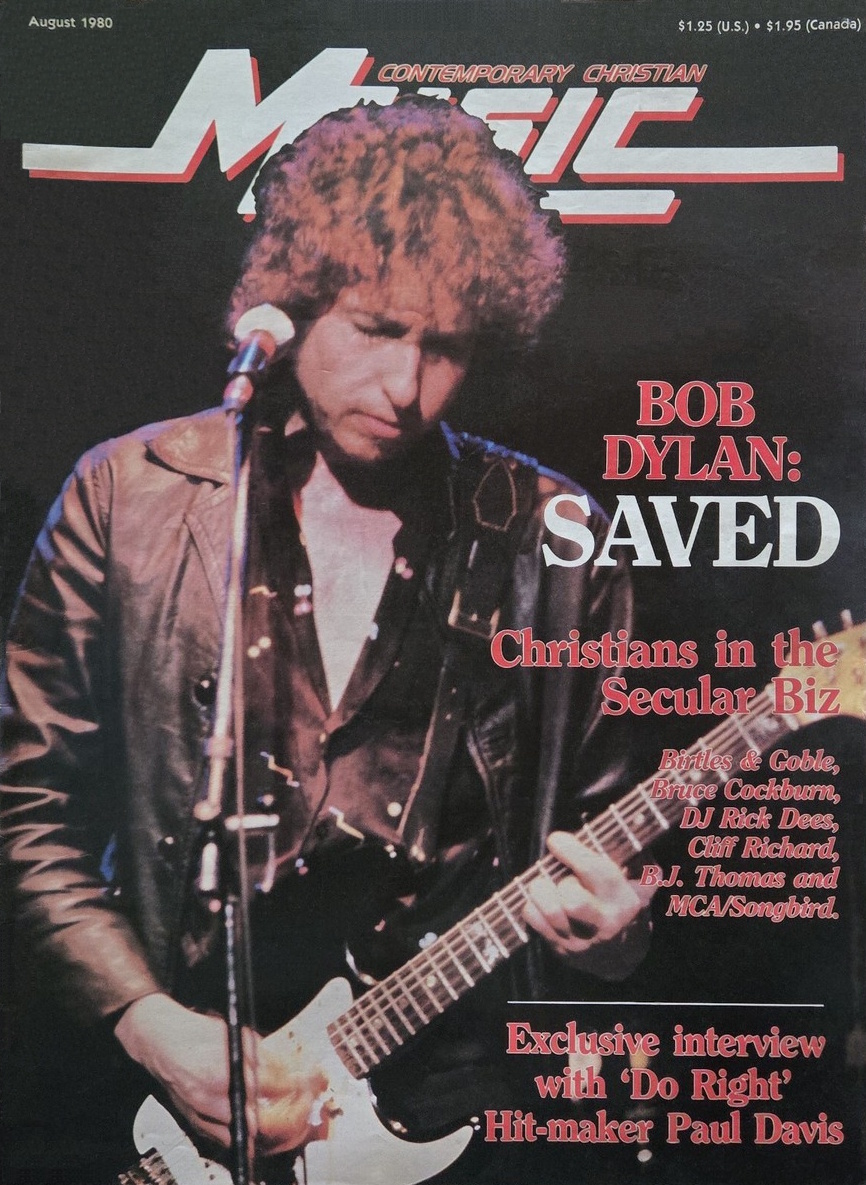 The August 1980 issue of CCM Magazine featured a cover story on Bob Dylan.
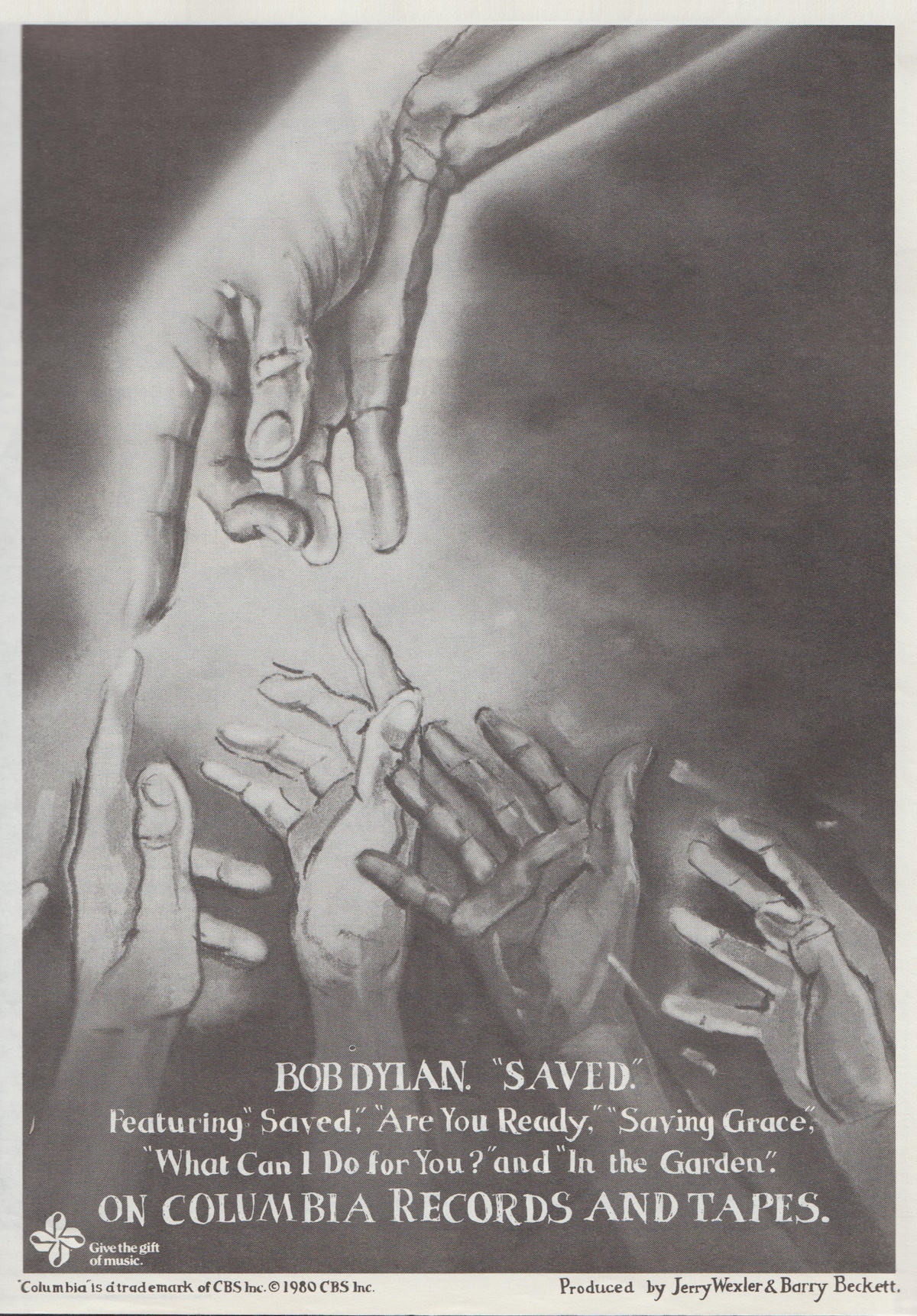 An advertisement for Bob Dylan’s album Saved was featured in the July 1980 issue of CCM Magazine.
A full-page advertisement for Bob Dylan’s Saved was featured in the June 21, 1980 issue of Billboard Magazine.
Reviews
There are no reviews yet.