Description
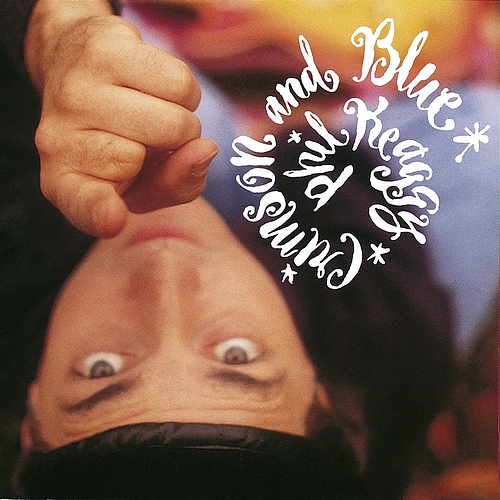
Crimson and Blue is the fourteenth solo album by the American singer, songwriter, and guitarist Phil Keaggy, released on Myrrh Records in March 1993, a division of Word. The album was recorded during the summer of 1992 by Bill Deaton at The Dugout in Nashville, Tennessee; with Lynn Arthur Nichols producing. (“Crimson signifies the literal flesh and shed-blood cost of God’s merciful intrusion into human lives. It is the color of holy sacrament and of royal sacrifice. Blue … speaks of the weight we may carry in this world, of the haze and shadows that light must filter through this side of heaven, of what it means to be human … and ultimately of our undeniable need for the crimson.” – Phil Keaggy)
Note: A disc titled Revelator featuring outtakes from the Crimson and Blue sessions, with a focus on the more upbeat guitar-rock songs, was released the same year. A different version of Crimson and Blue simply entitled Blue – featuring three new songs plus rock remixes – was released in the mainstream music market in 1994, manufactured and distributed by Epic Records.
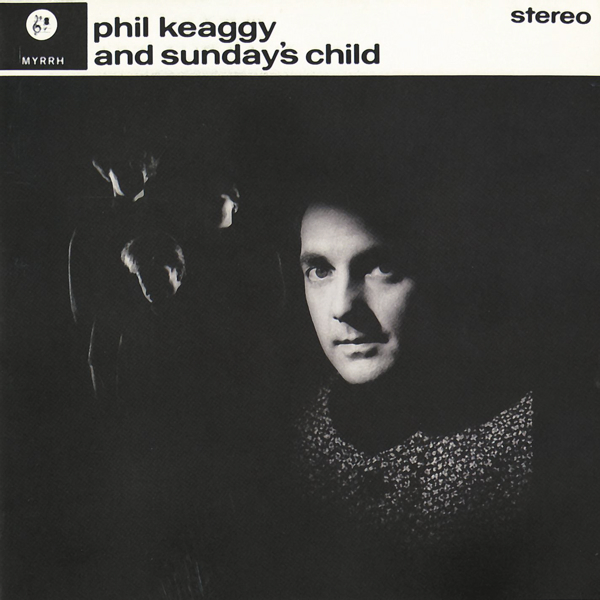
Crimson and Blue is the last album of Phil Keaggy’s ’60s Britpop inspired album trilogy released between 1988 and 1993. (Sunday’s Child and Find Me In These Fields being the first two installments.) Much like Find Me In These Fields, the previous installment, quite a few of the songs on Crimson and Blue (particularly those in the “Blue” section of the album) have the feel of a power rock trio – featuring Keaggy on guitars and an ace rhythm section consisting of Chagall Guevara bassist Wade Jaynes and Glass Harp drummer John Sferra (Glass Harp was Keaggy’s early ’70s power rock trio signed to Decca Records), as well as Phil Madeira and Lynn Arthur Nichols sitting in on Hammond B-3 organ and additional guitar, respectively. (Both Madeira and producer Nichols actually were members of Keaggy’s late 1970s rock outfit Phil Keaggy Band.)
Inspired bluesmanship, pop craftsmanship, Beatlesque influence, and Glass Harp style fret articulation come together to make this recording what some are calling “the guitar album Keaggy fans have waited years for.” This tour-de-force of electric guitar playing features awesome riffing and extended jams reminiscent of late ’60s and early ’70s power rock trios. There’s actually no more than two or three takes per song, and most of the solos were tracked live. The sound of the recording can be attributed to the amps and guitars used – an old Gretsch, Rickenbackers, the Gibson, and Vox amps. The mix is superb across the entire album and the arrangements spot on. The songwriting is strong as well. A landmark retro-rock album of jam-oriented nature. “A tour de force of ’60s and ’70s power trios and extended jams, Phil Keaggy’s Crimson & Blue has songwriting a few cuts above most of the material that inspired it…” according to All Music Guide.
It must be tough being Phil Keaggy. Despite having one of the most vociferously followings in Christian music, somebody’s always crabbing about which guitar he picks up! But on ‘Crimson and Blue’, Phil sounds as if he’s having more fun than he’s had in quite awhile, and the joy is contagious.
Keaggy opens the Crimson section by converting the 1966 Ray Repp worship chorus, «Shouts of Joy», into a Scottish-inflected rocker with a martial beat. Phil is at his most confident vocally, and as he scatters staccato guitar riffs throughout, he seems to be delivering a musical “in your face” to those wondering if he would ever again heed Spinal Tap’s admonition to set the amps on “11.” The rhythm section is provided by original Glass Harp (Keaggy’s first band) drummer John Sferra, bassist Wade Jaynes from Chagall Guevara, and organist Phil Madeira; their loose, swinging groove is prominent throughout the album. Keaggy shows command of both ends of his vocal register on «World of Mine», talk/singing the intro and first verse, before exploding into his higher range on the chorus, which reminds us that if we expect folks to take our beliefs seriously, we need to step outside our sheltered Christian existence and “be a flicker in this fallen dark world.” «Everywhere I Look», the album’s first single, comes next, elevated slightly above its airplay-safe conventionality by a lyrical guitar break and a «Penny Lane»-styled piccolo trumpet bridge. That sets the tone for the shameless Beatles homage «Love Divine». The nostalgia continues, appropriately, on «Reunion of Friends», which contains slide guitar riffs, vocal harmonies and ethereal keyboard passages reminiscent of Beatles proteges Badfinger. Keaggy caps the cut with a sweeping solo which Sferra punctuates with crisp drum fills.
The emotional peak of the first half of the album comes with Keaggy’s cover of one of Van Morrison’s most profound religious songs, «When Will I Ever Learn to Live in God». Though he’s doubtfully high on the playlist of many of our readers, Morrison’s passionate poetry would sound good sung by just anyone; interpreted by as fine a singer as Keaggy, it’s on a par with Van’s own version. The imagery is achingly vivid, made more so by Keaggy’s sinewy guitar phrases and Madeira’s wispy organ lines which float out of the speakers like an Irish mist. Following that somber interlude, «Stone Eyes» finds Phil uncorking the extended soloing hinted at during the first 30 minutes of the album. As Keaggy’s guitar chops through the arrangement like a chisel, he mixes skittering figures with a few twists of his trademark volume-knob twiddling. Keaggy concludes the Crimson set with a remake of his own «I Will Be There», displaying jazzy, Wes Montgomery influences, a side of his playing not often seen.
If that display of fret prowess only whets the appetites of Keaggy’s electric acolytes, then the four-song Blue set will definitely have them genuflecting and groaning “We’re not worthy.” «Don’t Pass Me By» is a slow-boiling call to social responsibility; this British blues workout, in the tradition of Cream and Blind Faith, has Keaggy and Madeira filling the roles of Clapton and Winwood. Keaggy next tackles a traditional tune, «John the Revelator», reeling off some paint-peeling choruses during the body of the song, before stretching out on a three minute coda where he interpolates vocal and musical quotes from Cream’s version of Willie Dixon’s «Spoonful». Before you can recover from those eight minutes of intensity, the band rears back and shuffles in with another eight minute tune, «Doin’ Nothin’».This stinging media indictment not only offers Keaggy’s best vocal on the album, but the tremendous four minute tag offers a two-fisted reply to the remaining naysayers who still think Phil’s recent efforts have been wimpy. Jaynes, Madeira and Sferra don’t fade into the wallpaper either; their funky backing makes it plain this is more than a Phil-fest. Lest the listener become over-stimulated on wattage, Keaggy pulls in the reins for the finale, «Nothing But The Blood», bringing the musical focus back to a single voice and guitar, and the lyrical focus back to the Source.
But wait – there’s more!!! As if this 70 minutes of brilliance weren’t enough, Keaggy offers the truly insatiable another 40 minutes worth of treats on a specially-priced EP called ‘Revelator‘. This collector’s item features the single mixes of «Everywhere I Look» and «John the Revelator», a shorter, alternate mix of «Doin’ Nothin’», some studio patter & “lounge lizard” jamming and a 12 and a half minute instrumental opus called «Further Adventures of». If you want just a taste of high-wattage Keaggy before making the big purchase, this EP is an attractive sampler of an artist at his peak. [Bruce A. Brown, CCM, March 1993]
– Can you tell some more about «Doing Nothing»? What made you write that song?
Well, the song «Doing Nothing» was written in the mid 80s. It was a song to be considered for ‘Sunday’s Child‘ but as you can see the song has a completely different flavour than what ‘Sunday’s Child’ ended up being, not to mention the fact that the song went through three entirely different arrangements. The first one was very Dire Straitish. The second one was more Cream/Blind Faithish, the last one was more Bo Diddlyish, with, you know, the tink, tink, tink you hear often today. U2 used that particular rhythm. The song was originally written after a sit-com programme on primetime TV. It was a comedy and you heard the laugh tracks, it was obviously artificial, there wasn’t a live audience like they did in the good old days or like Tracy Ullman uses a live audience. But it wasn’t funny. The concept wasn’t funny and it had to do with a moral concept. And the actual slant of the particular programme I was watching was basically making light of a very grave situation. It had to do with teen pregnancy, and abortion. Something people really go through and struggle with; when someone becomes pregnant and they don’t want to be and what all that means. The way it was handled by the producer and directors just really discouraged me. Since then it has actually gotten worse on television. So I’m not a big fan of television. At best I tolerate it. I really look for things to see, the kind of programmes that build character and come from a moral point of view, just like movies and programmes used to be in the old days, not that television was ever perfect. But the song is just me getting a few things off my chest basically. And talking about producers and directors, they audition ladies who want to be big stars, little stars, they want to be film stars. In a lot of ways, they’re being exploited. These days are days in which women are really speaking up about their rights, they don’t want men to trample all over them and yet many women who want their independence seem to be saying yes to everyone who offers them a good deal, and sometimes at a great cost of their own personal self worth and self esteem and character. So, I said a lot more that I wanted to about that song: We took a message and tried to lighten the background, the musical structure in which the lyrics find their place, so I wouldn’t come off like I would point my finger at you. It’s basically like a commentary but put across tongue-in-cheek.
[Excerpt from an interview with Phil Keaggy, published in Cross Rhythms Magazine No. 18, December 1993]
> Apple Music (https://music.apple.com/us/album/crimson-and-blue/1165976564)
CD tracklist:
01. Shouts of Joy – 5:54
02. World of Mine – 5:38
03. Everywhere I Look – 4:26
04. Love Divine – 2:23
05. Reunion of Friends – 4:11
06. All There is to Know – 3:47
07. When Will I Ever Learn to Live in God – 6:40
08. Stone Eyes – 7:01
09. I Will Be There – 6:51
10. Don’t Pass Me By – 3:44
11. John the Revelator – 8:04
12. Doin’ Nothin’ – 8:25
13. Nothing But the Blood – 2:44
Note: Simultaneously released on cassette and CD by Myrrh Records. A disc titled Revelator featuring outtakes from the Crimson and Blue sessions, with a focus on the more upbeat guitar-rock songs, was released the same year. The album was also released under the title Blue in the mainstream music market featuring a different tracklist as well as slightly different CD cover artwork. A remastered version is available at Bandcamp along with two Bonus Discs, and as well two Radio Special Discs:
https://philkeaggy.bandcamp.com/album/crimson-and-blue-remastered
https://philkeaggy.bandcamp.com/album/crimson-and-blue-bonus-disc-a-demos-performance-tracks
https://philkeaggy.bandcamp.com/album/crimson-and-blue-bonus-disc-b-session-jams-outtakes
https://philkeaggy.bandcamp.com/album/crimson-radio-special
https://philkeaggy.bandcamp.com/album/blue-radio-special
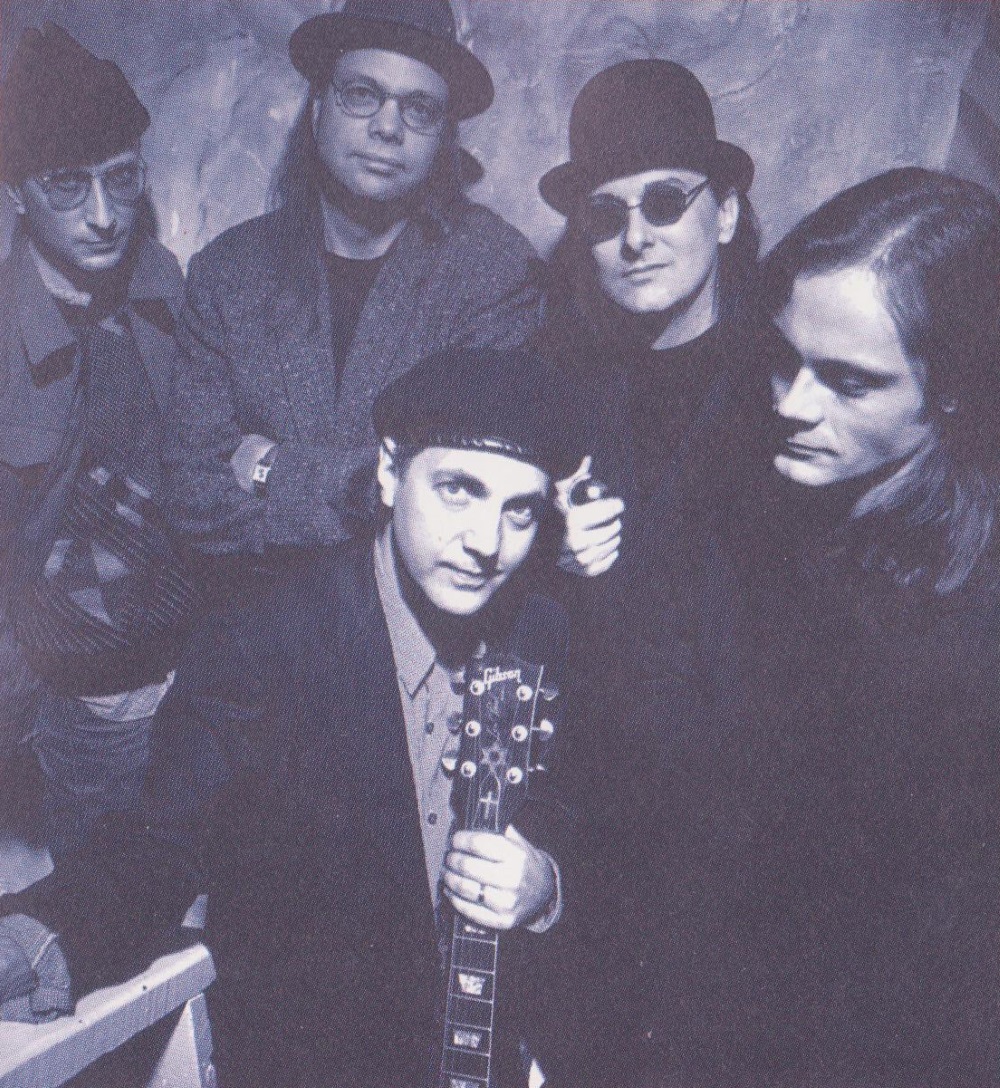 The Crimson and Blue Session Band: Phil Keaggy front, and in the back (L-R) John Sferra, Phil Madeira, Lynn Arthur Nichols, and Wade Jaynes.
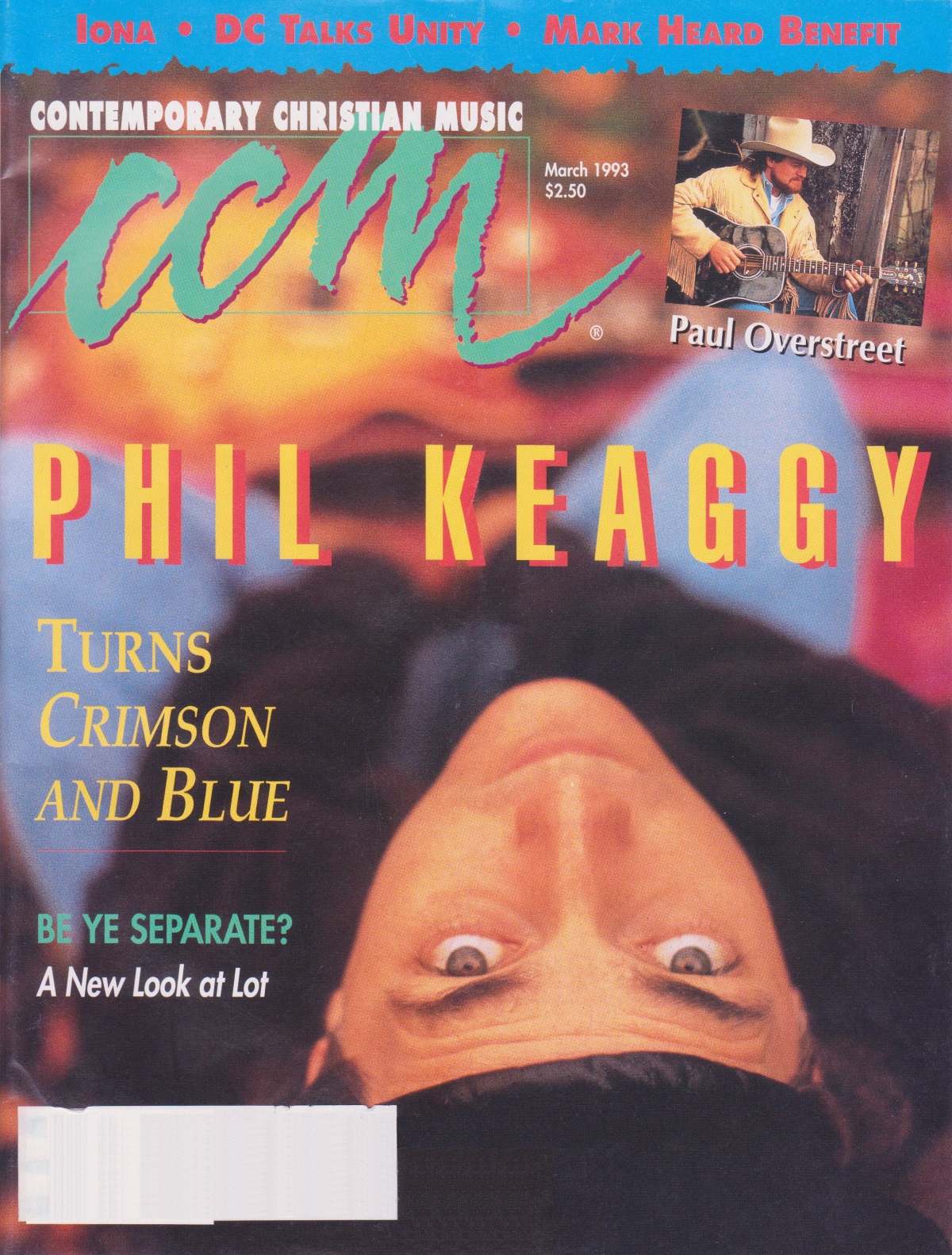 The March 1993 issue of CCM Magazine featured a cover story on Phil Keaggy.
 A full-page advertisement for Phil Keaggy’s Crimson and Blue was featured in the March 1993 issue of CCM Magazine.
“I Will Be There” (MUSIC VIDEO)
Crimson Radio Special (AC Version) + Blue Radio Special (ROCK) (hosted by Jon Rivers).
Phil Keaggy was a special guest along with Rex Carroll of Whitecross for Petra’s 50th anniversary concert in Nashville. Bob Hartman along with Phil and Rex play together on Phil’s classic “John the Revelator.” Backup band was Not Ashamed. (11/4/2023)
CREDITS. Produced by L. Arthur Nichols. Recorded at Dugout, Nashville, TN, summer ’92. Mixed at Battery Studios, Nashville, TN. Engineered and Mixed by Bill Deaton. Additional engineering by JB. Second engineering by Cary Summers, Lee Groitzsch, and Martin Woodlee. Mastered by Doug Sax at the Mastering Lab, Los Angeles, CA, with assistance from Gavin Lurssen. A&R Direction by Mark Maxwell. Art Direction by Diana Barnes. Design by Margo Chase Design. Photography by Michael Wilson. Band Photography by Ben Pearson.
Musicians: THE BAND – Phil Keaggy (Guitar, Lead Vocals), Wade Jaynes (Bass), John Sferra (Drums), Phil Madeira (Keyboards, Hammond B-3 Organ, Background Vocals), Lynn Nichols (Guitar, Background Vocals). SPECIAL GUESTS: John Painter (Mellotrone, Trumpet), Mike Mead (Percussion and Background Vocals on track 3), Ashley Cleveland (Background Vocals on track 7), Jimmy A. (Background Vocals on track 11).
Reviews
There are no reviews yet.