Description
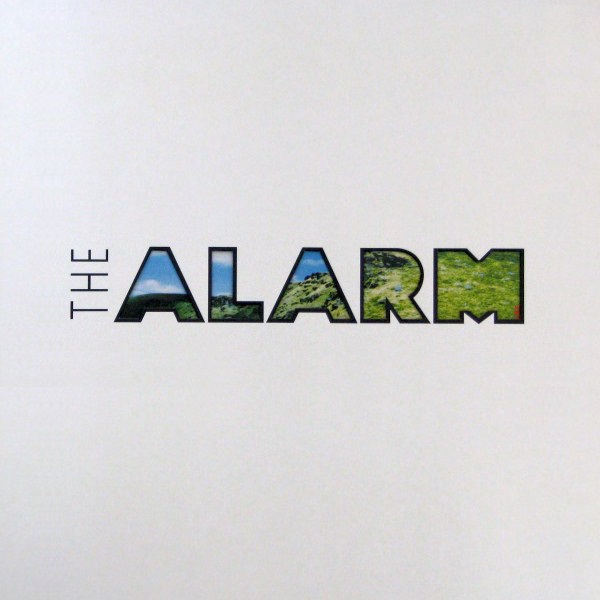
Change is the fourth studio album by the British alternative rock band The Alarm, released on I.R.S. Records in September 1989. The album was recorded at The Skylight Suite with Tony Visconti producing. Mixed by Visconti at his Good Earth Studios in London, England.
It’s been seven years since The Alarm first burst upon the American music scene with the brash anthem «The Stand» (“Come on down and meet your Maker/ Come on down and make the stand.”) The group has spent much of that time dodging criticisms of being a U2 clone. But the passion with which lead singer Mike Peters invests his songs is every bit as heartfelt (and often less calculated) as that of Bono. And as a writing team, Peters and Eddie MacDonald, who composed the bulk of the songs on ‘Change’ take a back seat to no one.
‘Change’ is primarily an examination of the bleak social and economic conditions in the band’s home country of Wales. The album does not offer a lot of simple solutions, and pulls no punches with its descriptions of Welsh life. Many of the coal mines which once provided jobs for thousands of Welshmen have been played out, in scenes described in «Black Sun» and «A New South Wales». The despair of unemployment is borne out in «Hardland» and «Where a Town Once Stood». The need for love from a source greater than oneself are the only suggested balm for these deep wounds. Peters’ pleas for human love can be heard in «Sold Me Down the River» and his cry for heavenly help on «The Rock» and «A New South Wales». ‘Change’ is not an easy album to listen to, but is a tribute to the resiliency of the human spirit, no matter what the country of one’s origin. [Bruce A. Brown, CCM, January 1990]
When it comes to album titles, the Alarm has never wasted words. And why should they? From their first full-length LP, ‘Declaration’, to the musically muscular ‘Strength’, and now with ‘Change’, these guys know how to nail down the main point of an album with a single word.
‘Change’, appropriately enough, finds the Alarm in a period of transition that began with their last studio effort, ‘Eye of the Hurricane’. The post-punk anthems and introspective pieces of more recent times have been replaced with tunes linked by a new unifying theme. This collection of 14 songs (12 on vinyl) is steeped in the green valleys and gray mills and mines of the Alarms native land – South Wales.
The musical quality of ‘Change’ is different, too. There’s a vintage early 70s rock ‘n’ roll feel to this record, occasionally augmented by piano and strings under the direction of veteran producer Tony Visconti (T. Rex and David Bowie). And it’s also worth mentioning that those big spikey hairdos and costume like duds that the Alarm used to favor are nowhere to be seen.
The Alarm’s overriding concern on ‘Change’ is the fate of their homeland and fellow Welsh people. Ruled by England since 1282, Wales has maintained a strong identity through it’s own language and customs. (Peters recorded the vocals of this record in Welsh as well, and the resulting album, ‘Newid’, has been released there.) The industrial revolution brought strip mines and factories to Southern Wales, in stark contrast to the beautiful grazing lands in the north. And now as the mining industry plays itself out, there’s a very real concern for Wales’ economic future, which is reflected in the song «A New South Wales». Mike Peters sings, “The black heap stares, it blocks out the sky/ Where’s the future in the place/ The question hangs unanswered/ All eyes on a new born babe.” Other songs on ‘Change’ like «Devoloution Workin’ Man Blues», «Hardland», «Where A Town Once Stood» and «Prison Without Prison Bars» examine other, more personal aspects of these weighty concerns.
As emotionally involved as they seem to be with their subject matter, the Alarm hasn’t forgotten the bottom line – ‘Change’ is a darn good rock ‘n’ roll album. And «Sold Me Down the River» is the most irresistible single they’ve ever recorded. Take a gutsy vocal by Peters, add a raunchy guitar hook from Dave Sharp, and mix in some solid rhythm courtesy of Twist and Eddie MacDonald, and you’ve got a song with “Instant Classic” written all over it – a rock ‘n’ roll strut in the tradition of Marc Bolan’s unforgettable «Bang A Gong» (also produced by Visconti).
There’s lots more to appreciate about ‘Change’ – like the tough, blue collar rock of «Devolution Workin’ Man Blues» or the inspirational «Born to Run» knock-off, «No Frontiers». Or how about the Alarm’s ode to the plight of modern industrial humanity, «Prison Without Prison Bars» or the quietly powerful «Rivers to Cross».
With ‘Change’, the Alarm have shown they’ve got the potential to bridge three generations of rock. Inspired by the D.I.Y. ethic and punk power of the late 70s, Mike Peters & Co. have come of age in the 80s as a viable musical unit. All of which stamps the Alarm as a band to watch in the 90s. Stay tuned for another worthwhile effort from these guys in a year of two. [Greg Easterling, Harvest Rock Syndicate, No. 4, 1989 (Volume 4)]
> Apple Music (https://music.apple.com/us/album/change-1989-1990-remastered/1324868134)
LP tracklist:
Side One
A1. “Sold Me Down The River” – 4:09
A2. “The Rock” – 4:39
A3. “Devolution Workin’ Man Blues” – 4:11
A4. “Love Don’t Come Easy” – 4:08
A5. “Hardland” – 4:09
A6. “Change II” – 2:52
Side Two
B1. “No Frontiers” – 3:53
B2. “Scarlet” – 4:18
B3. “Where A Town Once Stood” – 3:48
B4. “Prison Without Prison Bars” – 3:48
B5. “Rivers To Cross” – 3:42
B6. “A New South Wales” – 4:47
Note: Simultaneously released on cassette, 12-inch vinyl LP, and CD by I.R.S. Records, with the cassette and CD versions featuring two bonus tracks; “Black Sun” and “How The Mighty Fall”.


Reviews
There are no reviews yet.