Description
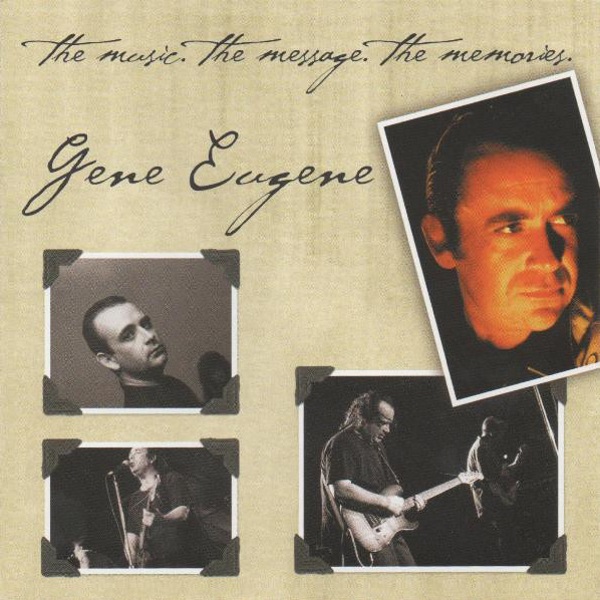
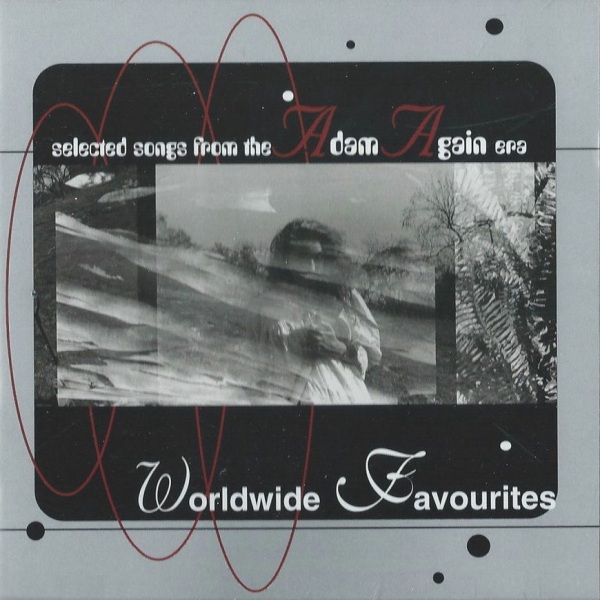
The Music. The Message. The Memories. is a tribute compilation album featuring works by the American singer, songwriter, engineer and producer Gene “Eugene” Andrusco (April 6, 1961 – March 20, 2000) of Adam Again, Lost Dogs, and the Swirling Eddies fame, posthumously released on KMG Records in 2000.
Music Falls Silent in a Magical Green Room. Fans nationwide are shocked by the death of 38-year-old Gene Eugene, the man who set a new tone for Christian music.
by WILLIAM LOBDELL, Los Angeles Times
In the Green Room this week, the talk was all about Gene Eugene. His gifts as a critically acclaimed singer, songwriter, musician and producer. The role he played in shaping more than 300 records over his career. The alternative rock band, Adam Again, he started in the early 1980s that brought Christian music out of the Dark Ages. And his funky recording studio – the beloved Green Room itself, on the first floor of his Huntington Beach home – which served as the breeding ground and flophouse for hundreds of bands, Christian and secular, famous and struggling. So when Eugene, 38, died unexpectedly Monday, mourning musicians and friends from across the country immediately hopped on planes and flew into town. They headed straight for the Green Room, where old friends talked long into the night about the remarkable life of Gene Andrusco, known to everyone as Gene Eugene. “He was way too young and way too vital for this to happen,” said John Thompson, founder of True Tunes, a magazine that covers the progressive Christian music scene. “Pulling him out of the equation is a huge loss for Christian music. If you were to combine Phil Spector, John Lennon and Booker T. [Jones] and make them into one guy, it’s about that devastating.” Early Monday morning, friends found Eugene dead on the floor of his studio. An Orange County Sheriff-Coroner’s official said the cause of death hasn’t been determined, and it could take as long as three months before all the test results come back. But friends say Eugene hadn’t been feeling well in recent weeks and complained of headaches the day before his death. His death shocked his fans, who turned to the Tooth and Nail Records Web site (www.toothandnail.com), which put up a moving tribute, to share their grief. The volume of more than 400 e-mails – 70 pages’ worth – froze the memorial bulletin board. “He was musically so talented that it was never truly recognized,” as in cases of musicians who excel at just one thing, said Brandon Ebel, president of Seattle-based Tooth and Nail. On some albums Eugene would do vocals and instrumentals and mix the tracks as well. He began in show business early, working as a child actor on such TV shows as “Bewitched” and “Wait Till Your Father Gets Home.” But he carved out his niche in show business by upgrading Christian rock music in the early 1980s through his band, Adam Again. “Christian music in the early days was in the minor leagues,” said Tim Taber of Prayer Chain, a band Eugene produced. “The thought was: ‘It’s just a Christian record, that’s good enough.’ But Gene said, ‘I want to make a record that’s good enough for MTV, for KROQ.’ And he did it, working with budgets that are a fraction of what the big bands had.”
So with his own group and then others – bands like Starflyer 59, Plankeye and Swirling Eddies – Eugene produced records that finally measured up to their secular counterparts and helped propel record companies like Tooth and Nail. “He wasn’t one of the inventors of alternative Christian music, but he was a perfecter,” Thompson said. “He took a lump of coal and shined it up quite a bit. By the ’90s, he was absolutely dominant.” The center of Eugene’s world – and arguably the center of the Christian rock world – was the Green Room, his studio and home in Huntington Beach. “The place is just legendary,” said friend Lori Lenz. “Bands would come into town and just want to hang out there. It became its own little society.” The open-door policy created an atmosphere where musicians would play on each other’s albums or simply crash for the night. “You never knew who was going to pop up,” Taber said. “Big-name musicians [would] walk in and give their two cents’ worth. The studio wasn’t spectacular, but there was magic there. The whole Orange County music scene plugs into the place.” So much as that Eugene rarely ventured outside the Green Room, unless of course it was baseball season and the Dodgers were playing. Rumor has it that Eugene would secure cash advances from recording contracts just to buy a single season ticket. “He’d sacrificed food and water to buy season tickets each year,” Thompson said. Though Eugene spent his career giving legitimacy to Christian music, friends say his faith was private. “He was a Christian, but he wasn’t evangelical,” Ebel said. “People saw Christ in him through his kindness and generosity and his servanthood.” But he wasn’t a saint. “I spent months of my life hating the guy,” said Mike Roe with a laugh. Roe was a good friend who played with Eugene in the all-star band Lost Dogs, a Christian version of the Traveling Wilburys. “He was a flake with a capital F. Any adjectives I use to describe Gene would fall short of the truth. I can’t imagine this guy gone – he’s just a three-ring circus. He balanced everything out with his extreme generosity.” That’s what people remembered about Eugene: a musical genius with a generous spirit.
He was a friend to everybody,” Taber said. “The kind of guy everyone wanted to be around. He had a quality that drew people in.” Michele Palmer and Eugene were divorced in 1994, but the two always remained close. “He really valued his friends. I mean he really valued them,” Palmer said. The couple had no children and he did not remarry. “He’s caring, sweet, funny and had a very twisted sense of humor. Most of all, he was just an incredible talent. He’s my favorite songwriter. He’s brilliant that way.” While Eugene’s studio was filled with talk about his life, the music – for this week, at least – had died. “The Green Room’s been incredibly quiet,” Lenz said. “It’s really strange to be in the studio and have no sound.”
> Apple Music (https://music.apple.com/us/album/gene-eugene-the-music-the-message-the-memories/391033275)
CD tracklist:
01. The Choir – Hey Gene – 4:29
02. Adam Again – Stone – 4:55
03. Adam Again – Worldwide – 2:04
04. Adam Again – Hopeless, Etc. – 4:49
05. Adam Again – This Band Is Our House – 5:54
06. L.S.U. – Blame – 4:26
07. Lost Dogs – Cry Baby – 2:57
08. Lost Dogs – Waiting For You To Come Around – 5:48
09. Lost Dogs – If It Be Your Will – 3:55
10. Lost Dogs – Dunce Cap – 3:56
11. Adam Again – Strobe – 2:27
12. Lost Dogs – Imagine That – 3:59
13. Lost Dogs – Breathe Deep (The Breath Of God) – 4:13
14. Mortal – Rescinding – 4:53
15. L.S.U. – Grace – 3:11
16. Adam Again – Don’t Cry – 4:05
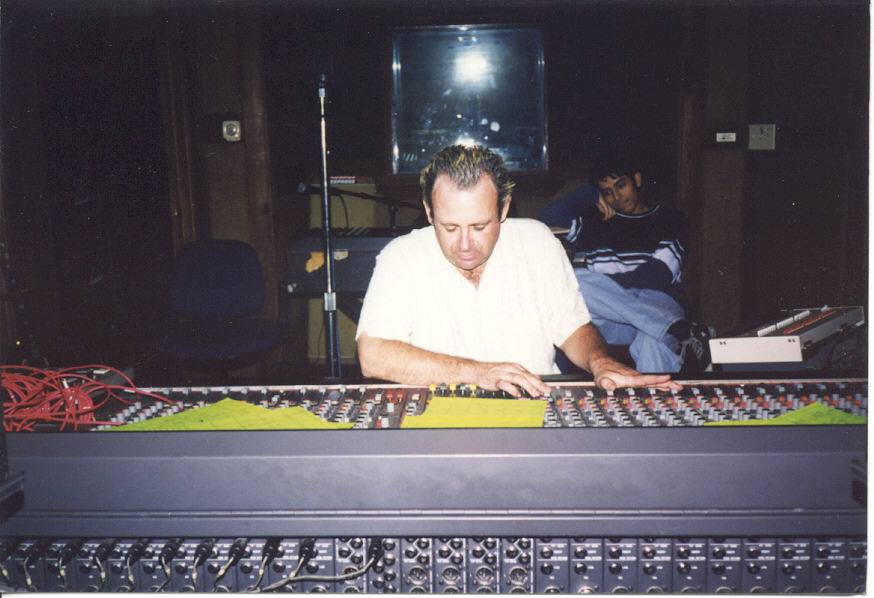 Gene Eugene engineering at his own studio The Green Room in Huntington Beach, California.
Remembering Gene Eugene (digital release on Brainstorm Artists Int’l 1/21/14) is a thoughtful look at the life and music of former member of Adam Again and The Lost Dogs, as told by his friends and peers. Testimonies surround solo recordings of 3 cover songs, the last ones Gene made.
ADAM AGAIN – The Greatest Rock Artist of the 90s
by lbangsGene Eugene, the man who was blood for the band Adam Again, passed away a year ago March 20. With a year now dividing us from his untimely death, most of the emotional brunt of this loss has waned. Now we are left with the music he created.
Claiming a band such as Adam Again as the greatest rock artist of the previous decade almost smacks of sneaky, over-assertive individuality. In a way, it is a bit under-handed; after all, how many people have even heard of Adam Again? What better way to stake out ground for one’s own unique ego than to make such a grand claim that hardly anyone is qualified to refute? Because of the music’s obscurity, the statement is virtually argument proof.
I only hope somebody will invest some dough into a valliant attempt to take me down a peg. I would love for someone to pick up Homeboys, Dig, or Perfecta, regardless of their motivation.
Gene Eugene, in one way or another, was responsible for an amazingly large amount of music. His work as producer and engineer was extensive, and his brief position as label owner enabled many interesting artists to finally release a few albums. He was also a member of a few psuedogroups, studio creations such as The Lost Dogs and The Swirling Eddies. The mere weight of his output is rather impressive. The cruel flipside to this is that his own band, Adam Again, only released 3 albums over the last decade.
Gene gave birth to Adam Again, and I suspect it was his parental pride that limited the band’s output. This was music in his own image, so to speak, and he was determined to save his best efforts for these releases.
Spinning the band’s two albums of the eighties, A New World of Time and Ten Songs by Adam Again, really reveals no hint of the creative quantum leap to come. Both are fine, if unspectacular, albums. The debut was a rather thin dance-pop album highlighted by lyrics a bit deeper than average for the genre. Ten Songs was a great improvement; Gene began to work on the album as a whole work of art rather than a collection of ten singles stiched together, the music grew more organic (though a drum machine still provided most of the beats), and Gene’s lyrics matured into introspective lines of spoken poetry. The band’s strength’s, Gene’s writing, the under-rated guitar work of Greg Lawless, the grooves of bassist Paul Valadez, and the ethereal, mysterious melodies born from the union of Gene’s soothing yet nasal vocals and the floating, haunting echoes of wife Riki Michele, were beginning to grow and merge into an odd mixture of grit and wistfulness. Additionally, the dance elements slid into the realm of funk, revealing a very subtle clue to where the band was headed.
1990 brought a new decade, a new album, and, for all practical purposes, a new Adam Again. The band finally attracted a live drummer into its ranks, and with Jon Knox pounding the hides, the rhythm section of the band gelled into a power factory of funk and soul grooves. The rest of the band reacted by stretching further into urban rock territory than ever. Gene was suffering from writer’s block, yet the only hints of this malady are a few excellent covers on the disc. Gene’s material was better than ever, and the bookends of the album were his best songs yet. «Homeboys», the album’s title track, told a haunting tale of loss while growing up in the city, while «No Regrets» was a mysterious bloodletting of sorrow and grief over an estrangement that now, perhaps because of death, was permanent. In between, Gene’s Hammond organ seeped into the entire album as an instrumental version of his own voice – sad, longing, and, still, comforting. It would never play such a pivotal role on an Adam Again album again.
Homeboys has been compared to a film noir, and this is an apt comparison if one realizes the noir elements are cross-pollinated with the sad echoes of urban tragedies of the 70s. By this point, Eugene had developed into an amazing producer, creating sparkling soundstages with little or no budget, and the spaces he left in Homeboys say as much about the album as the amazing presence of the instruments.
Despite Homeboy’s drastic improvement over the band’s former music, it threatened to be their peak. The band had never released anything approaching the quality of the album, and the sound of the album was that of a band who had finally perfectly realized their vision. Listeners really had no warning when Dig was released in 1992.
Gene’s writing block had gotten worse. The music he could create easy enough, but his heroes were songwriters such as Bob Dylan, Leonard Cohen, and Townes Van Zandt, and great music was simply not enough for him. He wanted to find his true voice for writing lyrics, and he wanted to write songs as excellent as those his heroes wrote.
Finally, he experiment with a new style, allowing his mind to stretch out in stream-of-consciousness brain storms. The words poured.
He also decided to downplay his organ work and picked up the guitar. Greg Lawless was already growing more bold with Hendrix-styled expressionistic playing. Now, the band had a dangerous double guitar front line. On Dig, this force finally attacked.
Another new element was Gene and Riki’s disintegrating marriage. They separated, and yet they both stayed in the band and, from all reports, remained good friends. Still, Gene was compelled to write about his frustrations in an honest, brutal matter, and the tension created when these lines were sung by his separated wife added an acidic fire never heard before from the band.
Adam Again not only managed to incorporate all these changes into their music, but they also perfected this new style immediately. Amazingly, Dig does not sound like a transition album. It roars like a band fully-formed and invigorated. Rock and funk were fully merged into a molten, soulful mix the Red Hot Chili Peppers would sell their souls for, a wired fury that could also mellow into a haunting dirge, and instead of sounding like a band striving for a new sound, Dig sounds like a band finally finding their true voice. With ten songs largely built around the image of the spade (used in both digging and gambling), the album was a tight, literate, funky, and rocking masterpiece.
I repeat. Dig is the greatest alternative rock album of the nineties, and hardly anybody heard it.
Why?
A few reasons stand out. First, the band was frankly much older than most units at a time when youth and rebellion were surging again. The band was certainly not grunge during a year when grunge was the rage. The band rarely toured, which is a much more important key to success than most people realize.
However, the main reason the band suffered in obscurity was the label it was released on, Gene’s own, Brainstorm (BAI). Gene Eugene was a Christian, and his early albums were released to the Christian CCM market. In all honesty, the band’s first album was simply a fairly good CCM album. However, as the band matured, their approach changed. Gene began writing songs about his life void of any Christian trappings. His faith was still there, but he no longer wrote songs attempting to twist other’s arms into accepting it. He simply wrote honest songs about his struggles in life, and even though Dig was even less of a CCM album than U2’s Joshua Tree was, Brainstorm was still locked into the CCM market. With such blazing songs about anger, doubt, and divorce, and with the lack of the word “Jesus” anywhere on the album, the CCM market wouldn’t touch Dig, and because BAI was seen as a CCM label, the mainstream radio most likely never heard the album. Appropriately enough, when I spun a few songs on my college radio show at time, three songs quickly entered my program’s top ten most requested songs and eventually topped the list. Whenever people finally heard Dig, Adam Again won new fans. Without airplay, a supporting tour, or mainstream press coverage, however, the album simply sank into the unknown.
The few fans the band had were forced to wait until 1995 for a new Adam Again release. Perfecta was not the blast of the new Dig was, but instead developed variations on the new style developed on the former album. Gene’s songwriting was frankly brilliant by this stage, with his unique alchemy of words and music reaching new heights of emotional and melodic bliss, and Perfecta contains some of the band’s greatest cuts. The album veers from acoustic ballads to danceable jams with ease, and only the inclusion of two jam-oriented songs into the middle of the disc keep the album from bettering Dig. The jams are quite excellent, but they also rip the album in two, to some degree destroying the unity of the whole. With stellar songs such as «Stone», «All Right», «Harsh» (a bitter, devastating song about his divorce with his ex-wife on background vocal!), «l.c.», and «Relapse» (perhaps their edgiest work ever), this is hardly a fatal flaw.
The album ended with four of the band’s greatest songs, and had they been released as an EP, the resulting disc would surely be one of the greatest works in rock history. «What’s Your Name?» is an enigmatic ballad about longing and release, «Unfunny» is a blazing blast against a cutting ‘joke’, «Try Not to Try» soared with a weariness and wisdom hardwon, and «Don’t Cry», a song about leaving a loved one, was surely one of the band’s most haunting songs yet, rendered even more poignant, perhaps, by Gene’s death in 2000.
Before his death, Gene was apparently rearing up to finally begin work on a new album. Several of his posts made to the Adam Again mailing list indicated that he was perhaps months away from beginning work on a new album. Of course, he had promised a new disc before, one he once titled (but perhaps only as a stalling tactic) Guadalupe. This never happened, and he died before recording a note for the new album.
Gene’s music was intensely personal, and this combined with genius is what turned many of his listeners into fanatics. I am convinced that Adam Again fans were Adam Again fans at least in part because to some degree they identified with his struggles, disappointments, and rare glimpses of peace and joy. His embrace of fragile humanity, with its many faults, led to extremely sensitive and insightful work. He may not have been a friend, but to many of us, he was a comrade, a fellow traveler who understood our tough journey more than many of our personal friends ever could. He saw what we saw; he knew the earth is largely an open sore. Like Mark Heard, he faced much rejection for painting pictures of the world as he knew it, not as he wanted it to be.
Some find this depressing. Fine. Some see a nicer place outside their window, and Gene’s music is a grim intrusion upon that view. For most of us, however, Gene inspired in ways ‘inspirational’ music is impotent to inspire. Gene sang of our stupid, useless world, its loveless limits, and its wounded citizens that wound in return for past pains (ourselves included), yet Gene also had the courage to declare that he wasn’t going to simply sit back and watch it all crumble around him. He was going to dig for something of value under the dung around him. This die-hard determination, and yes, this faith that something of value MUST lie underneath the ruins, this is what I believe inspired so many of us fans and lifted us like so little could.
As I mentioned, his death was about a year ago Tuesday. Adam Again is still much too obscure to even be considered a cult band, and most of their recordings are now out of print. It is probable that history will march on over Gene’s grave without even noticing his headstone.
It’s our loss.
Reviews
There are no reviews yet.