
Description
The Lyrical Strength of One Street Poet is the sophomore and final studio album by the American hip-hop artist D-Boy (Danny Rodriguez), released on Frontline Records in 1990. Produced by D-Boy, David Ebensberger, John Wirtz, and Tim Miner.
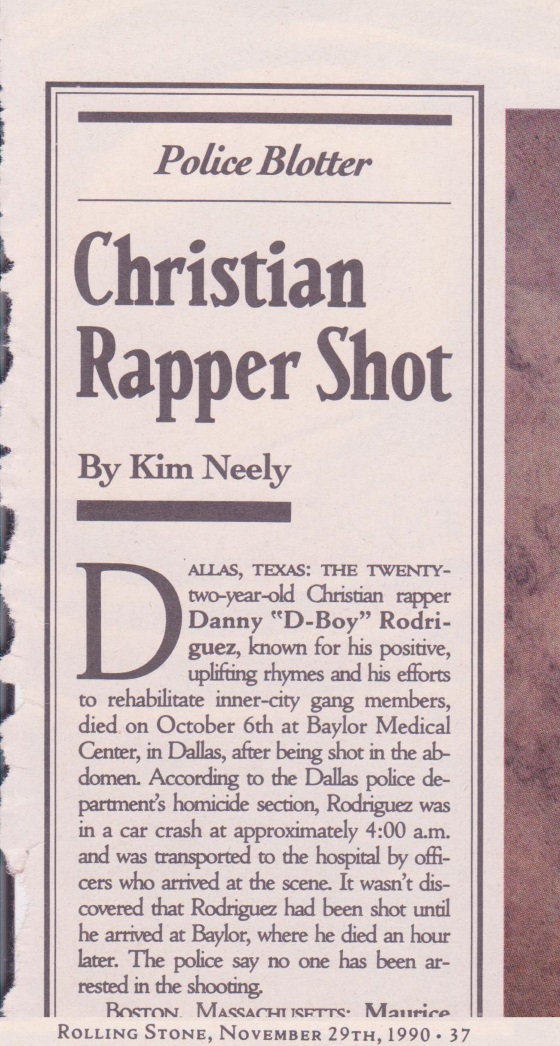
By now, all who care about Christian-made rap have likely mourned the loss of D-Boy Rodriguez. None of us will see the Preachin’ Puerto Rican again until heaven, but we can rejoice in his final testament of righteous rhyming power.
If you remember the quantum qualitative leap between the first two P.I.D. albums, then you might be prepared for the assault ‘The Lyrical Strength of One Street Poet’ is, compared to his ’89 debut, ‘Plantin’ a Seed’. Then again, the force of it still might stun you.
The set begins with swingbeat for pop radio, «That UB Urself», where D’s couplets join Tim Miner‘s silky background vocals for rollicking urging toward individuality. Next is a reprise where the same beat is slowed with some sultry horn bluster for a number that sways as it swings, all while D-Boy’s vocals come from a telephone speaker! (shades of Consolidated?)
Then the grit starts building. Few rappers can flow with speed, articulation and so little dross as D-Boy could. «Drop the Mic», «The Boy Don’t Play» and «Slackness» trace a path of increasing intensity where D takes no guff for not being of a darker hue, gives some of his morally suspect secular brothers-in-rhyme the what-for in their indiscretion and gets a plug in for his parent’s Street Church school… all while not letting Satan get a thought in edgewise.
This leads to the album’s centerpiece, «Cease for Peace», a saddening, disturbing, imminently danceable anthem of gang violence protest which doubles as a sonic montage of radio/TV reportage on gang troubles. Where it surpassese similar secular counterparts like «Self-Destruction» and «We’re All in the Same Gang», it is not so much in musical ferocity as the moral conscience of depicting a gangster caught between the knowledge of God’s love and the support he gets from his street companions. Not just chill but chilling.
After that, the themes may get lighter, but not D-Boy’s energy level. The technique of barely allowing space between tracks is utilized between the insinuating «Flow Time», a black gospel/beat box clash in «Shout», utilizing the Isley Brothers’ classic and the densest hip-house jam in Christendom yet, «God’s House». From there, it’s back to gloom in «Last Days» and the diss some contemporary Christian music artists who front on rap had coming in «Hip-Hopcracy» (paging Carman, Mr. Duncan). Finally, Miner joins Rodriguez again in a pan-Caribbean plea for the Body to be whole, «Come Back Home», similar in feel to little sister M.C. Ge Gee‘s «Unity».
We know that D-Boy can no longer tour nor make videos, but it would be criminal for Frontline to keep the fury and finesse of D-Boy a secret outside the Christian market. It’s THAT great. [Jamie Lee Rake, CCM, December 1990]
> Apple Music (https://music.apple.com/us/album/the-lyrical-strength/386175344,)
CD tracklist:
01. That UB Urself – 4:37
02. UB Urself (Reprise) – 3:31
03. Drop The Mic – 3:32
04. The Boy Don’t Play – 3:40
05. Slackness – 4:07
06. Cease For Peace – 5:51
07. Flow Time – 4:28
08. Shout – 3:01
09. God’s House – 3:54
10. Last Days – 4:03
11. Hip-Hopcracy – 4:06
12. Come Back Home – 3:58
Note: Simultaneously released on cassette and CD by Frontline Records. Both of D-Boy’s studio albums were re-issued on one CD by KMG Records in 1998.
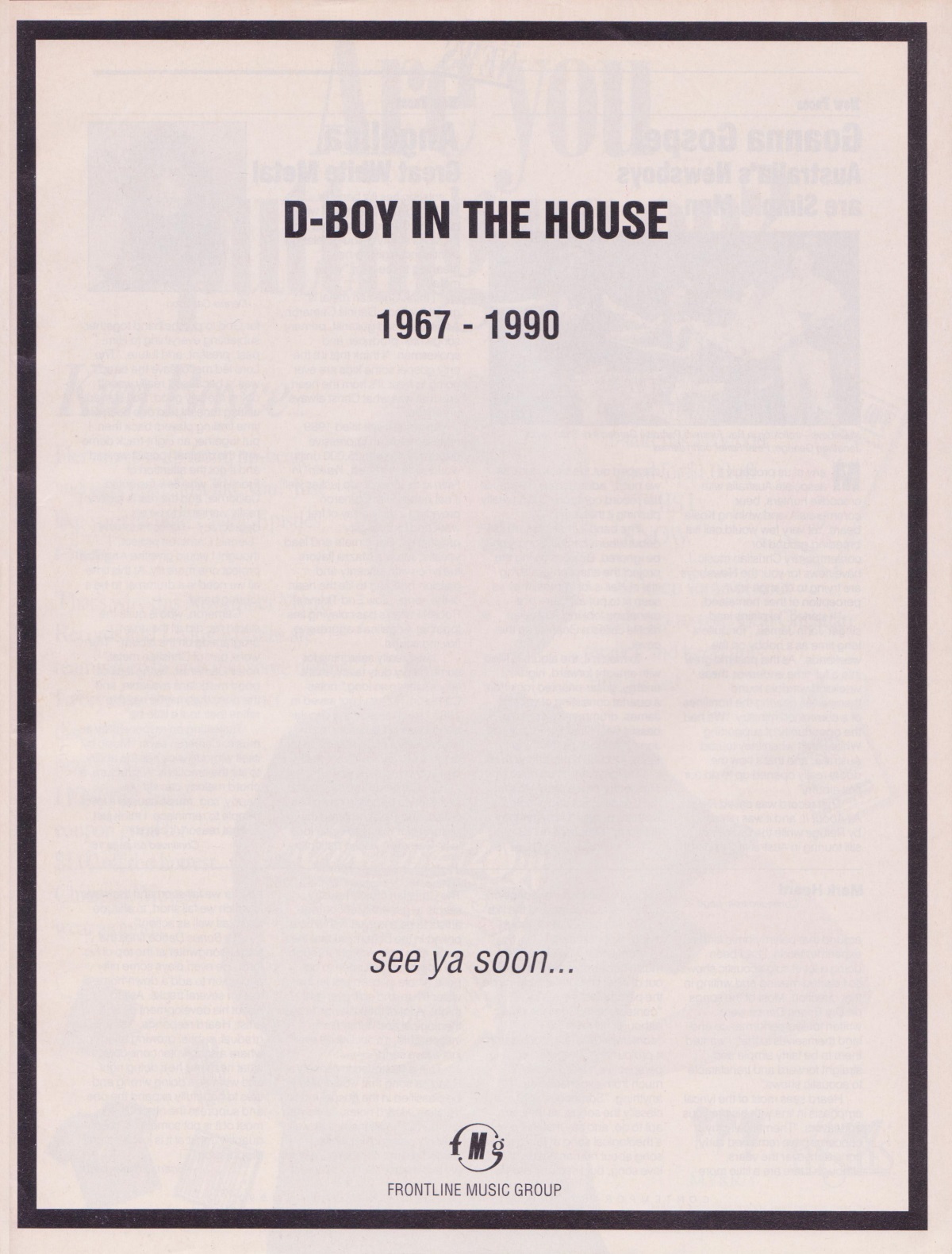 D-Boy remembered in the November 1990 issue of CCM Magazine.
Reviews
There are no reviews yet.