
Description
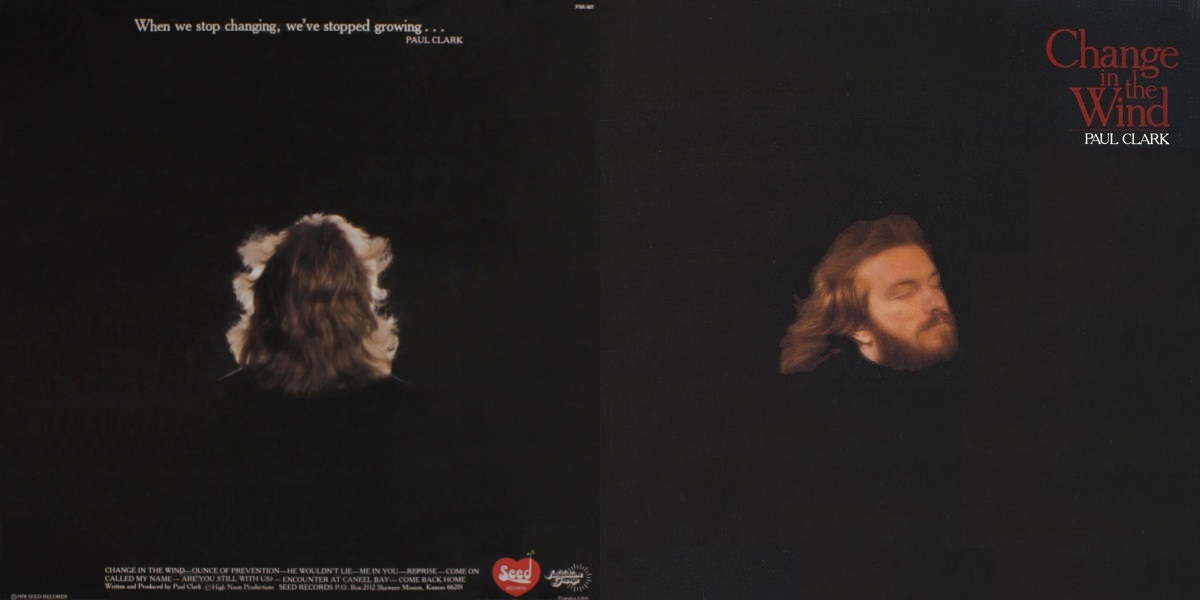
Change in the Wind is the sixth studio album by the American singer and songwriter Paul Clark, released on Clark’s own label Seed Records in 1978, through the Jubilation Group distribution arm of Myrrh Records, a division of Word. The album was recorded by Bobby Cotton at Associated Recorders in Oklahoma City, Oklahoma; starting in October 1977 with Paul Clark producing. Mixed February 1978 by Grammy Award winning engineer, John Guess at Hollywood Sound Recorders in Hollywood, California.
Paul Clark is backed by a session band consisting of Harlan Rogers (piano), Richard Bugg (Arp 2600), Curt Bartlett (1960 Epiphone Sheraton guitar), Don Juntnen (1958 Gibson Flying V through a 1959 Fender Tweed Champ Amp), Hadley Hockensmith (1962 Fender P-Bass through a Vox Fuzz Face), and Bill Maxwell (drums), with Jim Hochanadel sitting in on saxophone. Backing vocals provided by Judy Cotton, Rhenda Edwards, as well as Paul Clark.
Change In The Wind follows a pattern very similar to Hand To The Plow. Some great straight-ahead rockers, including the opening title track and «Me In You». Robust brass backing and vibrant electric guitar leads spruce up «Ounce Of Prevention», «He Wouldn’t Lie» and «Come On», once again leaving a few Steely Dan jazz-rock impressions. Lively saxophone and a hint of funky disco on «Are You Still With Us?». «Encounter At Caneel Bay» and «Come Back Home» are effective piano ballads, while «Called My Name» provides a soft-jazz mood ala Kenny G. Harlan Rogers and Hadley Hockensmith return, while Bill Maxwell joins on drums. [Ken Scott, The Archivist, 4th Edition]
From the opening grooves of the title track, it’s evident there’s been a change in the life and music of Paul Clark. Beginning with the ‘Good to Be Home‘ album, his music has become progressively tighter, and each new album contains more hard rock material than the last.
There is a new strength in Clark’s music, which his last album, ‘Hand to the Plow‘, only hinted at. Some of this is easily visible (or is that audible?) from first listening, like the change in Paul’s vocal stylings. His phrasing has improved, and he is developing a voice more suited to rock singing. The overall sound is enhanced by the impeccable musicianship of the band (Bill Maxwell, Curt Bartlett, Harlan Rogers and Hadley Hockensmith). They float like a butterfly and sting like a bee.
The strength of this album, however, doesn’t lie in the music alone. Though the word “Jesus” is never used, the lyrics are so direct and to the point that it’s almost uncomfortable. The album’s back cover quotes Clark, “When we stop changing, we’ve stopped growing.” The boldness and godly confidence exemplified in that statement pervades every track of ‘Change in the Wind’. [T.G., Contemporary Christian Acts, Vol. 2, No. 6, July 1978]
> Apple Music (https://music.apple.com/us/album/change-in-the-wind/307671862)
LP tracklist:
Side One
A1. “Change In The Wind” – 4:53
A2. “Ounce Of Prevention” – 4:33
A3. “He Wouldn’t Lie” – 3:39
A4. “Me In You” – 5:21
A5. “Reprise (Change In The Wind)” – 1:28
Side Two
B1. “Come On” – 4:06
B2. “Called My Name” – 5:37
B3. “Are You Still With Us?” – 3:37
B4. “Encounter At Caneel Bay” – 6:03
B5. “Come Back Home” – 4:03
Note: Simultaneously released on 8-track tape, cassette, and 12-inch vinyl LP by Seed Records. Re-issued on CD by Seed Records in 1990, as a part of the 2CD compilation Minstrel’s Voyage, Vol. II: 1975-1979 – Digital Reissue Collector’s Edition. As well released as a double cassette.
Reviews
There are no reviews yet.