Description
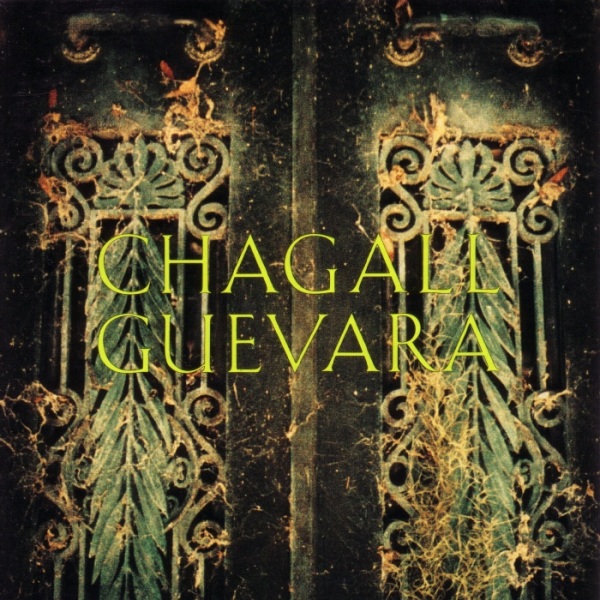
The self-titled debut album by the American rock band Chagall Guevara was released on MCA Records in January 1991. (In September the same year the album was as well licensed to Sparrow Records for distribution in the Christian marketplace, who also included the album track “Murder In The Big House” on the Sparrow promo compilation, Power Currents October 1991.) The album was recorded by David Bryson at The Bennett House in Franklin, Tennessee; with Matt Wallace and the band co-producing. It was done without any of the digital reverbs or samples used on most contemporary albums, only natural room sounds were used. Chagall Guevara features Steve Taylor on lead vocals, Dave Perkins and Lynn Arthur Nichols on guitars and vocals, as well as a rhythm section consisting of Wade Jaynes and Mike Mead on bass and drums respectively.
Upon its release Rolling Stone Magazine stated that “not since the Clash has a group so effectively turned militant discontent into passionate rock & roll and still maintained a sense of perspective and humor, however black.” And Music Express Magazine described the album as “an exceptional batch of smartly rendered lyrics set to music that is simultaneously sophisticated and raw“, and stated that “Chagall Guevara plays guitar-heavy rock with a predisposition toward dissonance, which makes it a perfect complement to the venom and dark humor of Steve Taylor’s provocative railings, which focus on loacting shreds of hope in the face of human madness.”
There are also a few non-album tracks by Chagall Guevara available elsewehere. The band first appeared on the soundtrack to the 1990 motion picture Pump Up the Volume with a track called “Tale O’ The Twister.” (The track is virtually identical to the version on their demo tape. The two other songs on that demo tape, “Murder in the Big House” and “Escher’s World”, were punched up quite a bit for their self-titled studio album.) There was also a rare B-side called “Still Know Your Number By Heart” included on the European version of the “Violent Blue” single. Finally, Chagall put together an amazing cover of “Treasure of the Broken Land” for the 1994 Mark Heard tribute album Strong Hand of Love, a track also featured on the enhanced 1996 re-issue, the double disc Orphans of God. (Chagall Guevara’s last live performance most likely was at the Mark Heard Memorial Concert held at the Massey Auditorium of Belmont University in Nashville, Tennessee, January 9th, 1993, where the band performed a cover of the Heard classic “Treasure of the Broken Land” and their own “Still Know Your Number By Heart”.)
There are bands that can be a little bit too polemic for their own good. You can easily cross the line from creating art into dispensing propaganda. One of the ways to diffuse that is to keep a little bit of humor in the music. [Steve Taylor, Excerpt from an interview featured in Music Express Magazine, April 1991]
The individual pedigrees of Chagall Guevara would truly amaze even you, our most discerning and cynical listener. Singer Steve Taylor even had a HUGE Post Modern hit, «Jim Morrison’s Grave». Produced by Matt Wallace, he of Replacements fame, this collaboration has fashioned and album of manic, guitar-driven, lyrically brilliant songs. Insightful, creative, reckless, furious, and inspiring rock ‘n’ roll is rarely found in such great depth as on this album. As Christgau would say, “A+.” [Post Modern Picks, edited by Karen Glauber – Hits Magazine, January 28, 1991 Volume 5, Issue 226]
Chagall Guevara is a Nashville band that epitomizes the most positive connotations of the word band: collective strength, camaraderie and a built-in check on egos. Guitar-group purists in search of a fix will instantly be heartened by the chiming chords that introduce the opening cut, «Murder in the Big House», like a call to arms. The tumbling frenzy of the rhythm section joins the fray, then Steve Taylor’s indignant voice falls in, asking: “When did you last look up at the sky?/ Really look at the sky and wonder?/ Used to be you could see forever/ Now there’s cracks in the canvas we’re under.”
Not since the Clash has a group so effectively turned militant discontent into passionate rock & roll and still maintained a sense of perspective and humor, however black. «Play God» aims darts at those who do just what the title says – televangelists, corporate tycoons, sleazy politicos – with a dry wit underscored by loopy, amateurish horns (the only departure from guitars and drums on the record). The manic rave-up «Take Me Back to Love Canal» takes a fun-house-mirror look at life in the ruins, complete with a catchy sing-along chorus. «Candy Guru» goes after false prophets, «The Rub of Love» scrutinizes the motives of an absentee dad, and «Violent Blue» rues the demise of idealism in this hardened age.
When piqued by some subject, as in the anti-authoritarian «Monkey Grinder», Chagall Guevara attacks corrosively. The flip side is the buoyantly textured pop of «Escher’s World» – reminiscent of Cheap Trick when the band was fab – and «Love Is a Dead Language». Finally, if your heart belongs to dada, «The Wrong George» – a tape of an apparently real-life telephone conversation with a confused old woman, set to instrumental accompaniment – will have you in stitches.
Throughout the debut, the feverish interplay of guitars – trebly-pop Rickenbakers pitted against granite-hard Les Pauls – keeps the musical amperage high, while Taylor’s match-to-a-flint voice stokes his ideas to flame. Chagall Guevara is a cathartic scream, with guitars that crunch like the apocalyptic reckoning the band believes is inevitable – and worth resisting with every remaining ounce of conviction. [Parke Puterbaugh, Rolling Stone Magazine, May 1991]
> Apple Music (https://music.apple.com/us/album/chagall-guevara/1444000995)
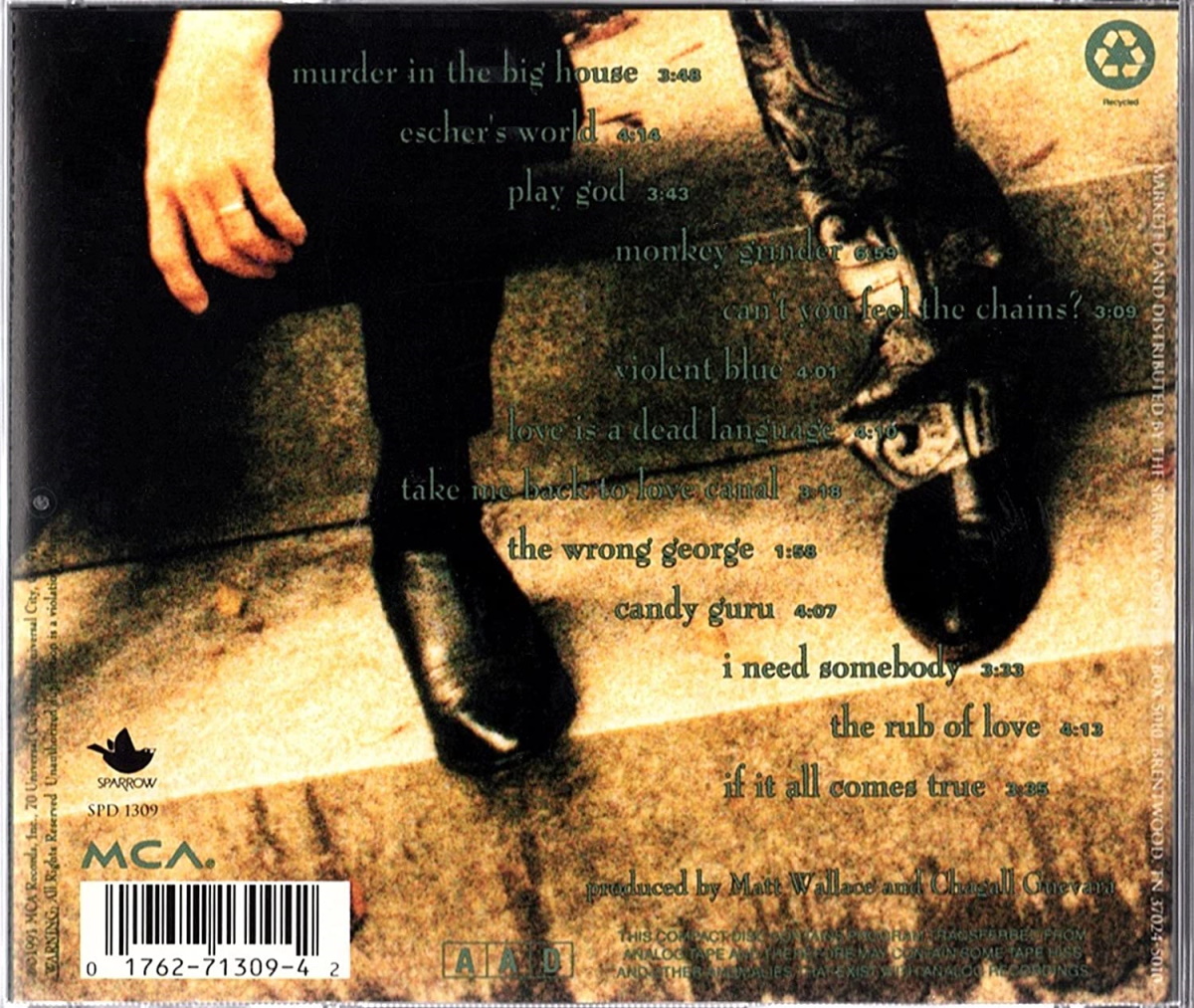
CD tracklist:
01. Murder In The Big House – 3:48
02. Escher’s World – 4:14
03. Play God – 3:43
04. Monkey Grinder – 7:00
05. Can’t You Feel The Chains? – 3:09
06. Violent Blue – 4:03
07. Love Is A Dead Language – 4:11
08. Take Me Back To Love Canal – 3:18
09. The Wrong George – 1:59
10. Candy Guru – 4:07
11. I Need Somebody – 3:33
12. The Rub Of Love – 4:13
13. If It All Comes True – 3:35
Note: Simultaneously released on cassette, 12-inch vinyl LP, and CD by MCA Records. Remastered (Remastering Supervision by Bob Ludwig) and re-issued on both CD and vinyl (pressed on both Black vinyl and Green/Yellow Marbled vinyl) by Splint Entertainment in 2022, distributed by Burnt Toast Vinyl.

“Tale ‘O the Twister” (Unreleased Video)
Well, it was bound to happen. You leave this many talented artists together in one place, at a time when they’re getting tired of being the critics’ darlings in the contemporary Christian music business (which can mean little more than modest sales by popular standards and a less than significant impact on the average record buying rocker), and they’re likely to do something utterly imaginative and aggressive that demands a larger audience. On its MCA Records debut Chagall Guevara – the combined talents of Steve Taylor, Dave Perkins, Lynn Nichols, Wade Jaynes, and Mike Mead – does just that.
But let’s get past the name first. Remember Marc Chagall, the famous artist who worked in mosaics and stained glass, and often spoke to and from his Jewish faith tradition? Remember Che Guevara, the political revolutionary? “We’re out to be revolutionary artists” seems to be the point, and while I find the sentiment noble, I still think it’s a silly name.
What isn’t silly here is the music – not one «Lifeboat» in the bunch – and in my opinion that is a very good thing. Although Perkins was an artist/producer in his own right (remember The Innocence for What? Records and work with Randy Stonehill and Servant), and the same is true of Nichols (remember Phil Keaggy Band’s … Emerging and work with Keaggy on Master and the Musician, Sunday’s Child and Find Me In These Fields), the real stepping off point for this outing is the last Myrrh release of Steve Taylor, the Perkins produced I Predict 1990. Turn up «Jim Morrison’s Grave» all the way and get a hint of the energy, creative spunk, societal rage and poetic thought behind Chagall Guevara. I predict this union of musicians will see 2000.
That this record is more aggressive, more intentionally obtuse, more broad and populist is an assumed given. However, this is not positive pop with only warm affirmations on the goodness of “love” to offer. Track after track bespeaks the brokenness of our world, and humanity’s longing for acceptance and wholeness or, to use a theological reference, salvation. The music’s raw, creative drive incarnates the liberation the songs point toward, while the songs have a melodic sensibility that Taylor never quite managed on his own. Perkins and Nichols have nailed the careless ease of dual guitar rhythms that Keith Richards and Ron Wood seemed to fashion and trademark, while Taylor’s vocal range has broadened beyond the occasional Bowie-ism to a richer, more organic growl. His rendering of «Love Canal» would impress Johnny (Rotten) Lydon.
Societal ills and their impact on individuals run through «Murder in the Big House», and «Escher’s Worlds» at the beginning to «I Need Somebody», «The Rub of Love» and the closing expression of community and faith, «If It All Comes True». Humans lose when they «Play God» and sell out to the «Monkey Grinder». You can «Feel the Chains» in a world where «Love Is a Dead Language». And no «Candy Guru» can take away the pain in eyes the color of «Violent Blue».
Clearly Chagall Guevara, aiming for major market success, has not made a record to satisfy the Christian radio audience, but then even when recording for Christian labels these fine musicians had trouble reining themselves into those constraints. Here, they make a truly eloquent rock record that bows to no one’s expectations, beyond artist satisfaction and musical integrity. That recognized, there is plenty here for this Christian music fan to delight in, and I suspect other alternative music fans who loved Taylor and Perkins way back when will find great satisfaction in Chagall Guevara’s depth and growth. It couldn’t have happenend to a nicer, or more talented, bunch of guys. [Brian Q. Newcomb, CCM, February 1991]
Years ago, a wise man named Steve Taylor told me how he and his pal, guitarist/producer Dave Perkins, were lamenting the death of new wave. The problem, he said, was that they didn’t know what the next step was. Well, wherever Mr. Taylor has disappeared to, I’m sure he would agree that Chagall Guevara is certainly a step in the right direction.
“Chagall Guevara?” I know. Sounds like a cologne. Or a Julio Iglesias cover band. Pronounce it “Chicago Vera” and it could be a professional lady wrestler. Since my review copy came sans any sort of literature – credits, lyrics, the usual – my best guess is that Chagall Guevara is a band of angry young men who grew up listening to the Stones and The Clash, and maybe grew disillusioned through previous experiences with the music industry.
“This house is crumbling/ This property’s condemned,” the vocalist intones in «Murder in the Big House», implying the band’s interest in architecture gone bad. As pieces fit together, the listener realizes the band is angry about something much larger – a fallen world. Jangling guitars, simple pop riffs, and generally cynical disposition liken Chagall Guevara to R.E.M. But while R.E.M. complains about the symptoms (politics, failed relationships), Chagall Guevara goes right to the source. The album presents a world of pain, loneliness and imperfection, where love loses its importance, money doesn’t buy what it used to, and people make the mistake of answering wrong numbers.
While that sounds pretty bleak, Chagall Guevara doesn’t seem too dragged down. They aren’t suicidal or nihilistic; just practical. A sense of humor sneaks through in places, such as the performance art of «The Wrong George», and there even appears to be a glimmer of hope at the end of the album in «If It All Comes True», as they dare to believe in the impossible.
The whole picture painted by Chagall Guevara isn’t readily available, of course – some songs only hint at what they might be about – but there are bits and pieces here and there that engage the listener. While a lyric sheet would help, I suspect the intention is to grab the listener by the collar and make them figure the album out for themselves, kind of like robbers breaking into your house and then expecting you to help them with the couch.
If that’s the plan, then the music certainly fits the bill: a couple of tunes, such as the superb «I Need Somebody», do sound like R.E.M. (on a good day, I might add), but Chagall Guevara seems to have a larger range. It’s not obvious at first; you’ve got to play it loud. «Murder in the Big House», through the sheer force of its guitars, makes an interesting dance-rocker; the slow, bluesy «Monkey Grinder» grinds away indeed, packing an unexpected wallop in its tempo; «Love Canal» has an oddly nostalgic pogo-pop feel to it, but with a much fuller sound.
Of note is the production quality, as well. Sometimes, when your basic rock combo belts out a few, the temptation is to let the guitars die with lifeless acoustics. The cuts here have a sheen to them, a nice spacious quality for the guitars to bounce you around with. It appears that, after the robbers make you help them load the truck, at least they’re kind enough to straighten your tie.
Of course, Chagall Guevara is Steve Taylor (who gave us classic ccm LP’s like I Want to be a Clone, On the Fritz, and I Predict 1990), David Perkins (Taylor’s producer the last time out, a solo artist who gave us The Innocence on What? Records, and who played and produced for Rick Cua, Randy Stonehill, and Servant), Lynn Nichols (one time member of the Phil Keaggy Band, and an A&R person for Myrrh, who also produced the latest from Keaggy, Sunday’s Child and Find Me in These Fields), Mike Mead (former drummer with Rick Cua’s band, and for Keaggy sessions); those with great expectation will certainly be delighted with the finished product. But for the rest of us all we know is that Chagall Guevara is a quality debut from a band that isn’t afraid to speak its mind – and have fun while it’s doing it. We’ll be looking for more of these guys for years to come. [Chris Well, Harvest Rock Syndicate, January/February 1991, Volume 6, Issue 19]

Reviews
There are no reviews yet.