Description
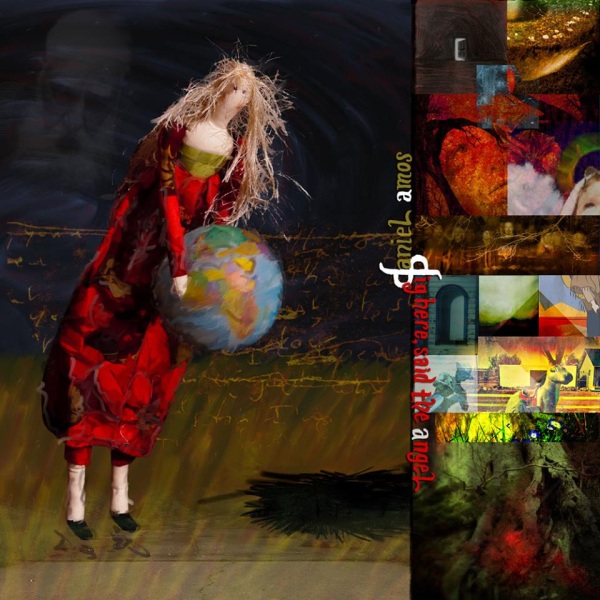
Dig Here Said the Angel is the fourteenth studio album by the American alternative rock band Daniel Amos, Kickstarter-funded and independently released on the band’s own label Stunt Records in July 2013. The album was recorded by Derri Daugherty of The Choir at Brown Owl Studio in Berry Hill and at Sled Dog Studios in Franklin, Tennessee; with band member Terry Taylor producing.
The album became a reunion of sorts – bringing in past band members Jerry Chamberlain, Rob Watson, Marty Dieckmeyer and Alex MacDougall to add their musical touches to the album. It also reunited the band with its early-1980s engineer and roadie, Derri Daugherty of The Choir fame, who engineered and mixed the project. Through a request on the band’s website and Facebook pages, fans were allowed to contribute dozens of pieces of artwork inspired by the album’s title. Those contributions were then merged into collages that were used in every aspect of the album’s artwork.
Terry Taylor, the creative force behind American rock band Daniel Amos, has always enjoyed the juxtapositions and complexities of humanity and spirituality and explored them in his work. So it’s no surprise that the opening lines of the band’s new album on the song «Forward In Reverse» should begin with a list of ironic juxtapositions, “I found a haystack in a needle, I caught an angel in a lie, I saw a hypocrite in Heaven remove a log from both his eyes,” etc, etc. But then so much of what Christ taught and the parables he shared turned everything on its head and it seems Taylor employs the same skill in a fashion that intrigues and provokes thought. This album is a double hitter as the band instantly impact you with intriguing lyrics and a musicality and catchy songs that immediately grab your attention and then somehow it has the power to grow on you with repeated listens. Not an easy feat to achieve. Daniel Amos have always had a huge helping of Beatles influences in their music and so this is awash with psychedelic period Beatles sounds and melodies even down to Tim Chandler’s melodic style of bass playing and Greg Flesch’s guitar work. The complexities and perplexities of life are married together as Taylor puzzles out the intersection of life and death, the confusion of injustices and the reality that the older we get, the less we can make sense out of some of our ordinary situations even in the midst of faith. All of these elements are wrapped up in his songwriting. There are so many highlights here from the epic title track to the blissed-out conclusion «The Sun Shines On Everyone» which brings the album to a close. «Our New Testament Best» sees Taylor delivering a song which sounds like the songwriting and vocal delivery of another Taylor, Steve! Like a lot of Daniel Amos albums, this latest one is deceptive! Whilst seeped in Beatlesy harmonies, melodies and musical elements, the band have their own strong personality which always comes through and beneath the surface there’s Taylor worrying away at the dilemmas that tease at all of us. «Jesus Wept» deals with the disappointments and fears that ordinary life throws up whilst «We’ll All Know Soon Enough» offers the hope of resolution in the afterlife. In a world of plastic, superficial, upbeat Christian music that feels more like a baby’s dummy designed to keep us childlike and pacified, this feels more like mature Christian music aimed at those who aren’t too afraid to ponder the deeper issues and not seek out superficial answers. It’s another winner from a fearless band. [Mike Rimmer, Cross Rhythms, August 2013]
> Apple Music (https://music.apple.com/us/album/dig-here-said-the-angel/681141948)
CD tracklist:
01. Forward In Reverse – 3:43
02. Jesus Wept – 4:42
03. Dig Here Said The Angel – 6:07
04. Our New Testament Best – 4:39
05. Love, Grace, And Mercy – 5:39
06. Now That I’ve Died – 5:20
07. We’ll All Know Soon Enough – 4:50
08. Waking Up Under Water – 4:07
09. The Uses Of Adversity – 3:50
10. The Ruthless Hum Of Dread – 6:05
11. The Sun Shines On Everyone – 5:59
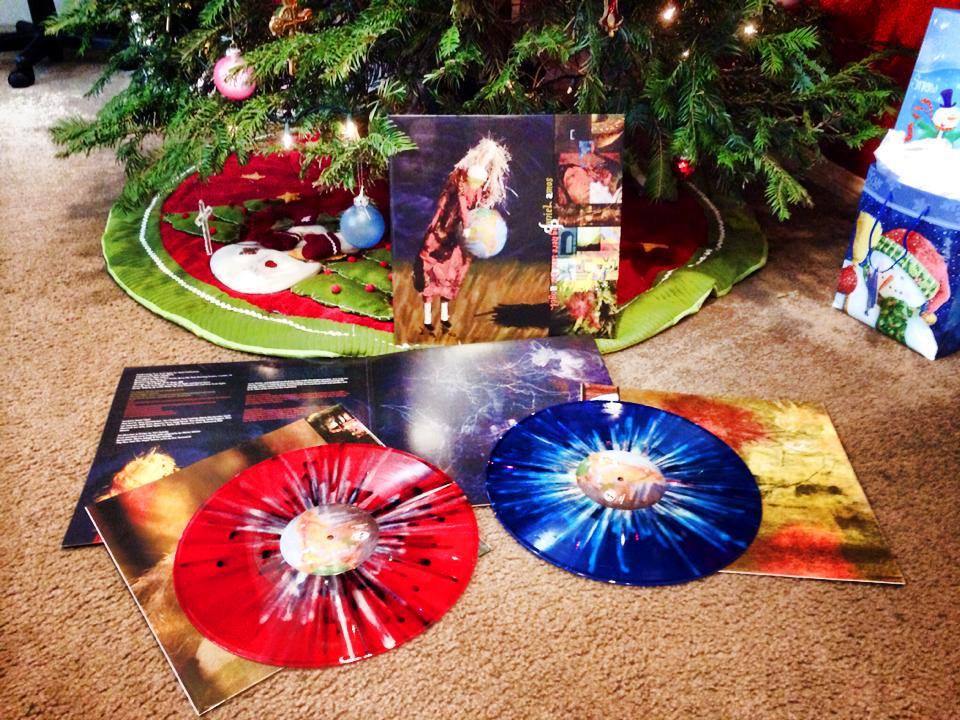
Note: Simultaneously released on CD and 12-inch vinyl double LP featuring gatefold sleeve (Limited Edition colored vinyl double LP with a bonus track; “Dig Here Said The Angel” – Remix). Available at Bandcamp: https://terryscotttaylor.bandcamp.com/album/dig-here-said-the-angel
https://terryscotttaylor.bandcamp.com/album/dig-here-radio-disc
Tim Chandler (February 3, 1960 – October 8, 2018) – bass snippet from a rehearsal for the Daniel Amos record Dig Here Said the Angel, Nashville, TN, February 2013.
Group songwriter, Terry Scott Taylor has always been interested in the dichotomy between the flesh and the spirit, and man’s inability to adequately understand or express God’s mercy and grace. Daniel Amos spent the whole of their classic 1983 album, ‘Doppelganger‘, exploring the former and most of 1987’s ‘Darn Floor – Big Bite‘ tackling the latter, while each of their albums traverse this complex but rewarding subject matter at least in part. The first song on the band’s exceptional new LP, ‘Dig Here, Said the Angel’, «Forward in Reverse» opens the record, wrapped in a wonderfully baroque arrangement of swirling keys and ringo-esqe drum-fills, setting the tone for the immense tunefulness of the project. The cut contains such paradoxical couplets as “I found a haystack in a needle, I caught an Angel in a lie, I saw a hypocrite in heaven, remove a log from both his eyes” which speak to both concepts actually, expounding on the biblical truism that God uses the foolish to confound the wise. This type of parabolic lyrical juxtaposition is nothing new for Taylor, who liberally sprinkles «Banquet at the World’s End» from 1993’s ‘Motorcycle‘ with equally whimsical musings, as both songs provide a fitting prelude to the earthy subjects tackled consequently on their respective records. A master at illuminating the folly that ensures people of faith, both corporately (including well-deserved swipes at the hypocrisy of certain gnostic-influenced branches of the modern church) and individually, when given over to the human side of their equation, Taylor seems to look inward on ‘Dig Here’ more so than on any other Daniel Amos release. Perhaps as a result of a 5-year period in which his family was visited by several crisis situations involving health and other matters, only to see some of their pain alleviated by a somewhat miraculous moving of God, through his people, Taylor’s perceptive observations carry more emotional depth than ever before. A favorite Taylor subject – death – is given an ultimately hopeful treatment on the gorgeously catchy, ebullient, «Jesus Wept», as the lyric presents death as a sort of precursor to something better than a life weighed down by our flesh. “Know, before he danced, Jesus wept”. It brings to mind the words of Paul when he writes, “Nevertheless to abide in the flesh is more needful for you,” a connection even more pronounced on the Dylan meets REM charmer, «The Uses of Adversity», where Taylor sings, “My heartbeat is the pounding of your iron hand breaking me. Who knows where this shattering love is taking me. ‘Cause you’re much too small if you’re not a Mystery. So don’t send me rain if I bloom in drought. No don’t send me certainty if somehow it’s best for me to doubt.”
«Love Grace and Mercy» pits one of the discs MANY memorable melodies with a lyric that again exposes the contradictory idea that God’s gifts are given to us despite (and even amidst) the wretchedness of our own ways. «Now That I’ve Died» is a witty look at the unattainable nature of perfection in this life, sung in the sort of accented speak-sing more representative of Steve Taylor, than Terry. This is marked, as well as many other songs, with a decided indebtedness to psychedelia and the fabulous 60’s, not the least of which is the ominously foreboding «We’ll All Know Soon Enough», a not so assured look at what awaits us in the afterlife. Greg Flesch’s guitar work on this cut is especially compelling as he occasionally drops in nuanced, reverb-heavy grace notes ala Buffalo Springfield’s «For What It’s Worth», the ambiance of which is conveyed throughout the cut.
Melodies and harmonies abound – as do keyboards, mellotron, and orchestration. But the album has a decidedly “rock” vibe with its hefty rhythm section and swirling (pun intended) psychedelic guitars.
Some of the credit for keyboard and orchestral bits has to go to Rob Watson, a friend and long-time collaborator with the group. But according to Taylor, much of it is DA’s own rocket scientist/guitarist Greg Flesch pulling double (or triple) duty on keyboards and other instruments. The project has a very complex sound, and it is gorgeous. This might be DA’s best sounding album yet, and was engineered by the lovely AND talented, Derri Daugherty, in between gravy breaks.
Of course, a big part of the DHSTA’s classic-yet-modern sound is Terry’s strong melodic sensibilities and the interesting things he does with his voice. That voice is in strong form on this album. As on other albums, DHSTA is also full of background vocals. Sometimes it is Terry going back and harmonizing with himself. Sometimes the other band members pitch in, especially in the star studded “Sunshine Street Choir” on «The Sun Shines on Everyone».
Tim Chandler’s bass is way up in the mix, and that is a wonderful thing. As always, it booms and does creative and unexpected things that somehow come out melodic and pleasing to the ear. Ed McTaggart’s drumming is rock steady, but there’s much more maturity and variety to it on DHSTA. McTaggart follows the aesthetic of ‘Less is more’, reminding many of greats like Jim Keltner and Ringo Starr.
The album is a virtual treasure trove of accessible hooks and singable melodies, yet that accessibility is never compromised by cheap musical shortcuts. The song-craft is strong and creative, as with most any DA album, and bears the question as to why these guys have seen their audience shrink so much in the years since their early to mid 80’s heyday. The album ends with the especially encouraging «The Sun Shines on Everyone» in recognition that God plays no favorites among his people, His grace and mercy is available to ALL who accept it. It also mirrors a song from the past, at least in form if not melodically, as the anthemic quality of the chorus and the multi-voiced choir that sings it recalls the stirring «The Shape of Air» from ‘Darn Floor – Big Bite’. On that note, while there are several moments that recall past DA songs (the initial melody of «The Ruthless hum of Dread» recalls ‘Doppelganger’s «Here I Am» with eerie accuracy) ‘Dig Here, Said the Angel’, in typical DA fashion, sounds nothing like any other album in the groups long discography. One of the reasons this band has survived ever-changing musical environments, fitful recording schedules, and multiple side projects, is the fact that they (and in particular, Terry Taylor) are such restless musical visionaries. They seem incapable of repeating themselves or even of making a poor album. If this is a band you have very little reference point for, I would urge you to discover their music. If I were asked to name the band I thought was most responsible for positive artistic growth in the Christian music sub-culture, I would, without hesitation answer Daniel Amos. I would even go so far as to name Terry Scott Taylor one of the 5 best pop/rock era songwriters to ever grace our planet (with names like McCartney/Lennon, Wilson, Dylan) and not blink an eye. We in the Christian music world have long ignored a remarkable talent and it is, simply, no longer tenable to continue doing this. ‘Dig Here, Said the Angel’ is as good as any album Daniel Amos has ever released, and maybe as good as any Christian album released in the past 25 years. This music needs to be heard. [Shawn McLaughlin, Christian Musician, September/October 2013]
Chad Thomas Johnston (patheos.com) : One of the things that makes Dig Here Said the Angel so strong – and something that is also present throughout Daniel Amos’s discography – is the way you write about spiritual things. So many Christian writers veer into propaganda, but you have a gift for writing poetically, profoundly, and even humorously about your spiritual preoccupations. Would you be willing to talk a bit about your approach to writing about theological things?
Terry Scott Taylor: There is a line in the song «The Uses of Adversity» (on Dig Here Said the Angel) that makes reference to our inability to fully grasp the profound nature and ways of God. It says “You’re much too small if you’re not a mystery.” My lyrics often contain a certain lack of directness and certitude because I’m often trying to express those things that are essentially inexpressible.
While God isn’t confined solely to the words used to describe him or his actions, as a Christian I do believe that God’s true and essential nature is revealed in Jesus of Nazareth, who said, “If you’ve seen me, you’ve seen the Father.” So I’m obviously not saying that there’s absolutely nothing about God that can be known, or that nothing that can be said about him using simple, plain, linear sentences, and therefore there’s no use in even trying to say anything about Him.
But I will say I enjoy engaging the imaginations of my listeners by sometimes taking a kind of out-of-left-field approach. By poetically restating old, familiar truths in a new and unique way, I hopefully will enable the listener to hear with fresh ears something he or she may have heard or read a thousand times before but which, through repetition, has lost its power to inspire passionate commitment to whatever principals or directives it’s concerned with. Of course, while God’s Spirit is ultimately responsible for these things, lyrics can be used by the Spirit as a springboard into action.
All that being said, my first duty as a songwriter is to write a good song. I’m an artist, not a theologian. Hans Rookmaaker said, “Art needs no justification,” and I would agree. However well-intentioned, I despise musical bait-and-switch intended as religious indoctrination.
The idea that it’s the Christian artist’s duty to only write utilitarian “Gospel” songs as a means of “converting” the listener, or “uplifting” the believer, or the idea that a song’s worth is directly proportionate to its power to propagandize, is repulsive to me.

Reviews
There are no reviews yet.