
Description
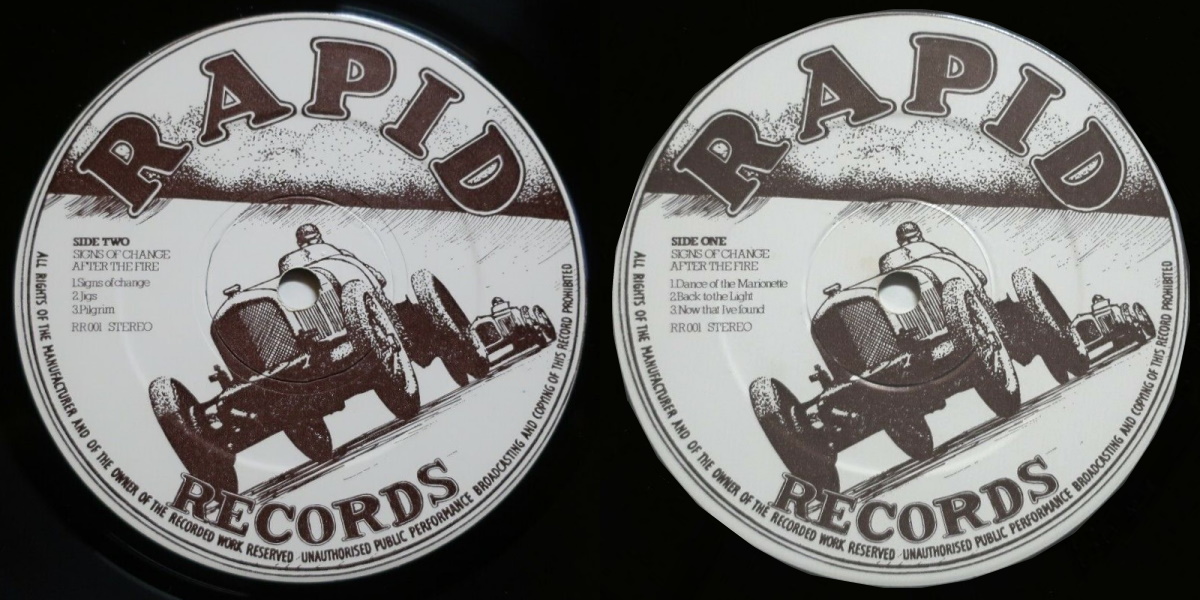
Signs of Change is the debut album by the British progressive rock band After The Fire, self-released on the band’s own label Rapid Records in April 1978. The album was recorded by Andy Kidd and Dave Aston at ICC Studios in Eastbourne, England; with the band producing. Re-issued on CD by the band in 2005 featuring four bonus tracks.
The band’s original line up was formed in 1971 as a three piece with keyboard player Peter Banks joined by bassist John Leach and drummer Ian Adamson but only lasted a year before drifting apart. Banks spent 1973 as a member of the Christian folk-rock band Narnia before reforming After the Fire in 1975 with Adamson, this time joined by bass player Robin Childs and Andy Piercy on guitar and lead vocals (the Signs of Change CD re-issue includes a few bonus tracks featuring this line up). Before joining After The Fire, Piercy had been working with Ian Smale as the folk rock duo Ishmael & Andy, much loved in the Christian counter culture for their album Ready Salted, released on Myrrh in 1973.
The band then went through several personnel changes before settling on Banks on keyboards, guitarist and vocalist Andy Piercy, and a rhythm section consisting of bassist Nick Battle and drummer Ivor Twydell. The new lineup played the London music scene and eventually became a favorite at the Marquee on London’s Wardour Street. In 1978, the band recorded their first album at ICC Studios in Eastbourne, England, through frustration with Christian record labels released on their own label, Rapid Records. At the time After The Fire played progressive rock in the style of early Genesis, Greenslade, and Yes, though that would soon change.
After the release of the Signs of Change LP in early 1978, line up changes happened again. Nick Battle left After The Fire to join Writz and Andy Piercy switched to playing bass as the band experimented as a three piece, playing energetic synth-based rock. Later guitarist John Russell joined the band. (Russell actually was a former bandmate of Banks from his days with Narnia.) Before the year was out After The Fire had been signed to CBS Records and embarked on recording their next album, entitled Laser Love. The album was released the following year as the band’s first out of three studio albums for the major label CBS Records.
Anyone who’s been collecting Christian music awhile will have noticed that good ’70s progressive rock is an ultra-scarce commodity. The essential LPs can be counted on one, maybe two hands. Signs Of Change is most certainly one of them. After The Fire is probably more known for their three excellent UK-released techno-pop/new wave LPs and the hit «Der Kommissar», but for their premier custom project the original line-up of Peter Banks (keyboards), Nick Battle (bass), Andy Piercy (guitar), and Ivor Twidell (drum) was hobnobbing with the synth-driven art rock sounds of groups like Yes and Emerson, Lake & Palmer. Though Banks’ multi-faceted quirky synthesizer sounds are readily recognized and still the driving force behind their trademark sound, the context is entirely different. Most all the album’s six or so (they meld together) songs extend into the 7-10 minute range with lengthy instrumental breaks. Lyrically it’s more “overtly Christian” then their ensuing albums. It’s fairly outstanding stuff, professionally done. [Ken Scott, The Archivist]
Signs of Change (CD Re-issue)
The first time I ever heard this album I was at a ceilidh run by the Methodist Society at Newcastle Uni in the summer of 1978 a few weeks after I’d become a Christian. It was played during the break for food. I remember asking someone whether it was Genesis or Yes or something of that ilk and discovered it was something called After The Fire! There was also excitement amongst this bunch of Methodists that the band had been booked to play Reading Festival. Now more than 25 years later the album has finally seen its way onto CD! There will be tears shed amongst 40 and 50 somethings at the news. In fact my mate Martin had just forked out £30 for a vinyl copy of this on Ebay and DID cry when I told him it had come out on CD! Ho hum! It’s recognised as a classic and I hadn’t listened to it for years so hearing these tunes took me straight back to being a teenager and were at once familiar and nostalgic. This was an independent recording in 1977 at ICC studios in an attempt to get the band a mainstream record detail. The band had never really gone for the Christian labels. However they found themselves recording seven and eight minute epic pieces with superb musicianship and songwriting at the time that punk was sweeping aside dinosaur rock like this and the band found themselves deeply unfashionable even though both John Peel and Alan Freeman gave this play on Radio 1. It was an immediate fan favourite though and shows off Andy Piercy when he was guitarist with the band and the amazing talents of keyboardist Pete Banks. Tracks like «Back To The Light», «Dance Of The Marionette» and the title cut are propelled along by Ivor Twydell‘s drums (that bass drum does sound a little like a cardboard box at times!) and Nick Battle’s bass (soon to exit the band after recording this to join Writz). But it’s the epic «Pilgrim» which is the highlight here based on Bunyan’s Pilgrim’s Progress. Years after the band had changed styles shortened the length of their songs to a more fashionable three minutes and signed to CBS, diehard fans would shout for «Pilgrim» during quiet moments in their live shows! It is a fine piece of prog rock though! Sadly it’s doubtful that the reformed ATF will play any of this at their gigs. However with three bonus cuts of earlier material of variable sound quality and a demo of «Back To The Light», this is a must for any ATF fan and it’s great to have it on CD! Now bring on the double CD of their CBS material! [Mike Rimmer, Cross Rhythms, January 2005]
Signs of Change (CD Re-issue)
Signs of Change (Angel Air) was After The Fire’s self-produced record from 1978, which sold 4K copies in the first few weeks. At that time they were a progressive rock band, with the line up of Andy Piercy: vocals, acoustic and electric guitars, tambourines; Ivor (Iva) Twydell: drums; Nick Battle: vocals and bass; Peter Banks: vocals, Mini Moog, keyboards including Hammond C3, and piano.
Progressive rock was made possible by the AOR (album oriented rock) radio format, as the songs were too long for singles. Two songs here (or pieces when they are instrumental) run to over 11 minutes each. Also, progressive albums tended to fuse elements of rock and classical music. The main ways that this record differs from the later ATF songs and singles is that the songs tend to be slower, lacking the frantic and frenetic pace of some later new wave, with long instrumental sections, more complex music with more changes, sometimes tackling larger or deeper concepts in the lyrics.
There were only six songs on the original record, the last being a rock opera based on John Bunyan’s «Pilgrim’s Progress», with different parts for the Narrator, Evangelist, and Pilgrim. Included is an eight page booklet with lyrics and notes “by Memory” and “Banksy” (which are both monickers of keyboardist Peter Banks), and “Andy”. All of the songs are by the songwriting team of Piercy/ Banks, except «Jigs» on the original record is by Piercy, and «Hallelujah», an instrumental bonus track built around the hymn, «Christ the Lord is Risen Today» is by Banks.
If I’m reading the booklet right, some of the bonus tracks date back to around 1974. «Samaritan Woman», inspired by the Biblical story of the woman at the well, is like an epic rock opera piece clocking in at over 11 minutes. A likable thing about this CD is that the Moog sounded like a synthesizer, and therefore the album is filled not with keyboards emulating orchestras, but being played as instruments with their own unique sounds beneath the skillful hands of Peter Banks. [Gord Wilson, 2022]
> Apple Music (https://music.apple.com/us/album/signs-of-change/409353675)
LP tracklist:
Side One
A1. “Dance of the Marionette” – 7:00
A2. “Back to the Light” – 4:30
A3. “Now That I’ve Found” – 8:10
Side Two
B1. “Signs of Change” – 8:04
B2. “Jigs” – 2:58
B3. “Pilgrim” – 11:22
Note: The album had a limited release of 4000 copies, initially only sold by direct mail order, later on one-stop distributors were to purchase in quantity. Remastered and re-issued on CD by the bands own label RoughMix in 2005 with four bonus tracks (featuring Robin Childs on bass and Ian Adamson on drums): “Samaritan Woman” (11:01), “Dreamaway” (9:50), “Hallelujah” (6:31), and “Back to the Light” demo version (05:09).
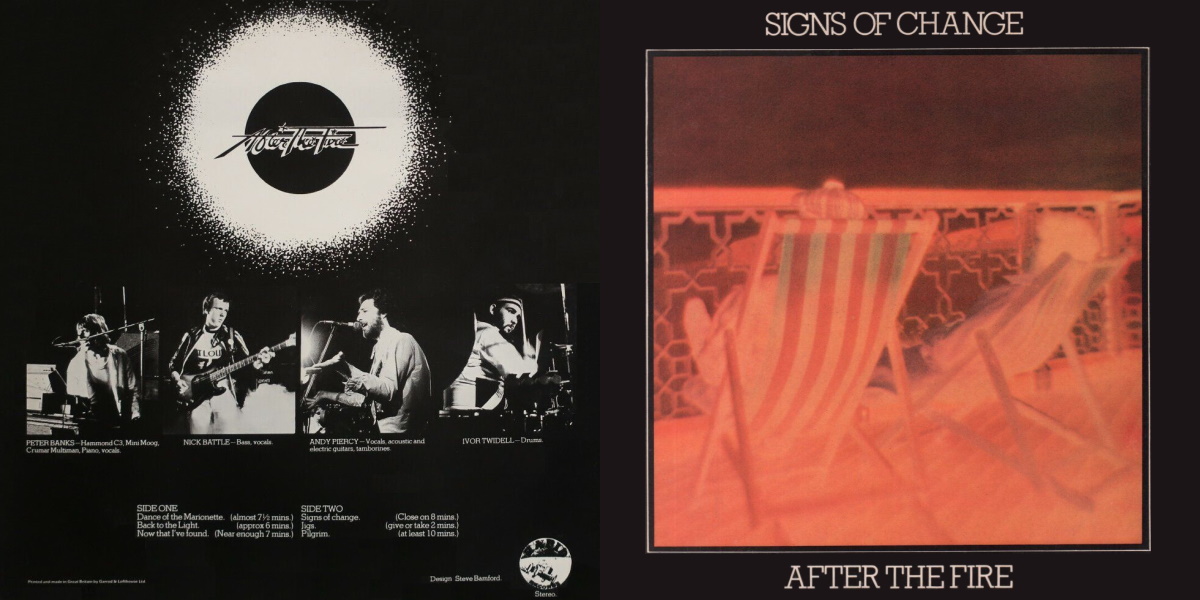
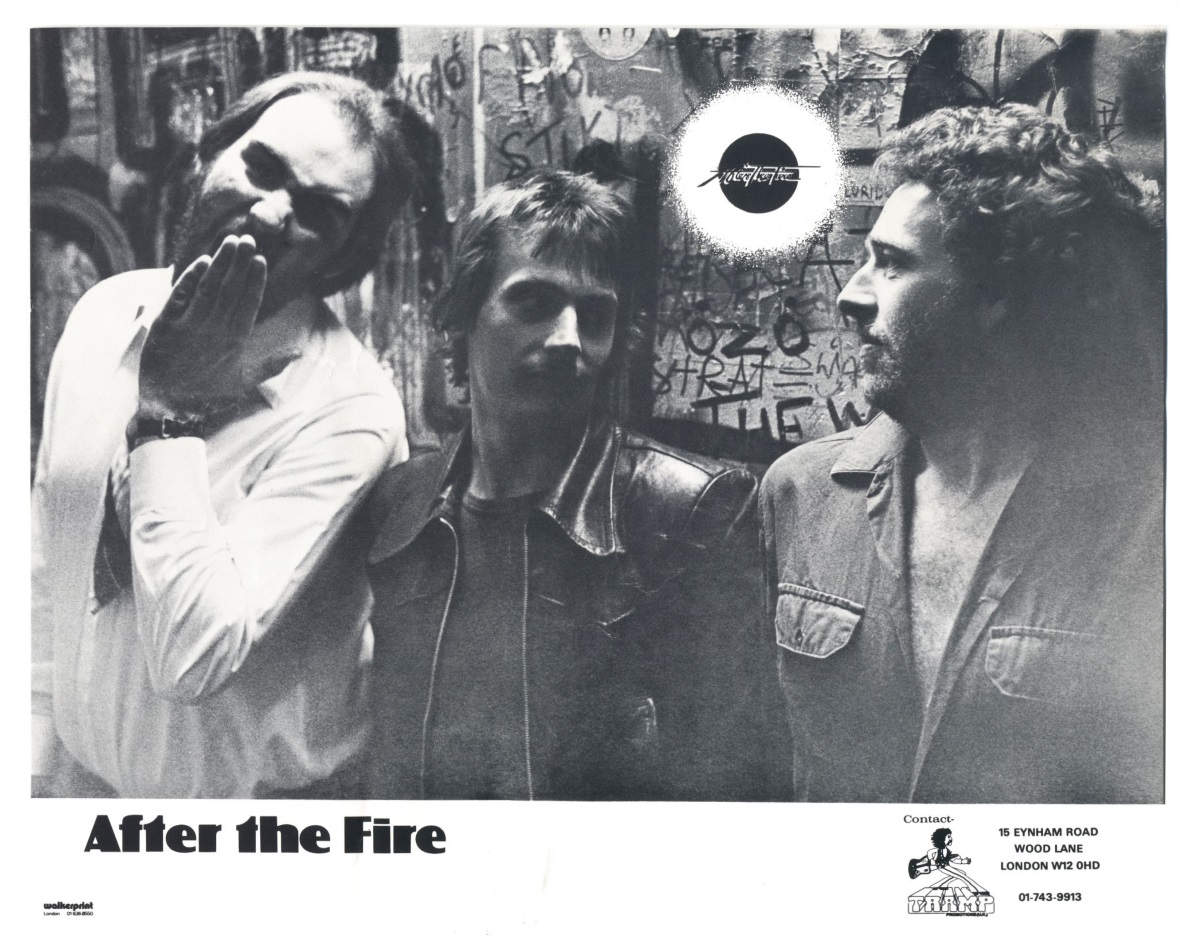
After the Fire, 1978 line-up (L-R): Ivor “Iva” Twydell, Peter Banks, Andy Piercy. (After the release of the Signs of Change LP in early 1978, line up changes happened again. Nick Battle left After The Fire to join Writz and Andy Piercy switched to playing bass as the band experimented as a three piece, playing energetic synth-based rock.)
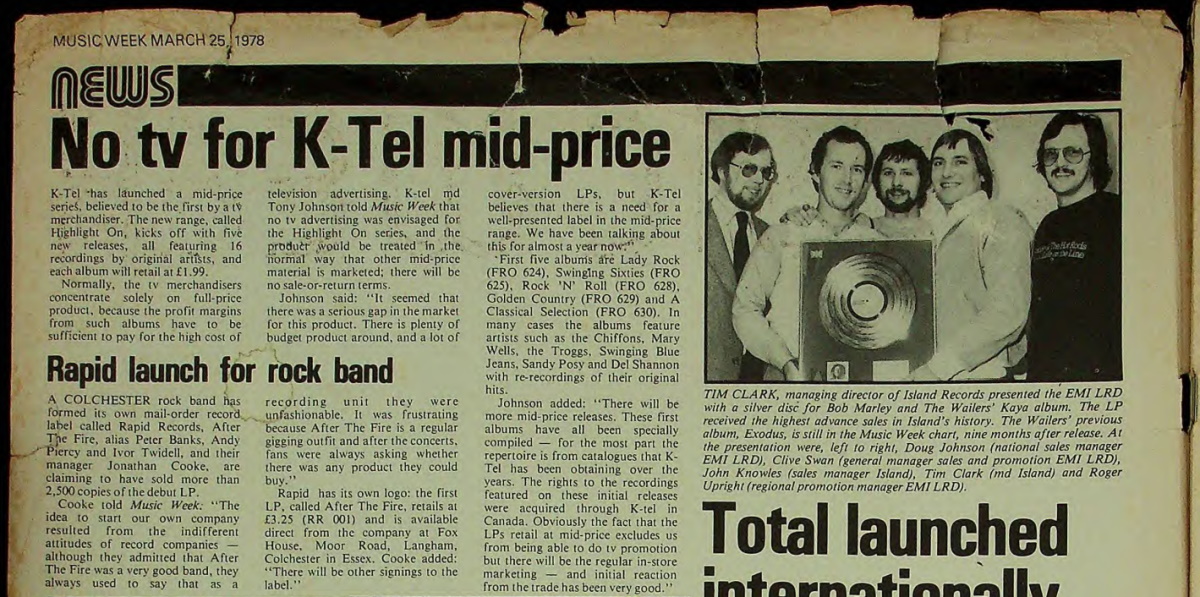 The March 25, 1978 issue of Music Week magazine featured a story on After the Fire and their self-launched label Rapid Records: “Rapid launch for rock band.”

Reviews
There are no reviews yet.