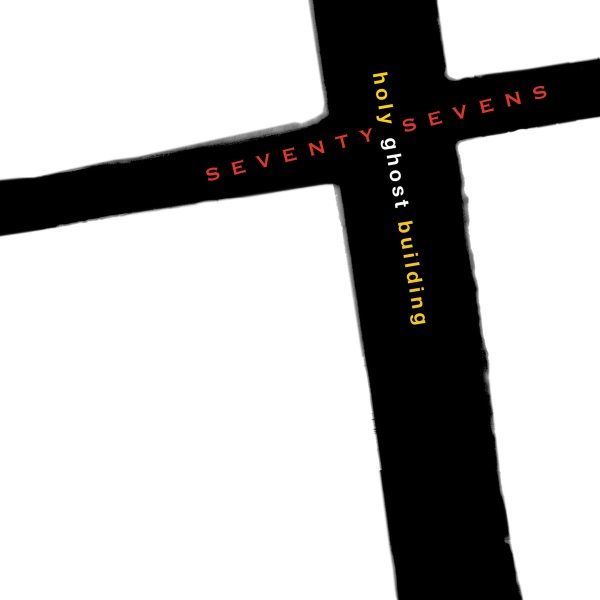
Description
Holy Ghost Building is the ninth full-length studio album by the American rock band The Seventy Sevens, independently released on the band’s own label Fools of the World in 2008.
It was in 1982 that the Seventy Sevens first played ‘Ping Pong Over The Abyss‘ and since then they have followed a long and winding road almost back to where they started. Only Mike Roe (guitar and vocals) remains from the original line up; he now plays with Mark Harmon (bass and vocals) and Bruce Spencer (drums and vocals). On their debut album, alluded to above, they closed with Washington Phillips’ «Denomination Blues» showing an awareness of the past. Here, in ‘Holy Ghost Building’ they take a musical journey back to the blues. The album has a feel of the early Elvis or Johnny Cash going into the studio with their bands and playing their favourites while the tape keeps a-rollin’. So we revisit classics such as «Keep Your Lamps Trimmed And Burning» and «I’m Gone Run To The City Of Refuge» which give us a glimpse into the band’s record collection and perhaps also into their very hearts. While the other band in which Mike Roe features, the Lost Dogs, take a more Americana/country approach, this is black blues-gospel played by white boys with affection and no little dexterity. In some ways, not dissimilar to the Kevin Max ‘The Blood‘ set. But take care. The end of the CD has the haunting «A Lifetime Without You» which is as bleak as «I Could Laugh» from ‘77s‘ in 1986, but then good music isn’t always easy listening. [Steven Whitehead, Cross Rhythms, November 2008]
I suppose it’s true that even the most outrageous among us get more introspective as we get older. A few years ago we saw mainstream Christian artists re-visiting the hymns ad nauseam. Well before that trend was popular, Russ Taff explored the origins of the gutsy gospel-rock that he was performing (what happened, Russ?) on his 1991 classic, Under Their Influence. Even earlier than that, the amazing Delaney & Bonnie and Friends let the world eavesdrop as they kicked back and got old-school with country blues and gospel on Motel Shot. More recently, Kevin Max’s excellent project, The Blood, mined the depths of jazz, blues, country and spirituals and dug up a musical travelogue of American gospel music styles ranging from the bare-bones recordings of pioneers like Blind Willie Johnson and Sister Rosetta Tharpe to the contemporary efforts of The Original Blind Boys and Prince. Now Mike Roe, Mark Harmon and Bruce Spencer – collectively known as the 77s – delve into the rocky musical soil of the early blues, rockabilly, and bluegrass gospel recordings whose ghosts inhabit the structure of every four-chord rock and roll song from the early days of Sun Records to tomorrow’s downloaded mp3 file.
Holy Ghost Building is a natural for The 77s. In the world of Christian music, there are only a handful of true rockers; and very close to the top (and maybe even at the very top) of that list sit Roe, Harmon, and Spencer, wielding guitar, bass and drums like royal scepters. The band starts off this project with authority, launching into the familiar «I’m Working on a Building», driven hard by a rockabilly / bluegrass rhythm that’ll knock you right off your front porch, even though the drums don’t really kick in hard ‘till about four minutes into the track. Harmon’s bass snakes in, around, and through the song with such animation the song could have been sub-titled, “Amazing Bass (How Sweet the Sound).” If low-down Louisiana blues is what you’re looking for, «Keep Your Lamps Trimmed and Burning», rocks from the first note and swings like the score of one of Max Fleischer’s more demented pre-Popeye cartoons. This track also features some very cool background vocals by the boys (“doot! doot! doot!”) while Mike plays some Brian Setzer-like big guitar riffs.
While it might sometimes be hard to tell where sincerity («He’s A Mighty Good Leader») ends and just plain fun («Stranger Won’t You Change Your Sinful Ways») begins, the truth is, that the band seems to be having fun with the genre throughout the whole project, while respecting the truth of the gospel message at the same time. Roe seems to have a ball channeling Elvis as he works his way through «When My Blue Moon Turns to Gold Again», as the 77s mimic the standard back-up singer sound of the Sun studios – Roe’s “a well-a, when-a my …” opening vocal phrase is priceless. The guitarist trades his pick for a bottleneck slide, and transforms into ‘Mississippi’ Mike Roe on «Everybody Ought to Pray Sometime», singing in his best Blind Willie Johnson style.
Of course these guys are serious about the way they rock, and can play most other bands right off the stage. From the Johnny Winter – style blues rock of «You’re Gonna’ Be Sorry», with its doubled slide and vocal riffs to the funky, Rolling Stones-inspired, «I’ll Remember You, Love, In my Prayers», this trio rips through the harder-rocking tracks with a snarling, aggressive attack that only the best in the business know how to deliver. The drums thunder, the bass produces a sure foundation, the guitar is gut-wrenching and dazzles at the same time, and Roe’s vocals tease, scream, and even beg – the gospel message has seldom been placed in a more visceral setting.
The approach for this album was essentially back-to-basics; to record with mostly ideas and little rehearsal – to bring out The 77s in their raw form. The band, who also produced the project – succeeded in creating what might not exactly be a unique concept, but certainly one that has more energy and authentic spirit than other, more well-known and over-ballyhooed efforts of a similar nature (try listening to Kraus and Plant after this…).
The only possible misstep here is the inclusion of «A Lifetime Without You», which is not only the sole original song on the CD, but features a kinder, gentler Mike Roe singing about a broken relationship. The song is out of step with the rest of the album and is in the unfortunate spot of following what should have been the project’s final song: the amazing «I’m Gonna’ Run to the City of Refuge», which is a track that would make Jagger himself shake his head in awe.
Holy Ghost Building is a triumph. They flipped that house. I’m ready now for a project of all-new rockers from what just might be the best rock and roll band around. [Bert Saraco, The Phantom Tollbooth, 2008]
> Apple Music (https://music.apple.com/us/album/holy-ghost-building/379261437)
CD tracklist:
01. I’m Working On A Building – 5:00
02. Keep Your Lamps Trimmed And Burning – 4:10
03. Stranger Won’t You Change Your Sinful Ways – 4:29
04. I’ll Remember You, Love, In My Prayers – 3:57
05. You’re Gonna Be Sorry – 5:08
06. What Would You Give In Exchange For Your Soul – 3:40
07. He’s A Mighty Good Leader – 3:10
08. When My Blue Moon Turns To Gold Again – 3:50
09. Everybody Ought To Pray Sometime – 2:39
10. I’m Gonna Run To The City Of Refuge – 5:19
11. A Lifetime Without You – 4:13
Note: Available at Bandcamp: https://the77s.bandcamp.com/album/holy-ghost-building
I’ve been a Sevens fan for more than 15 years. They’ve been playing for more than 20, and in that time, they’ve amassed a consistently rewarding and unjustifiably ignored catalog of rock-pop-blues goodness. Most of that catalog is out of print and unavailable now and it’s a damn shame that so few people will ever hear albums like Sticks and Stones and Pray Naked. Hell, their awesome live album Eighty-Eight has been released twice, and both pressings are out of print now.
You are lucky, though, because the Seventy Sevens have just released one of their finest efforts, called Holy Ghost Building. And you can buy that one right now. Let me tell you why you should.
I’ve said this before, but there are only a couple of guitar players that unfailingly move me. One of them is Mike Roe, the leader of the Seventy Sevens – I can listen to his work over and over, on endless repeat for days, and not be bored. The tone of Roe’s work shifts constantly, from the blues-rock of the Sevens to his folksier solo stuff, to his country-fied stints with the Lost Dogs, to the instrumental space-rock of his collaborations with bassist Mark Harmon. But at the center of all of that is his shimmering guitar work, sometimes clean, sometimes dirty, always amazing.
Roe’s been the one constant throughout the Sevens’ career. About 13 years ago, he pared the band down to a powerhouse trio, with Harmon on the bass and Bruce Spencer on drums, and from that point on, they’ve been a tightly focused unit. Roe kicks his heels up with the Lost Dogs, and shows off his gentle side on his solo work, but with the Sevens, he rocks, and rocks hard.
It’s been seven years since the band’s last full-length album, A Golden Field of Radioactive Crows, and in hindsight, that one wasn’t their best work. I liked it – it’s summery and bright and heavy, but it’s missing some essential element that would have tied it all together. It turns out, that element was a sense of history. The best Seventy Sevens material springs from a deeper well, one that taps into rivers of blues and gospel and bluegrass. Their best work has always nodded towards American spiritual music, and the further they get away from that – see «U R Trippin», on Golden Field – the less successful they are.
Holy Ghost Building is the album on which the Sevens embrace that sense of history, that deep and tangled root system that feeds their souls. On the surface, it’s just a collection of covers, old gospel and bluegrass songs. But one listen through makes it clear – this is nothing less than a new identity for the Seventy Sevens, a set of new priorities played out before your ears. There is no Seventy Sevens studio album that captures the power of the band as well as this one does, nor one that brings to bear the band’s deep influences as well as this one.
It should have been a throwaway. Hell, it was designed as a throwaway, a three-day recording session to get the wheels spinning. But it turned out to be a great Seventy Sevens album. One of the best, in fact.
Full disclosure time – Lo-Fidelity Records paid me to write the press bio for this album, so even though it only hit the streets a week ago, I’ve been living with it for more than a month now. I agreed to the job because, hey, it’s work, but I loved doing it because this album is so good, and getting a perspective on its creation was fascinating.
Basically, Roe, Harmon and Spencer got together for three days in 2005, and jammed out 10 old tunes. They did it Elvis style – Roe would play the band his old recordings of these songs, and when they all agreed on one, they’d crank out their own arrangement in two or three takes. They then spent the next two years tweaking it, adding harmonies and production touches, so that the finished product is both raw and polished. They also wrote an original tune, «A Lifetime Without You», to close the record, but they did that one live too – the music came spontaneously, and Roe improvised the lyrics.
It’s in circumstances like this that bands find out who they are. I don’t know if I’ve heard a purer Seventy Sevens song than their take on «I’ll Remember You, Love, In My Prayers». The trio transforms the old bluegrass song, most famously performed by Alison Krauss and Union Station, into a blues-rock rave-up. It’s simple, it’s uncluttered, it’s perfect. And it rocks, a lot.
The Sevens find their groove early here. Things kick off with «I’m Working on a Building», the old Bill Monroe track that lends the album its title, and while Harmon lays down this ever-shifting bed, Roe just goes to town over it, pealing off great little leads and shuffling rhythms. The band scores a home run with their take on Rev. Gary Davis’ «Keep Your Lamps Trimmed and Burning», knocking the Hot Tuna version aside like a fly.
For a real taste of what this band can do, head to track five, a raw, blistering take on Fred MacDowell’s «You’re Gonna Be Sorry». Roe whips out the slide, and injects the signature riff with such feeling, it’s palpable. The vibe on this song is awesome – it’s sloppy here and there, as Roe shifts from rhythm to lead, but it’s dusty and real and live, and will run you over like a steam train. This is the Seventy Sevens, sounding like they always should have.
The band gets more inventive as the record goes along. They turn Skip James’ spiritual blues «He’s a Mighty Good Leader» into a pretty acoustic waltz, and transform «When My Blue Moon Turns to Gold Again» into a dead-on Elvis Presley workout. And they storm their way through «I’m Gonna Run to the City of Refuge», a Blind Willie Johnson song Roe and Harmon had previously covered on their Fun With Sound album.
Many of these songs are about getting yourself right with God, a common theme in Roe’s work, and on this album, you get to hear just how deep the roots of that theme run with him. As he said when I interviewed him, “I need to hear these songs as much as anybody,” and if the Seventy Sevens have been writing about redemption for 20 years, then the old masters they cover here have been writing about it for much, much longer. «Stranger, Won’t You Change Your Sinful Ways», «What Would You Give in Exchange For Your Soul», «Everybody Ought to Pray Sometime» – these are songs of conviction, of rebuilding one’s spiritual connection.
So it’s odd that the album ends with its one sad love song. After a very pretty vocal bridge, «A Lifetime Without You» spins a tale of painful loneliness, another common Seventy Sevens theme. It’s a reminder of what Mike Roe has been trying to tell us for years – even though God is good, life is hard. And yet, even though life is hard, God is good. It’s a beautiful dichotomy that runs through the band’s entire catalog.
Holy Ghost Building is a pleasant surprise. When Roe first announced this project, almost three years ago, I expected a stopgap, a way station between real Seventy Sevens projects. But this is the real deal, an album of great scope and history, one that finds the Sevens becoming who they are more than almost any other record they’ve done.
The last words on the album are “I think I’ll quit now and walk away,” and if this is the last Seventy Sevens album, it’s a great way to go out. But I hope it isn’t. I hope this is just the start of a rebirth for this band – they’ve toiled in obscurity for longer than is conscionable, and they deserve to be heard. Holy Ghost Building spins these old-time spirituals into gold, and flat-out rocks while doing it, defining the band’s sound and soul. This is the Seventy Sevens, in all their glory.
[Andre Salles, Tuesday Morning 3 a.m., 7/2/08]

Reviews
There are no reviews yet.